What Is Soft Close Cabinet Hardware?
Key takeaway
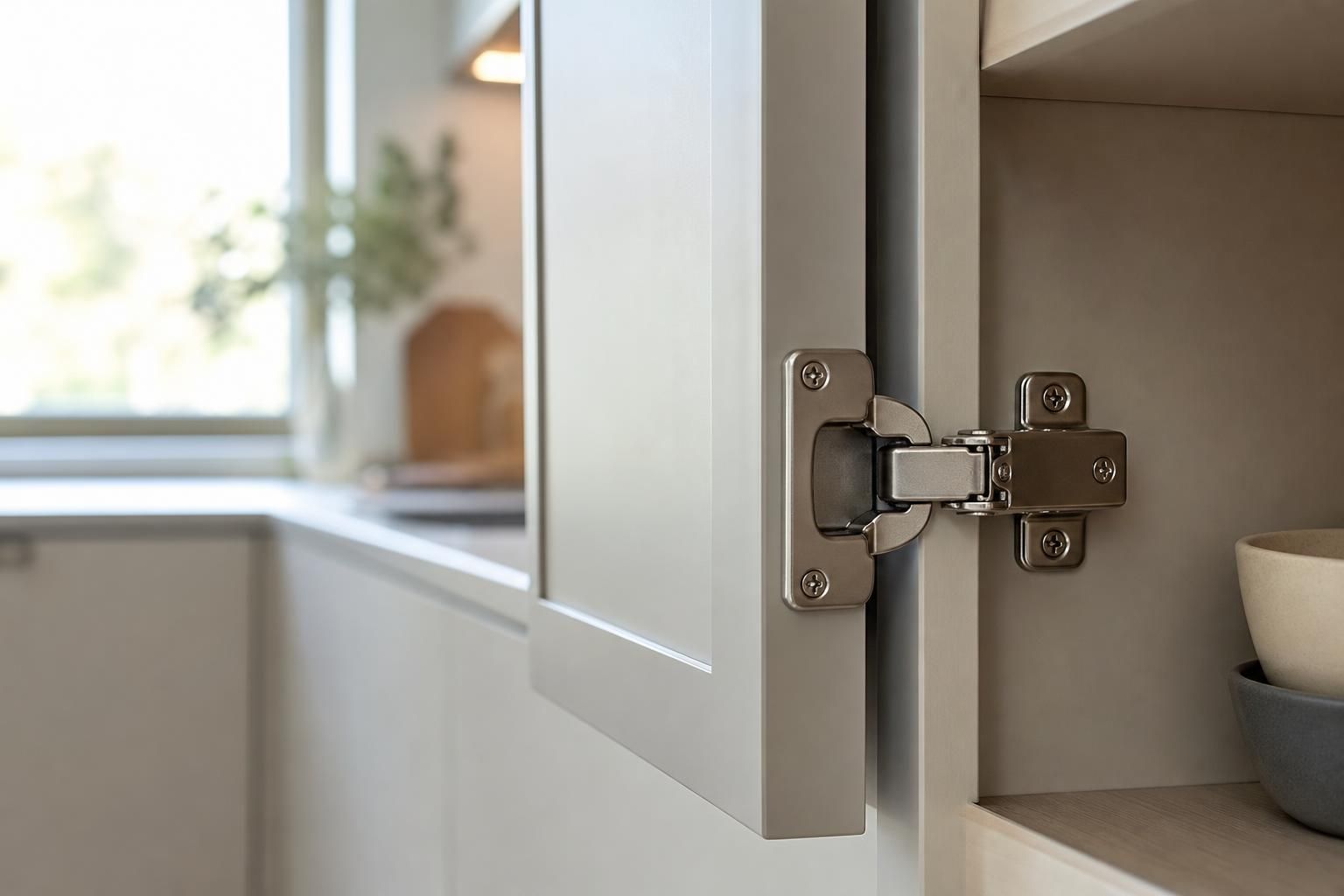
Soft close cabinet hardware is a hinge or drawer slide mechanism with a built-in hydraulic or pneumatic damper that catches a door or drawer just before it reaches the cabinet frame, slowing it down so it clicks shut quietly instead of slamming. The damper is a small cylinder, usually filled with air or oil, mounted inside the hinge body or at the back of the drawer slide. It's now a standard upgrade option on nearly all cabinet lines, not a specialty item reserved for high-end kitchens.
Key takeaways
- Soft close works through a spring-loaded hydraulic or air cylinder inside the hinge or slide, not a separate gadget you install.
- It can be retrofitted to many existing cabinets with add-on dampers, but matching hinge type matters more than price.
- For condo units with AOAO noise rules, soft close hardware on cabinets is a small but real way to cut down daily impact noise.
How the Mechanism Actually Works
A soft close hinge or slide has two parts working together: the mechanical arm that lets the door or drawer move, and a damper cartridge that engages only in the last few inches of travel. As the door swings closed, a small piston inside the damper gets pushed into a sealed chamber of air or hydraulic fluid. That resistance absorbs the momentum, so instead of the door banging into the cabinet box, it eases shut over roughly half a second to a full second.
Most modern systems use one of two designs:
- Hydraulic dampers – oil-filled cylinders that give smooth, consistent resistance and tend to hold up over many years of use.
- Pneumatic (air) dampers – air-filled cylinders that are lighter-duty and common on budget-tier hardware, sometimes less consistent once they've seen tens of thousands of cycles.
Drawer slides use the same idea but built into the slide rail rather than a hinge — a small block near the back of the slide compresses as the drawer approaches closed, braking it smoothly.
Soft Close vs Standard Hinges
Standard cabinet hinges rely purely on spring tension to pull a door shut, which means the last inch or two of travel happens at full speed with nothing to slow it down. Over years of daily use, that repeated impact is what loosens screws, cracks paint at the hinge mortise, and wears out the cabinet box faster. Soft close hardware doesn't change how the door opens or how it looks from the front — the difference is entirely in that final moment of closing.
For households with young kids, soft close also removes the pinch-point slam that causes most minor cabinet-related finger injuries, which is one reason the Consumer Product Safety Commission has flagged furniture and cabinet closures as a recurring home injury category worth designing around.
Where It Matters Most in a Hawaii Kitchen
Kitchens get the heaviest daily cabinet use in any home, and in Oahu's salt air and humidity, hardware that's already working harder to resist corrosion benefits from reduced mechanical stress too. Soft close is worth prioritizing on:
- Base cabinets near a cooktop or sink, which open and close the most times per day
- Pantry cabinets with heavier loaded doors, where momentum is higher
- Drawer banks used for utensils and pots, where slamming is common with kids or multiple cooks
If you're adding storage rather than replacing a full kitchen, the same hardware question applies to smaller additions — see how to add a pantry cabinet to a small kitchen for what to specify when ordering.
Soft Close and Condo Noise Rules
Many Honolulu condo buildings have AOAO rules that require a minimum Impact Insulation Class rating for flooring to limit noise transfer to units below — but cabinets matter too, especially in open-concept units where a kitchen island backs onto a shared wall or sits above another owner's ceiling. Soft close hardware won't satisfy a flooring IIC requirement on its own, but it's a straightforward way to cut down the sharp, repetitive bang of cabinet doors that's often what actually triggers a neighbor complaint. For the flooring side of that same noise question, see what noise rating Honolulu condos require for flooring.
Retrofitting an Existing Kitchen
You don't always need to replace cabinet doors to add soft close. Two common retrofit paths:
- Swap the hinge – if your doors use a standard European-style concealed hinge (the round cup type visible when the door is open), many manufacturers make a direct soft-close replacement that fits the same 35mm cup hole.
- Add a clip-on damper – small adhesive or screw-mounted dampers can be added to the cabinet frame near an existing standard hinge, adding a soft-close function without removing the hinge at all.
Drawer slides are harder to retrofit piece by piece — usually the whole slide gets replaced, since the damper is built into the slide mechanism rather than added separately. This is where matching slide length, weight rating, and mounting type (side-mount vs undermount) matters more than finding the cheapest option, since the wrong slide simply won't fit the existing drawer box.
Durability and What Wears Out First
The moving mechanical parts — hinge arms and slide rails — generally outlast the damper cylinder itself. On lower-tier hydraulic dampers, the most common failure mode is the cylinder losing resistance over time so the door starts closing faster than it used to, rather than failing outright. This is normal wear, and most hinge and slide manufacturers sell the damper cartridge as a separate replaceable part rather than requiring a full hinge swap. The American National Standards Institute maintains cycle-testing standards (through ANSI/BHMA) that hardware manufacturers use to rate how many open-close cycles a hinge or slide is built to handle, which is a more useful comparison point between hardware tiers than visual appearance alone.
Choosing Hardware for a Custom Cabinet Order
If you're ordering new cabinets rather than retrofitting, soft close is typically a spec you choose per door and drawer bank, not an all-or-nothing upgrade for the whole kitchen. It's worth deciding early which cabinets get it, since hinge and slide choice affects the cabinet box dimensions and mounting hardware the cabinet maker builds around. For Mililani-area projects specifically, what to check before hiring a cabinet maker covers the related questions to ask about hardware specs before signing a contract, and the same logic applies whether you're in Kailua, Kapolei, or anywhere else on the island — see custom cabinets in Kailua for a full rundown of what to confirm before you order.
Frequently Asked Questions
Q: Is soft close cabinet hardware the same as slow close?
Yes — "soft close" and "slow close" describe the same hydraulic or pneumatic damping mechanism inside a hinge or drawer slide. The terms are used interchangeably by most manufacturers and installers.
Q: Can soft close hinges be added to any cabinet door?
Most concealed European-style hinges can be swapped for a soft-close version if the door uses the standard 35mm cup hole, but older face-frame cabinets with exposed hinges often need a clip-on damper instead, or a full hinge replacement.
Q: Does soft close hardware wear out over time?
The damper cylinder can lose resistance after years of heavy use, which shows up as the door closing faster than it used to rather than a sudden failure. Many manufacturers sell replacement damper cartridges separately from the full hinge.
Q: Do soft close drawers need special slides?
Yes — the damping mechanism is built into the slide itself, so soft close drawers need a slide designed for it rather than an add-on part, unlike some hinge retrofits. Slide length, weight rating, and mounting style all need to match the existing drawer box.
Q: Does soft close hardware help with condo noise complaints?
It reduces the sharp impact noise of cabinet doors and drawers slamming shut, which is often what triggers noise complaints in shared-wall condo units, though it's separate from flooring noise ratings that AOAO boards require for floor coverings.