Cabinet Makers in Mililani: What to Check Before Hiring
Key takeaway
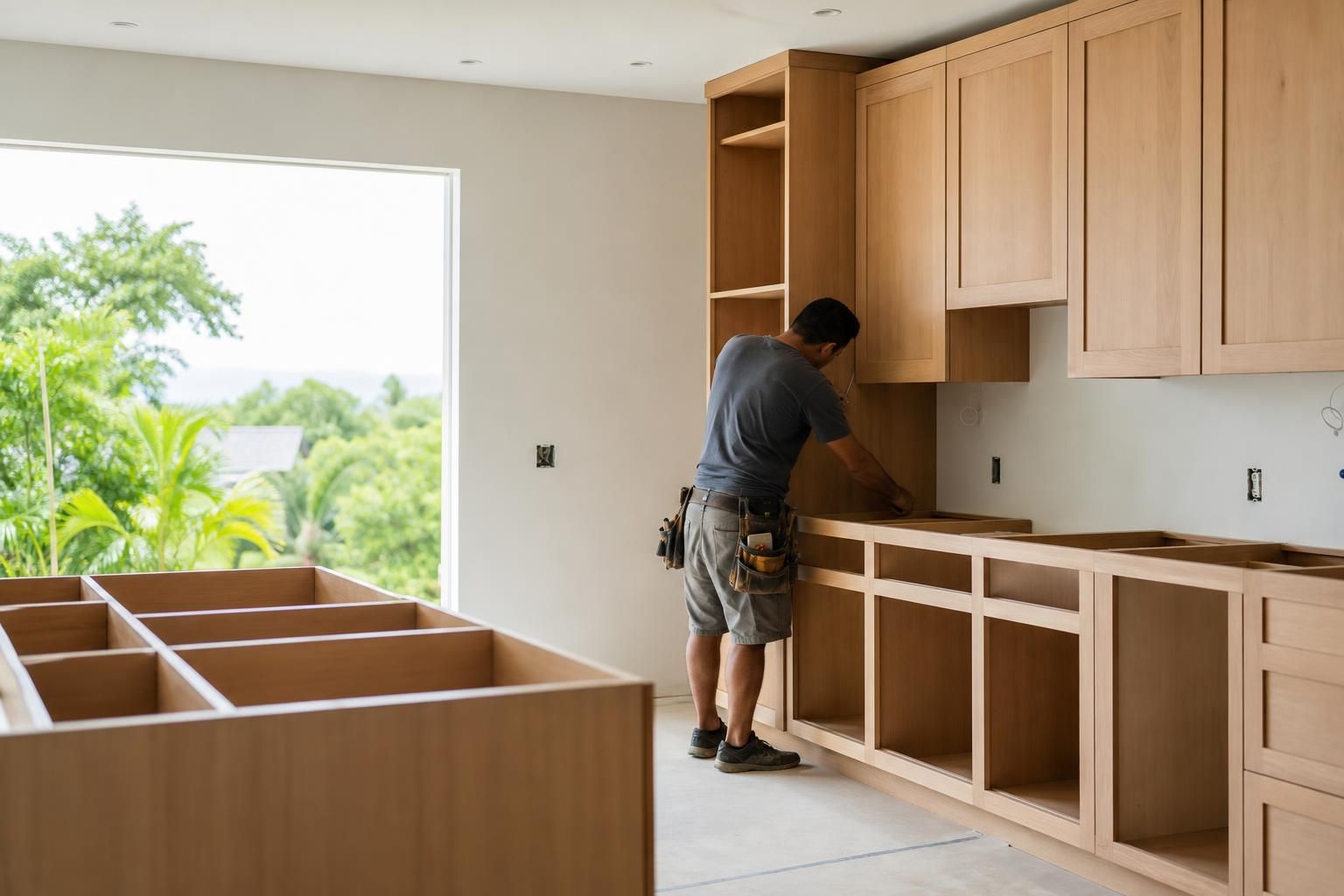
The right cabinet maker for a Mililani project is one licensed to work in Hawaii, able to show you a 3D layout or design preview before production starts, and clear about who handles delivery and installation versus who just builds the boxes. Mililani's mix of older plantation-era homes and newer subdivisions means cabinet fit and wall conditions vary block to block, so a maker who measures your actual space — rather than quoting from a floor plan — saves you from rework later.
Key takeaways
- Confirm the cabinet maker is tied to a licensed contractor for installation, not just a fabrication shop that drops off boxes.
- Ask to see or touch physical door and finish samples before approving a design — screen colors shift under LED showroom lighting.
- Get your layout measured in person; Mililani homes built before the 1990s often have out-of-square walls that standard cabinet runs won't fit cleanly.
What "cabinet maker" actually means in this context
In Hawaii, most residential cabinet work isn't done by a single craftsman building from raw lumber on-site. It's typically a design-and-fabrication process: a showroom or supplier takes your measurements, builds a 3D layout, manufactures the cabinet boxes and doors (often through a larger supplier network), then hands off to a licensed installer. Understanding this chain matters because the quality of your project depends on coordination between the designer, the fabricator, and the installer — not just one person's woodworking skill. A supplier that manages that whole chain, from first call to delivery, cuts out a layer of miscommunication that's common when homeowners hire a designer and installer separately.
Licensing and what to verify before you sign
Hawaii requires contractors performing cabinet installation, along with any related electrical or plumbing work, to hold a current license through the Hawaii Department of Commerce and Consumer Affairs contractor license search. Before committing to a cabinet maker:
- Ask for the contractor's license number and verify it's active, not just "pending renewal."
- Confirm whether the quote includes installation or materials only — some suppliers sell cabinets as a product and connect you separately with a licensed installer.
- Check if the installer also handles electrical rough-in for under-cabinet lighting or outlet relocation, since that requires its own licensed trade.
- Ask whether old cabinet tear-out and disposal is included or billed separately.
If you're weighing cabinets alongside a full kitchen layout change, it's worth reading through how to choose kitchen cabinets for your Oahu kitchen before finalizing door styles, since cabinet choice affects counter overhang and appliance clearance.
Design previews: what to ask for
A reputable cabinet maker should be able to show you a layout rendering before you commit to an order — not just a sketch, but a to-scale 3D preview showing cabinet runs, appliance placement, and door swing. This matters most in Mililani kitchens with peninsula or galley layouts, where a few inches of miscalculated clearance can block a dishwasher door or fridge swing. Ask specifically:
- Does the preview reflect your actual wall measurements, or a template?
- Can you see the door style and finish in person, not just on a screen?
- How many revision rounds are included before production locks in?
Touchable samples solve a real problem: cabinet finish photos shift color under different lighting, and a "warm white" door can read cooler or yellower depending on your kitchen's window exposure and bulb temperature.
Two-tone and finish decisions that affect cost drivers
Two-tone cabinets — a different finish on uppers versus lowers, or on an island versus perimeter cabinets — have become a common request in Oahu kitchens. They don't change the cabinet box construction, but they do add a finishing step and sometimes extend lead time since doors ship with two separate finish orders. If you're considering this look, this breakdown of two-tone kitchen cabinets covers how the split typically works and where it looks intentional versus patchy.
Hardware finish is the other decision that gets overlooked until install day. Matte black, brushed brass, and satin nickel all wear differently under daily kitchen use — oil, water spots, and cleaning chemicals affect each finish at a different rate. How to choose cabinet hardware finish that lasts walks through which finishes hold up best in a working kitchen.
What moves the cost on a Mililani cabinet job
Cabinet pricing isn't a flat per-linear-foot number, because what drives the total is specific to your kitchen, not a general Oahu average. The real cost drivers are:
- Cabinet box material and construction — plywood boxes versus particleboard, soft-close versus standard hinges, and drawer box construction all shift the quote.
- Layout complexity — an L-shaped kitchen with a peninsula costs differently to fabricate than a straight run, because of corner cabinet solutions and filler pieces.
- Wall and floor conditions — older Mililani homes sometimes have settled foundations or out-of-level floors that require scribing cabinets to fit, which adds installer time.
- Electrical and plumbing relocation — moving an outlet, sink, or range hood vent changes the installation timeline and may require a separate licensed trade.
- Custom sizing — standard cabinet widths (typically in 3-inch increments) fit most kitchens, but oddly-shaped spaces or ceiling heights above standard often require custom-built units, which take longer to fabricate.
Because every one of these varies by house, the only accurate number comes from a quote measured against your actual kitchen — not a published range that would be wrong for most readers anyway.
Mililani-specific considerations
Mililani's housing stock spans several decades, so cabinet fit issues differ by neighborhood age. Newer Mililani Mauka homes tend to have standard stud spacing and square corners, making stock cabinet runs straightforward. Older Mililani Town homes, built from the 1960s through 1980s, more often need on-site scribing or custom filler panels to close gaps at walls and ceilings. If you're also replacing flooring as part of the kitchen update, how to choose flooring contractors in Mililani covers sequencing — flooring installed before or after cabinets changes labor time and material waste.
Frequently Asked Questions
Q: Do cabinet makers in Mililani also handle installation, or just build the cabinets?
It depends on the company. Some are fabrication-only and expect you to hire a separate licensed installer; others manage design, fabrication, and installation as one connected process with a single point of contact.
Q: How long does a custom cabinet order typically take from design approval to installation?
Timelines vary by order complexity and whether doors are stock sizes or custom-built, since custom sizing requires additional fabrication time. A supplier should give you a specific delivery window once your layout and material selections are locked in.
Q: Can I see cabinet finishes in person before ordering?
Yes — reputable suppliers maintain showroom samples you can touch and view under different lighting, which matters because screen photos and printed swatches don't always match the finish accurately in your kitchen's actual light.
Q: Does cabinet installation require a licensed contractor in Hawaii?
Yes. Installation work, especially when paired with electrical changes like under-cabinet lighting or outlet moves, should be performed by a contractor holding a current Hawaii license, verifiable through the state's DCCA contractor license search.
Q: What's the difference between hiring a cabinet maker in Mililani versus Kapolei or Honolulu?
The core selection criteria — licensing, design previews, finish samples — are the same across Oahu. Local differences come down to housing stock age and typical layout quirks, which is why it helps to compare notes with guides like cabinet makers in Kapolei or cabinet makers in Honolulu if you're weighing suppliers across areas.