How to Choose Cabinet Hardware Finish That Lasts
Key takeaway
Choose cabinet hardware finish by matching it to your cabinet undertone (warm wood or cool paint), coordinating it with your faucet and light fixtures, and — on Oahu specifically — picking a finish rated to resist salt-air corrosion if you're within a few miles of the coast. Matte black, brushed nickel, and unlacquered brass are the three finishes that hold up best in humid, salty island air, while polished chrome and cheap plated finishes tend to pit or dull fastest.
Key takeaways
- Match hardware finish to undertone first (warm vs. cool), then to your faucet metal, not the other way around.
- In coastal and windward Oahu homes, prioritize solid or PVD-coated finishes over thin plating — salt air accelerates corrosion on anything porous.
- Bring an actual cabinet door sample or paint chip when shopping finishes; screen colors shift the undertone and will mislead you.
Start With Your Cabinet's Undertone, Not a Trend
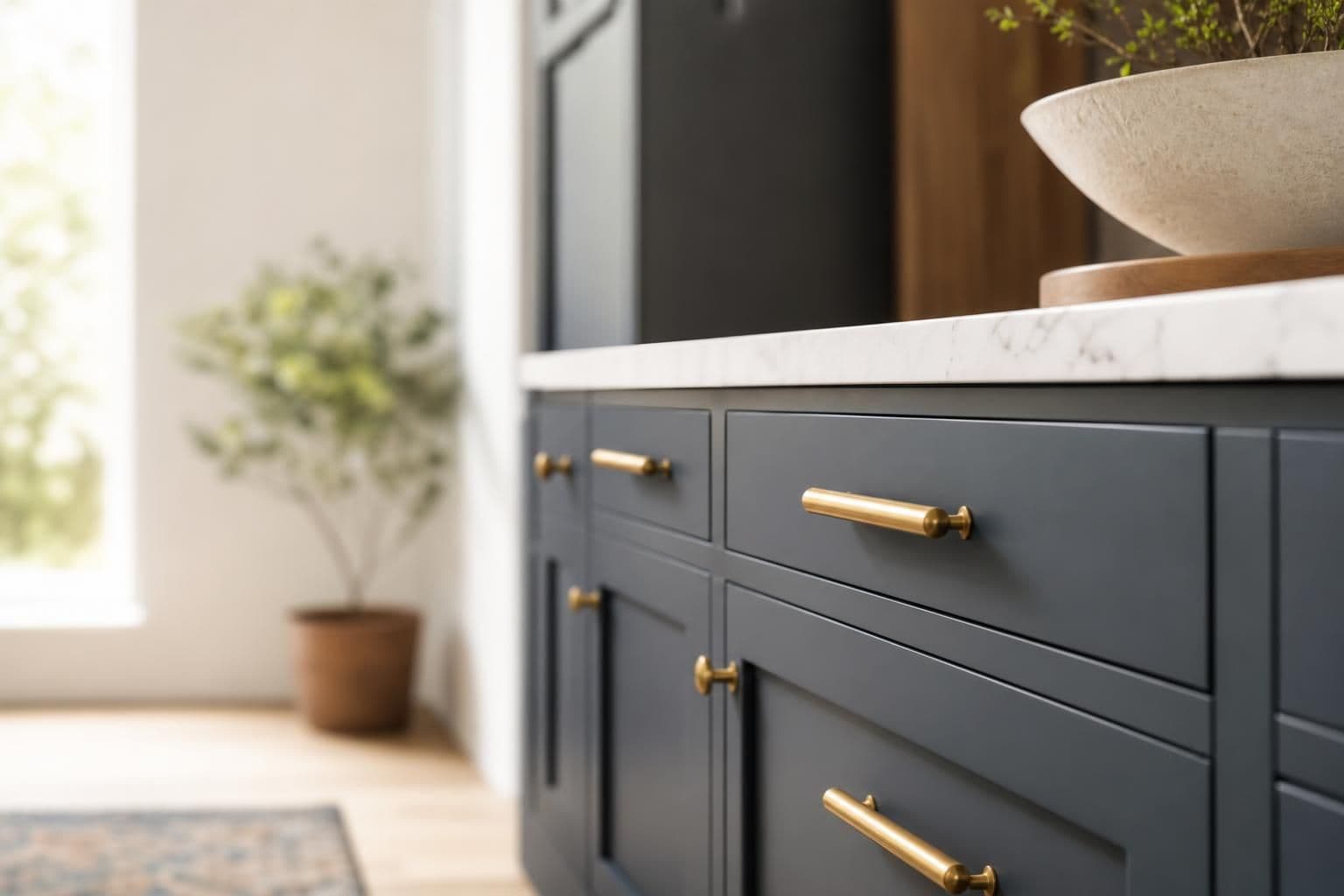
Every cabinet surface, painted or stained, leans warm or cool. White oak and natural wood tones lean warm and pair naturally with brass, bronze, and brushed gold. Cool grays, true whites, and navy or black painted cabinets pair better with nickel, chrome, or matte black. If you've already picked a cabinet color to go with your flooring, that decision has effectively narrowed your hardware options — a warm walnut vinyl plank floor with honey-toned cabinets will fight a cold chrome pull in a way a brushed brass one won't.
Match Hardware to Your Faucet and Fixtures
Mixing metals is fine in small doses, but your faucet, cabinet pulls, and any exposed hinges should share a family, if not an identical finish. A common approach:
- Pick the faucet finish first, since it's harder and more expensive to change.
- Choose hardware in the same finish or a close cousin (e.g., matte black faucet with matte black or oil-rubbed bronze pulls).
- Let lighting fixtures and door hinges follow the same metal family, even if the exact finish varies slightly.
Hardware showrooms that let you hold a faucet and a pull side by side under the same light make this decision far easier than comparing product photos on a screen, which is one reason it's worth seeing finishes in person before ordering.
Why Salt Air Changes the Calculus on Oahu
Standard decorative hardware is often designed and tested for interior, climate-controlled homes on the mainland — not for homes with louvered windows, trade-wind cross breezes, or oceanfront exposure. The National Oceanic and Atmospheric Administration notes that airborne salt accelerates metal corrosion in coastal environments, and that effect is measurable well beyond the immediate shoreline wherever onshore winds carry mist inland. Practical implications for hardware selection:
- PVD (physical vapor deposition) finishes bond the metal coating at a molecular level and resist pitting far longer than standard electroplating.
- Unlacquered or "living" brass will patina over time rather than flake, which some homeowners prefer precisely because it ages predictably.
- Matte black powder-coat performs well in salt air because the coating is thicker than decorative plating, though scratches can expose the base metal underneath.
- Polished chrome and bright gold plating are the most likely to show spotting or dulling within a few years in exposed coastal or windward locations (Kailua, North Shore, parts of Kapolei).
If your home sits directly oceanfront or in a high-wind corridor, ask any hardware supplier specifically whether a finish is rated for coastal or marine-grade use — that single question filters out a lot of options fast.
Finish Options and Where They Work Best
| Finish | Undertone | Best fit |
|---|---|---|
| Brushed/satin nickel | Cool-neutral | Versatile, hides fingerprints, good all-around coastal performer |
| Matte black | Cool | Bold contrast on light cabinets, resists salt air well |
| Unlacquered brass | Warm | Wood-tone or traditional kitchens, develops patina on purpose |
| Oil-rubbed bronze | Warm-neutral | Traditional or transitional styles, hides wear |
| Polished chrome | Cool | Interior, non-coastal rooms only |
Condo and Rental Considerations
Condo associations on Oahu sometimes restrict visible exterior hardware changes or have guidance on finishes for units facing common areas, though interior cabinet hardware is rarely a board-review item the way flooring is. If your project also involves a flooring swap, it's worth reading up on AOAO flooring approval requirements before ordering materials, since paperwork timelines can affect your whole renovation schedule even when hardware itself isn't restricted. Rental property owners should lean toward durable, low-maintenance finishes (brushed nickel, matte black) since tenants won't maintain unlacquered brass patina evenly across units.
A Simple Decision Process
- Identify your cabinet undertone (warm or cool) by looking at the door in natural daylight, not under indoor bulbs.
- Choose your faucet finish, since plumbing fixtures are costlier to swap than hardware.
- Select hardware in the same or a closely related finish family.
- Check coastal exposure — if you're within a mile or two of the ocean or in a trade-wind corridor, prioritize PVD, powder-coat, or solid/unlacquered metals over thin plating.
- Order one or two physical samples and live with them on the actual cabinet door for a few days before committing to the full set.
This same logic applies whether you're replacing pulls on existing cabinets or finalizing hardware for new custom cabinet doors that are being painted or refaced — the finish decision should happen after the door color is locked in, not before.
Frequently Asked Questions
Q: What cabinet hardware finish lasts longest in humid climates?
Matte black powder-coat, brushed nickel, and unlacquered brass tend to outperform polished chrome and thin gold plating in humid, salt-air environments because the coating or metal itself resists pitting rather than relying on a thin plated layer.
Q: Should cabinet hardware match the faucet exactly?
It doesn't need to match exactly, but it should belong to the same metal family — for example, matte black hardware with a matte black or dark bronze faucet reads as intentional, while mixing warm brass pulls with a cool chrome faucet usually looks unplanned.
Q: Can I mix two different hardware finishes in one kitchen?
Yes, as long as one finish is clearly dominant (used on most cabinets) and the second is used deliberately, such as on an island or a single accent wall of cabinets, rather than scattered randomly.
Q: Does cabinet hardware finish affect resale value?
Hardware finish is a low-cost, easily reversible choice that buyers rarely weigh heavily, but dated or corroded hardware (common with cheap plating in coastal homes) can make an otherwise updated kitchen look neglected.
Q: How do I know if my home's location requires coastal-rated hardware?
If your home is within a mile or two of the ocean, sits in a windward trade-wind corridor, or regularly has salt residue on windows and railings, ask your hardware supplier directly whether a finish is rated for coastal or marine exposure before you order.