Bathroom Flooring Ideas That Hold Up in Oahu Homes
Key takeaway
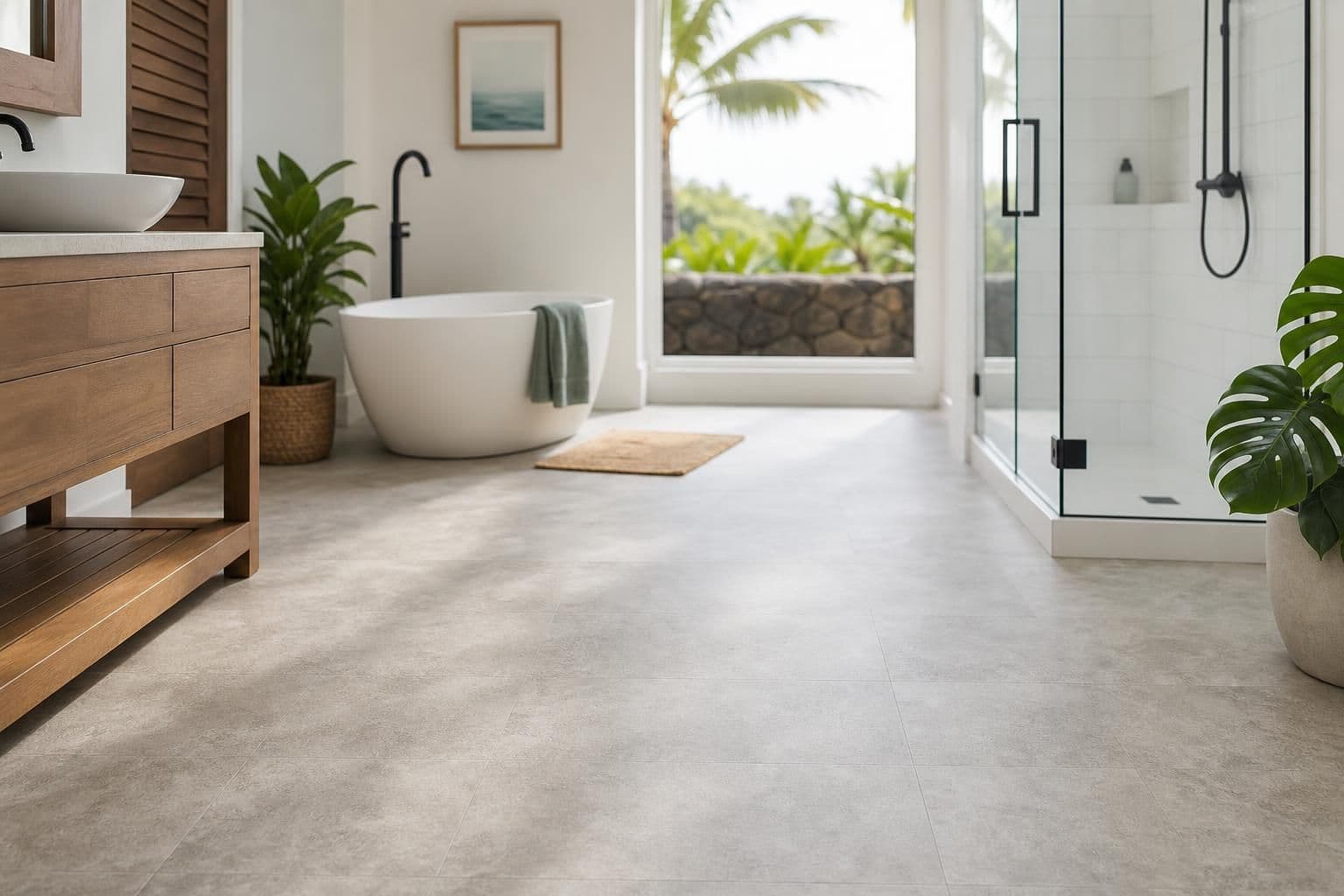
The best bathroom flooring ideas for Oahu homes center on fully waterproof materials, since ocean humidity and daily steam push moisture into subfloors year-round. Waterproof vinyl plank (SPC or WPC core) and porcelain tile are the two options that consistently perform in island bathrooms, while natural stone and laminate cause more problems than they solve near the coast. What you'll actually pay depends on your bathroom's layout, subfloor condition, and material tier — the sections below explain what drives that number so you know what you're comparing before you call anyone.
Key takeaways
- Waterproof vinyl plank (SPC core) and porcelain tile are the two safest bets for Oahu bathrooms; laminate and solid hardwood are not.
- Tile costs more than vinyl plank mainly because setting it is slower and more skilled labor, and because most bathrooms require cutting around fixtures, curbs, and shower pans — all of which add time regardless of square footage.
- Condo owners need AOAO-approved specs (sound rating, moisture barrier) before installation can even be scheduled, which can add lead time to a project before work starts.
Why Bathroom Flooring Choice Matters More on Oahu
Bathrooms are already the wettest room in any house, but Oahu adds constant ambient humidity and, in coastal or North Shore homes, salt-laden air that finds its way into wall cavities and under baseboards. Materials that are fine in a mainland bathroom — laminate, engineered wood, or unsealed natural stone — can swell, delaminate, or stain faster here. The EPA's indoor air quality guidance also notes that trapped moisture behind flooring is a common driver of mold growth, which makes a genuinely waterproof floor system a health decision as much as a design one.
Vinyl Plank: The Practical Default
Rigid-core vinyl plank (SPC) is the most common recommendation for Oahu bathrooms because the core itself is 100% waterproof — not just water-resistant — and the click-lock seams shed spilled or splashed water instead of absorbing it. It also handles temperature swings from hot showers without the expansion gaps that plague laminate.
- What actually moves the price on a vinyl bathroom job: subfloor condition (older Oahu homes often need leveling compound before planks can lock properly), how much trim and edge-cutting the layout requires around a toilet flange, vanity, and tub, and whether old flooring needs to be torn out and hauled away first.
- Small bathrooms (40–60 sq ft) often land toward the higher end of what a job "should" cost relative to size, simply because labor minimums and trim work don't shrink along with the square footage.
- Look at vinyl plank flooring options with a wear layer of at least 12 mil for bathroom traffic and cleaning chemicals.
If you're deciding between vinyl and other resilient options for the whole house, the site's own comparison of LVP versus laminate and engineered wood breaks down where each performs and where it doesn't.
Porcelain and Ceramic Tile
Tile remains a strong bathroom choice when the layout allows for it, largely because it's inherently water-impermeable once properly grouted and sealed, and it handles direct water exposure (like a curbless shower pan) better than any plank product.
- Tile setting takes longer than plank installation and requires more specialized labor, which is the main reason it costs more than vinyl for the same square footage — cutting around drains, curbs, and niches adds hours a straightforward plank layout doesn't.
- Grout lines need periodic resealing — every 1–2 years is a common maintenance interval cited by tile manufacturers — or they become the weak point for moisture intrusion.
- Large-format tile (12x24 or bigger) reduces grout lines and is increasingly common in Oahu bathroom remodels for that reason, and it can also install faster than small mosaic tile since fewer pieces are being set.
What to Avoid in a Humid Bathroom
Not every popular flooring trend translates well to island conditions:
- Laminate — the core is wood fiber, and even "water-resistant" laminate will swell at seams if water sits on it, which happens routinely around a toilet base or shower door.
- Solid hardwood — reacts to humidity swings by cupping or gapping; it's a poor match for any bathroom, not just an Oahu one.
- Natural stone (unsealed) — porous stones like travertine or unsealed marble absorb moisture and can stain or etch from bathroom cleaners; sealed stone works but adds a maintenance step most homeowners skip.
- Sheet vinyl with seams — installs quickly, but seams are a moisture entry point over time, unlike the tight click-lock system in rigid vinyl plank.
For homes near the water specifically, the site's guide to waterproof flooring for Oahu beach houses covers salt-air-specific durability concerns that apply directly to bathrooms too.
Condo Bathrooms Have an Extra Step
If you live in a Honolulu high-rise or mid-rise condo, your bathroom floor isn't just a design decision — it's a paperwork one. Most AOAOs require documentation on the flooring's sound rating (commonly an IIC/STC rating from an underlayment system) before approving any hard-surface replacement, especially over a neighbor's ceiling. Getting those specs wrong is the most common reason board submissions get sent back for revision, which delays the job before installation even starts. High-rise jobs can also take longer to schedule and complete once elevator reservations and loading-dock windows are factored in, since materials and old flooring debris both have to move through the building's freight system rather than a driveway.
- Ask for the same underlayment documentation used for sound-rated flooring in condo units — bathroom floors are held to the same board standard as living areas in most buildings.
- Building age matters: pre-1990s Oahu condos often have stricter or older moisture-barrier requirements written into house rules.
Layout and Design Choices That Actually Matter
Beyond material, a few practical decisions affect both the scope of work and long-term performance:
- Waterproofing the transition, not just the floor. The seam where bathroom flooring meets hallway flooring is a common leak point if not properly transitioned and sealed.
- Slip resistance in wet zones. Textured or matte-finish vinyl and tile (rated for wet-area slip resistance) matter more than gloss finish for safety, particularly for households with kids or older adults — a point the CDC's home safety guidance on fall prevention also emphasizes for bathroom surfaces generally.
- Color and pattern for small spaces. Lighter, larger-format planks or tiles tend to make small Oahu bathrooms (often under 50 sq ft) feel less cramped than busy patterns or dark grout.
Getting an Accurate Number for Your Bathroom
Square footage alone only tells part of the story — bathroom jobs carry more edge-cutting, more trim work around fixtures, and sometimes subfloor repair from a prior leak, all of which change the scope of the job. Add in whether old flooring needs tear-out and disposal, whether furniture or a vanity needs to be moved out of the way, and whether any material is a special order that has to ship to the island, and two bathrooms of identical size can still land in very different places. The only way to get a real number is a quote priced against your actual measurements and condition — not a rough online average. That process is laid out in how to get an accurate flooring quote on Oahu. Oahu Flooring Quote provides that kind of quote, based on real dimensions, typically within 24 hours.
Frequently Asked Questions
Q: What is the best flooring for a small Oahu bathroom?
Waterproof rigid-core vinyl plank is the most common recommendation for small bathrooms because it handles moisture fully, installs with fewer seams, and involves simpler, faster labor than tile.
Q: Is tile or vinyl plank better for a bathroom in Hawaii?
Both are fully waterproof choices; tile is more durable in direct-water zones like shower floors, while vinyl plank installs faster, involves less specialized labor, and feels warmer underfoot. Most Oahu homeowners choose vinyl plank for the main bathroom floor and tile for wet walls or shower pans.
Q: Can I install laminate flooring in a bathroom on Oahu?
It's not recommended. Laminate's wood-fiber core swells at seams when exposed to standing water, which is common around toilets and shower doors, and Oahu's humidity makes that risk worse than in drier climates.
Q: Do condo bathrooms need special approval for new flooring?
Most Honolulu AOAOs require documentation of the flooring's sound rating and moisture barrier before approving a bathroom floor replacement, even for a small room. Getting those specs written correctly the first time avoids delays with the board, and buildings with tighter elevator or loading-dock windows can add scheduling time on top of that.
Q: How much does it cost to redo bathroom flooring on Oahu?
It depends on the material tier you choose, subfloor condition, how much cutting and trim work the layout requires, whether tear-out and disposal of old flooring is needed, and — for condo units — any AOAO-driven underlayment requirements. A project-specific quote against your bathroom's actual measurements is the only way to get an exact number.