Sound-Rated Underlayment for Condo Vinyl Flooring, Explained
Key takeaway
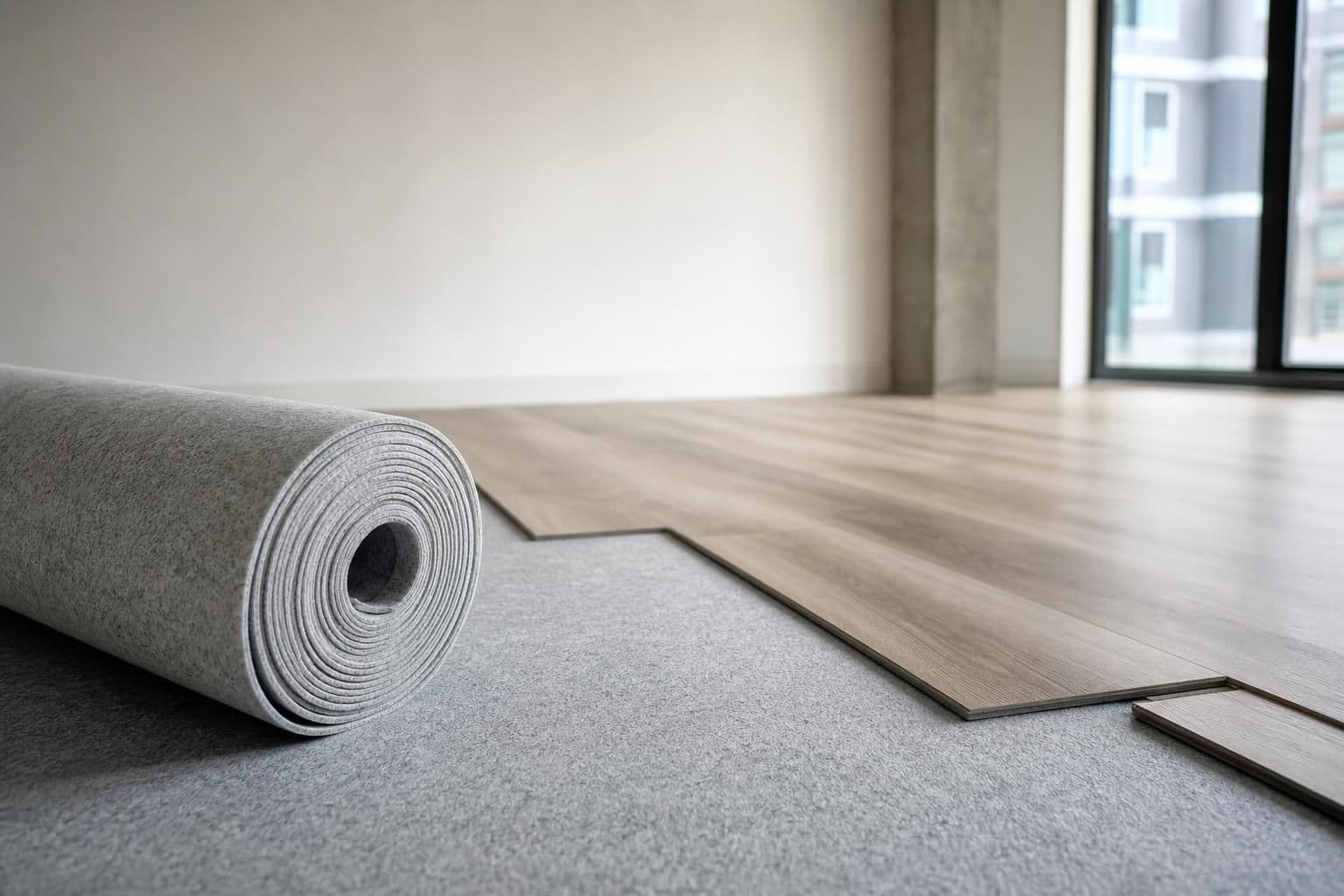
Sound-rated underlayment is a thin acoustic layer installed beneath vinyl plank flooring to reduce impact noise — footsteps, dropped items, chair legs — transmitted through a concrete slab to the unit below. Most Oahu condo AOAO boards require underlayment with a documented IIC (Impact Insulation Class) rating of 50 or higher before they'll approve a flooring replacement over concrete. Without that paperwork, a board can reject the installation even after the floor is already down.
Key takeaways
- Condo boards typically require IIC 50+ (sometimes 60+ for older buildings), documented by a manufacturer test report, not just a marketing claim.
- Underlayment material alone usually runs $0.50–$2.50 per sq ft on Oahu, layered under the vinyl plank material cost itself.
- Get the underlayment's IIC/STC spec sheet before you buy flooring — some vinyl planks come with attached pad that doesn't meet condo minimums on its own.
What IIC and STC Ratings Actually Measure
IIC (Impact Insulation Class) rates how well a floor assembly blocks impact noise — the thump of a footstep or a dropped shoe — from passing through to the unit below. STC (Sound Transmission Class) rates airborne noise instead, like voices or music. Condo house rules almost always focus on IIC because impact noise from hard-surface flooring is the most common complaint neighbors file. These ratings are measured using standardized lab test methods maintained by ASTM International, which publishes the test procedures manufacturers use to generate the numbers printed on underlayment spec sheets.
A rating of IIC 50 is roughly the baseline most U.S. building codes treat as acceptable separation between units, a threshold referenced in guidance from acoustics researchers and building-science organizations like the Acoustical Society of America. Many Oahu high-rises write their own house rules stricter than that baseline, since concrete towers built decades ago often transmit sound more readily than modern construction.
Why This Matters More on Concrete Slab Construction
Almost every Oahu condo sits on a concrete slab, not a wood-frame subfloor. Concrete transmits impact noise efficiently, which is exactly why boards care so much about what goes under a vinyl plank floor. A slab with no cushioning layer turns every footstep into a hard, resonant knock heard clearly one floor down.
This is different from a single-family home, where the subfloor, joists, and insulation already absorb some sound before it reaches anyone. In a condo tower, the floor assembly a board approves today becomes the ceiling experience for the unit below for years. That's the practical reason AOAO paperwork exists — it's not bureaucracy for its own sake, it's a genuine noise-control requirement building managers get held to.
Typical Underlayment Types and What They Cost
On Oahu, sound-rated underlayment for vinyl plank generally falls into a few categories:
- Attached pad (integrated underlayment): Some rigid-core vinyl planks come with a thin foam or cork layer fused to the back. This is often included in the plank price, but not all attached pads hit IIC 50 — check the spec sheet before assuming it qualifies.
- Standalone foam underlayment: Typically $0.50–$1.00 per sq ft in material cost, adequate for many buildings' minimum requirements.
- Cork or rubber underlayment: Denser materials that often reach higher IIC ratings, typically $1.00–$2.50 per sq ft in material cost, more common in older buildings with stricter house rules.
These are typical Oahu material ranges only — labor, moisture barrier needs, and the specific brand all move the number, and a firm figure only comes from a quote against your actual square footage. If you're pricing out the full floor rather than just the underlayment, a vinyl plank flooring cost guide breaks down how material, underlayment, and installation typically stack per square foot.
What AOAO Boards Actually Ask to See
Boards don't take a homeowner's word that a product is "sound rated." Most request:
- The underlayment manufacturer's spec sheet showing a tested IIC number (and sometimes STC).
- Confirmation of which vinyl plank product is being installed over it, since the combined assembly — not the underlayment alone — is what gets rated in the manufacturer's test.
- A description of installation method (floating, glued, or adhered) since that can affect the final rating.
- Sometimes a licensed contractor's name for the work, separate from the material order.
Submitting a spec sheet that doesn't match the actual product installed is one of the more common reasons approvals get delayed or flooring gets flagged during a post-installation walkthrough. Getting the paperwork right before the board meeting, rather than after installers are already scheduled, avoids the most common holdup in condo remodels.
Getting the Right Assembly for Your Building
The safest approach is to confirm your building's specific IIC minimum from the house rules or property manager before choosing a product, then match underlayment and plank together as a tested assembly rather than mixing components and hoping they clear the bar. A single point of contact who already has both the vinyl plank and underlayment specs on hand — rather than sourcing them from two separate vendors — makes it easier to hand a board exactly what it's asking for the first time.
Frequently Asked Questions
Q: What IIC rating do condo boards usually require for vinyl plank flooring?
Most Oahu AOAO house rules set a minimum of IIC 50, though some older buildings require IIC 55 or 60. Always check your specific building's house rules rather than assuming a standard number applies.
Q: Does vinyl plank flooring need underlayment even if it already has an attached pad?
Not always adequate on its own — attached pads vary widely in thickness and material, and not every one meets a condo's IIC minimum. Check the manufacturer's tested IIC rating for that specific product before assuming it satisfies board requirements.
Q: Can I install vinyl flooring in a condo without submitting sound rating paperwork?
Technically you can install it, but skipping AOAO paperwork risks a rejected application, a stop-work order, or being required to remove and redo the floor later. It's far cheaper to get the spec sheet approved before installation begins.
Q: How much does sound-rated underlayment add to a flooring project on Oahu?
Material costs typically run $0.50–$2.50 per sq ft depending on the underlayment type, on top of the vinyl plank material itself. A free quote based on your actual square footage is the only way to get an exact number for your unit.
Q: Is IIC the same as STC?
No — IIC measures impact noise like footsteps, while STC measures airborne noise like voices or music. Condo boards focused on hard-surface flooring almost always care about IIC specifically.