Flooring Ideas for Oahu Homes: A Room-by-Room Guide
Key takeaway
Good flooring ideas for Oahu start with climate and building type, not color trends — humidity, salt air, and condo noise rules eliminate some materials before style ever enters the conversation. Waterproof vinyl plank handles the islands' moisture and temperature swings better than hardwood or laminate in most rooms, while tile and engineered wood still have a place in specific layouts. The right choice depends on which room, which floor of the building, and what your association requires.
Key takeaways
- Waterproof rigid-core vinyl plank is the most forgiving choice for Oahu's humidity and salt air across living areas, bedrooms, and condos.
- Condo and high-rise floors usually need an IIC/STC sound rating before an AOAO board will approve them — check this before you fall in love with a look.
- Ground-floor and older single-wall homes often need subfloor leveling or moisture testing first, which changes material options more than style preference does.
Why Climate Narrows the List First
Hawaii's year-round humidity and frequent trade-wind moisture put real stress on flooring materials that aren't rated for it. Solid hardwood expands and contracts with seasonal humidity swings, which is why mainland installers often warn against it in tropical climates, and why many Oahu homes that have it eventually show gapping or cupping near windows and lanai doors. The National Oceanic and Atmospheric Administration tracks Hawaii's consistently high relative humidity, which is the underlying reason waterproof, dimensionally stable materials outperform traditional wood here.
Vinyl plank with a rigid core doesn't absorb moisture the way wood or laminate can, which is why it dominates recommendations for Oahu flooring ideas across almost every room type. For a side-by-side on how it compares to tile in wet-prone spaces, see this breakdown of vinyl plank versus tile for Hawaii homes.
Living Room and Common Areas
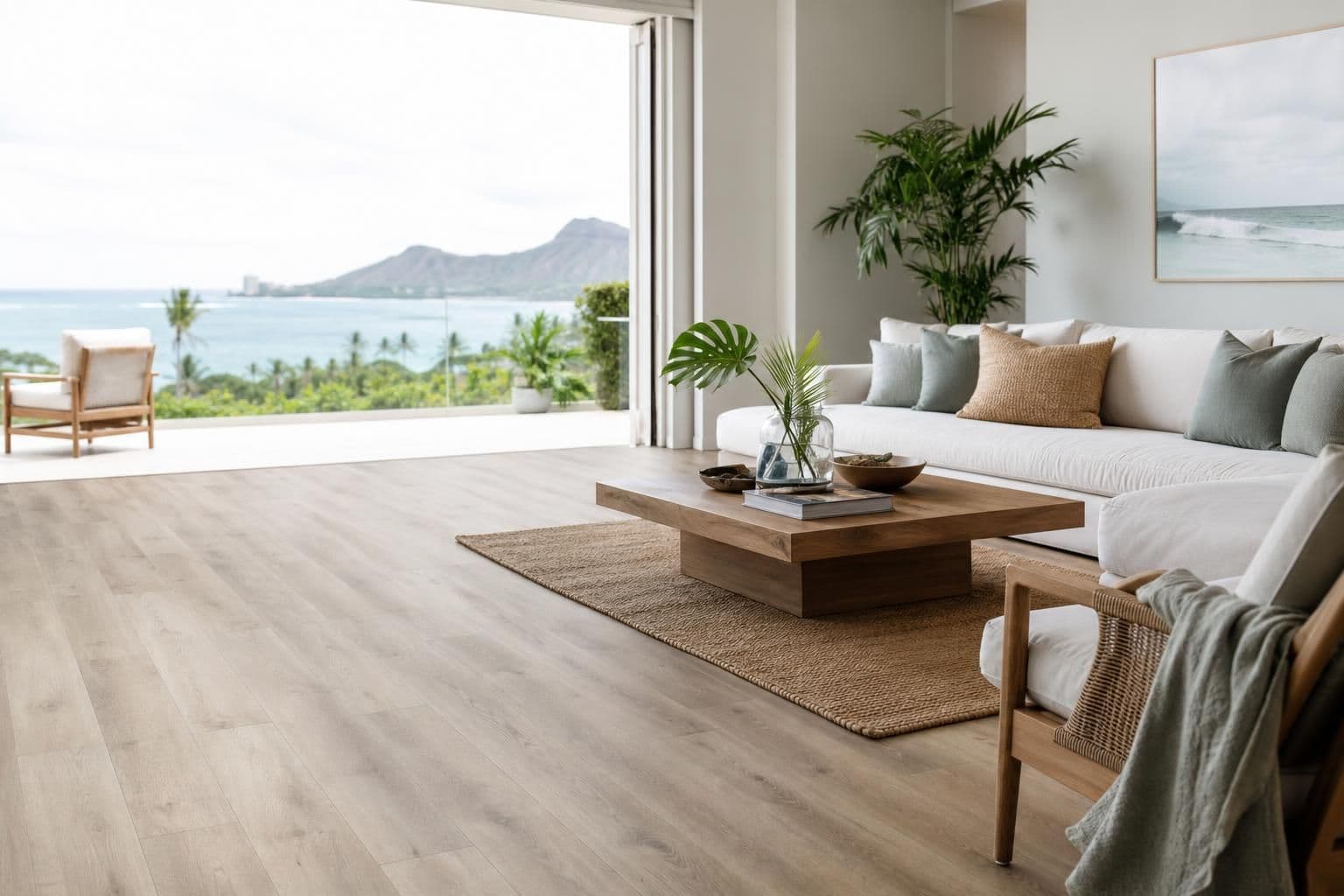
Open living spaces that flow into lanais or kitchens benefit from a single continuous material, which visually expands the room and avoids transition strips that trap sand and moisture. Wide-plank vinyl in warm, mid-tone wood tones reads larger in small Oahu floor plans and hides the fine coral dust that blows in through open doors. If you're deciding between pattern directions, plank widths, or how a color choice affects perceived room size, a dedicated guide on flooring ideas for living rooms on Oahu walks through layout-specific choices, and a separate piece on choosing flooring color to make a room look bigger covers the visual mechanics in more depth.
Entryways and Lanai Transitions
Entry floors take the brunt of sand, sunscreen, and rinsed-off slippers, so the material needs to resist scratching and standing water without needing a transition strip at every doorway. A textured, slip-resistant vinyl plank or tile with a matte finish handles grit better than high-gloss options, which show scuffs fast under daily foot traffic. Full guidance on wear layers, texture, and slip resistance for this specific zone is in the article on the best flooring for an entryway.
Condos and AOAO-Regulated Floors
High-rise and mid-rise condo associations almost always require a minimum Impact Insulation Class (IIC) or Sound Transmission Class (STC) rating before approving new flooring, because the goal is reducing footstep noise for the unit below. This is a building-code and association concern, not a style preference — the International Code Council publishes the acoustic standards many AOAO documents reference. Vinyl plank with an attached or underlayment-pad sound rating tends to clear these requirements more easily than tile or solid hardwood. Getting the paperwork right the first time avoids a rejected application and a second round of board review, which is where a condo-specific spec sheet saves real time.
Home Offices and Home Gyms
Rooms with a dedicated function need flooring matched to that use rather than general house-wide flooring. A home office benefits from a quieter, slightly cushioned vinyl that reduces chair-roll noise and resists caster wear, covered in detail in the best flooring for a home office. A home gym needs impact resistance and grip under both bare feet and equipment — specific product and thickness guidance is in the best flooring for a home gym. Both rooms are good candidates for a different material or thickness than the rest of the house, since they're self-contained and don't need to flow visually into open living areas.
Kitchens: Flooring and Cabinets Together
Kitchen flooring ideas on Oahu usually get decided alongside cabinet and countertop choices, since all three surfaces need to read as one palette in an open layout. Waterproof vinyl plank or tile under cabinetry protects against dishwasher and sink leaks better than laminate, and a lighter floor tone against darker cabinets is a common way to keep a galley-style Oahu kitchen from feeling closed in. For cabinet door styles, storage layouts, and finishes that pair well with local light and humidity, see kitchen cabinet ideas that work for Oahu homes.
What Actually Changes the Cost of These Ideas
None of these choices price out the same way from house to house, because the labor and prep side of an Oahu flooring project varies more than the material itself:
- Subfloor condition — many older single-wall Oahu homes need leveling compound or moisture testing before new flooring goes down, which the U.S. Environmental Protection Agency notes is critical wherever trapped moisture under flooring can support mold growth.
- Building access — Honolulu high-rises with elevator reservations or loading-dock windows add scheduling and material-handling time that a single-family home doesn't have.
- AOAO documentation — sound-rating specs and board-approval paperwork take time to prepare correctly, especially on a tight condo renovation timeline.
- Tear-out and disposal — removing existing tile, carpet, or hardwood adds labor and haul-away costs that vary by how many layers are already down.
- Stairs and furniture moving — multi-level homes and fully furnished rooms both add time that flat, empty single-story spaces don't require.
- Material tier and freight — specialty or special-order products shipped to Oahu carry freight timing that standard in-stock vinyl doesn't.
Because every one of these factors is specific to the property, the only accurate number comes from measuring the actual space and conditions — a flat per-square-foot figure quoted without seeing the job is a guess, not a quote.
Frequently Asked Questions
Q: What is the most popular flooring idea for Oahu homes right now?
Wide-plank, waterproof rigid-core vinyl in warm mid-tone wood colors is the most commonly chosen option across Oahu living rooms, bedrooms, and condos because it resists humidity and handles everyday sand and moisture without special maintenance.
Q: Can I use hardwood flooring in a Hawaii home?
Solid hardwood is possible but risky in Hawaii's humidity, since it expands and contracts with moisture swings more than engineered or vinyl alternatives; engineered wood or waterproof vinyl plank typically perform more consistently island-wide.
Q: Do condo associations on Oahu require special flooring?
Most Oahu AOAOs require a minimum sound rating, often expressed as an IIC or STC number, before approving new flooring in a unit above another resident, so check your association's documents before choosing a material.
Q: Should flooring match throughout an open-concept home?
Running one consistent material through connected living, dining, and kitchen areas generally makes small or mid-size Oahu homes feel larger and avoids visible transition strips, though separate-use rooms like a gym or office can reasonably use a different material.
Q: How do I know what flooring will actually work for my specific house?
Humidity resistance, subfloor condition, and building type (single-family versus condo) narrow the material list, but confirming fit requires measuring the actual room and checking any AOAO requirements rather than relying on general guidelines alone.