What Is the Best Flooring for an Entryway?
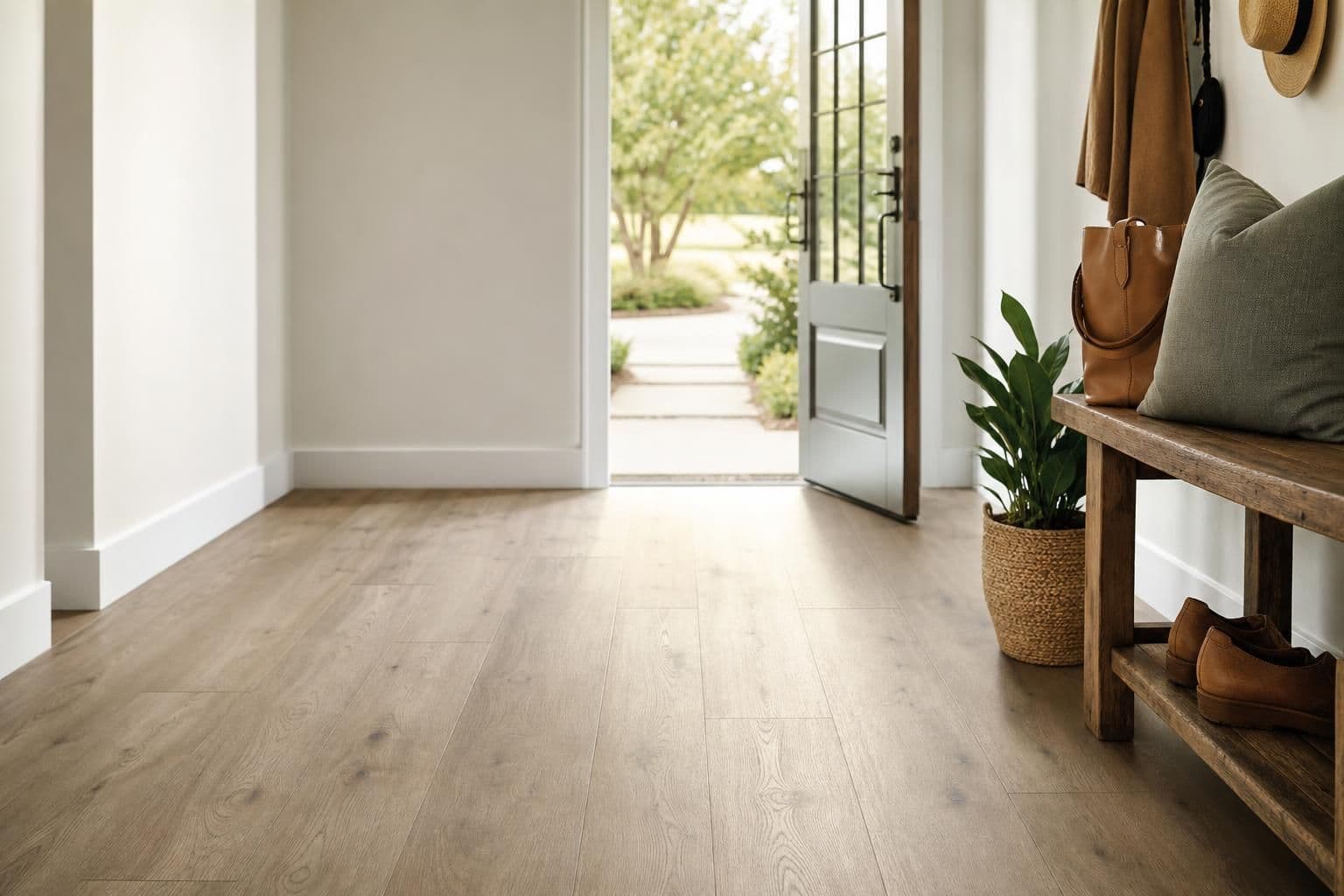
Key takeaway
For most Oahu homes, the best entryway flooring is a rigid-core luxury vinyl plank or a matte-finish porcelain tile — both shed sand and moisture without swelling, resist scratching from slippers and rubber slippahs, and clean up with a mop instead of a refinish. The right pick depends on how much direct weather the entry takes, whether it sits over concrete slab or wood subfloor, and whether it needs to visually transition into an adjoining living room or hallway. There is no single "best" material for every entry — there's a best material for your entry's exposure and traffic.
Key takeaways
- Rigid-core vinyl plank and matte porcelain tile both resist sand, salt air, and moisture better than hardwood or laminate at a home's entry point.
- Slip resistance matters more at an entryway than anywhere else in the house — choose a matte or textured finish, not high-gloss.
- A transition strip at the entry threshold lets you use a tougher material there while keeping a different floor in the rest of the house.
What an Oahu Entryway Actually Has to Survive
Entry flooring near a front door or lanai slider on Oahu deals with more than foot traffic. Sand and grit act like sandpaper under shoes, tracked-in rain adds standing moisture, and salt air corrodes weaker finishes over time. Homes near the coast in Kailua or the North Shore see this faster than inland properties in Mililani or Kapolei, but every entry on the island gets some version of it. Flooring here needs to handle repeated wet-dry cycling without the planks or grout lines lifting.
Direct UV exposure through a glass door or open lanai is a separate issue: it fades color and can make some vinyl and laminate wear layers brittle years before the rest of the house shows wear. An entry facing west or south gets more of this than one facing a covered carport.
Comparing Entryway Flooring Options
| Material | Moisture & sand tolerance | Slip resistance (matte finish) | Typical upkeep |
|---|---|---|---|
| Rigid-core vinyl plank | High — waterproof core, sand wipes off | Good | Sweep and damp mop |
| Matte porcelain tile | High — nonporous, doesn't swell | Very good | Mop; grout needs periodic sealing |
| Natural stone tile | Moderate — porous unless sealed | Good when honed | Requires resealing over time |
| Engineered hardwood | Low-moderate — can cup at door thresholds | Fair | Refinishing eventually needed |
| Laminate | Low — swells if water sits at the seams | Fair | Cannot be wet-mopped heavily |
Solid hardwood is left off this table on purpose — most manufacturers and installers don't recommend it directly at an exterior threshold on a humid island climate, because repeated wetting at the door is exactly the condition solid wood handles worst.
Why Vinyl Plank Usually Wins at the Front Door
Rigid-core vinyl plank flooring is waterproof through the plank, not just the surface finish, so a puddle from a wet umbrella or dripping surfboard doesn't need to be wiped up within minutes to prevent damage. It also installs as a floating floor over most subfloors, including concrete slab, which describes a large share of Oahu ground-floor entries — see installing vinyl plank over concrete for how that works on slab specifically. Because it comes in wide plank and stone-look tile formats, it's also one of the easier materials to run continuously from the entry into an adjoining living area, avoiding a visible seam right inside the front door.
The tradeoff is underlayment choice at doorways: a plush underlayment that feels great in a bedroom can make a rigid-core plank feel spongy right at a threshold where people step down harder from an exterior surface. If you're layering vinyl over an existing floor near an entry, checking the right underlayment for vinyl plank before ordering avoids a floor that feels different room to room.
When Tile Is the Better Call
Matte porcelain tile earns its place at entries that take heavier direct weather — a lanai-facing slider, a mudroom off a garage, or a rental property entry with high foot turnover. Because it's fired, nonporous, and doesn't rely on a wear layer the way vinyl does, it holds up to years of grit without visible scuffing. The tradeoff is a colder, harder underfoot feel and grout lines that need periodic sealing to stay stain-resistant, according to guidance from the National Wood Flooring Association and general porcelain tile industry care standards. Tile is also less forgiving to walk on barefoot straight from a cold entry into the rest of a home, which some households weigh against its durability.
Slip Resistance Matters More Here Than Anywhere Else
Falls are a leading cause of home injury according to the U.S. Consumer Product Safety Commission, and an entryway is where wet feet, sandy soles, and a hard floor surface meet most often. High-gloss finishes look sharp in a showroom but become noticeably more slippery once wet — a matte or low-sheen finish with texture in the wear layer is the safer everyday choice at a front door. ASTM International maintains slip-resistance testing standards that flooring manufacturers reference on product spec sheets; asking to see that rating on a sample is a reasonable thing to request before you commit to a material for an entry.
Managing the Transition Into the Rest of the House
Most Oahu entries aren't a sealed-off room — they open directly into a living room, hallway, or kitchen. A transition strip or reducer at the threshold lets you run a tougher, more water-resistant material at the door itself while keeping a different plank color or a softer laminate in the adjoining space. This also solves a height-mismatch problem: tile is often thicker than vinyl plank, and a properly installed transition keeps that difference from becoming a trip hazard.
For condo entries specifically, any change in flooring material or underlayment at a shared-corridor threshold can fall under building sound-rating rules. If you're in a high-rise, it's worth reviewing what boards typically require before ordering material — Oahu Flooring Quote writes AOAO-ready specs for condo owners as part of a quote, which is worth checking early rather than after material is purchased.
Touch the Sample Before You Decide
Photos and product renderings don't show you how a matte finish actually feels underfoot when damp, or how deep a texture is once sand settles into it. Checking a physical sample before buying — including wetting a corner of it — tells you more about entryway performance than any spec sheet. Once a material is installed and grout or seams are set, swapping it is a full redo, not an adjustment.
The only way to know what an entryway floor will actually cost on your project is a quote built against your own square footage, subfloor condition, and how far the material needs to run into adjoining rooms — a free quote answers that within 24 hours without guessing from a generic price list.
Frequently Asked Questions
Q: Is vinyl plank or tile better for a front entryway?
Both handle sand and moisture well; vinyl plank is easier to run continuously into adjoining rooms and feels warmer underfoot, while matte porcelain tile holds up better under heavier direct weather exposure like an uncovered lanai entry.
Q: Can I put hardwood flooring in an entryway on Oahu?
Solid hardwood is generally not recommended directly at an exterior threshold in a humid coastal climate, since repeated wetting from tracked-in rain is the condition it handles worst; engineered hardwood with a protected entry performs somewhat better.
Q: What flooring finish is safest for a wet entryway?
A matte or low-sheen, textured finish is safer than high-gloss, since gloss finishes become noticeably slicker once wet; manufacturers reference slip-resistance testing standards from bodies like ASTM International on product spec sheets.
Q: Does entryway flooring need to match the rest of the house?
No — a transition strip at the threshold lets you use a tougher, more water-resistant material at the entry while keeping a different floor in adjoining rooms, as long as the height difference is properly transitioned.
Q: Do condo entryways have special flooring rules on Oahu?
Many AOAO boards set sound-rating or underlayment requirements for flooring changes at shared corridors, so it's worth confirming those specs before ordering material for a condo entry.