Vinyl Plank Flooring Cost on Oahu: What Affects the Price
Key takeaway
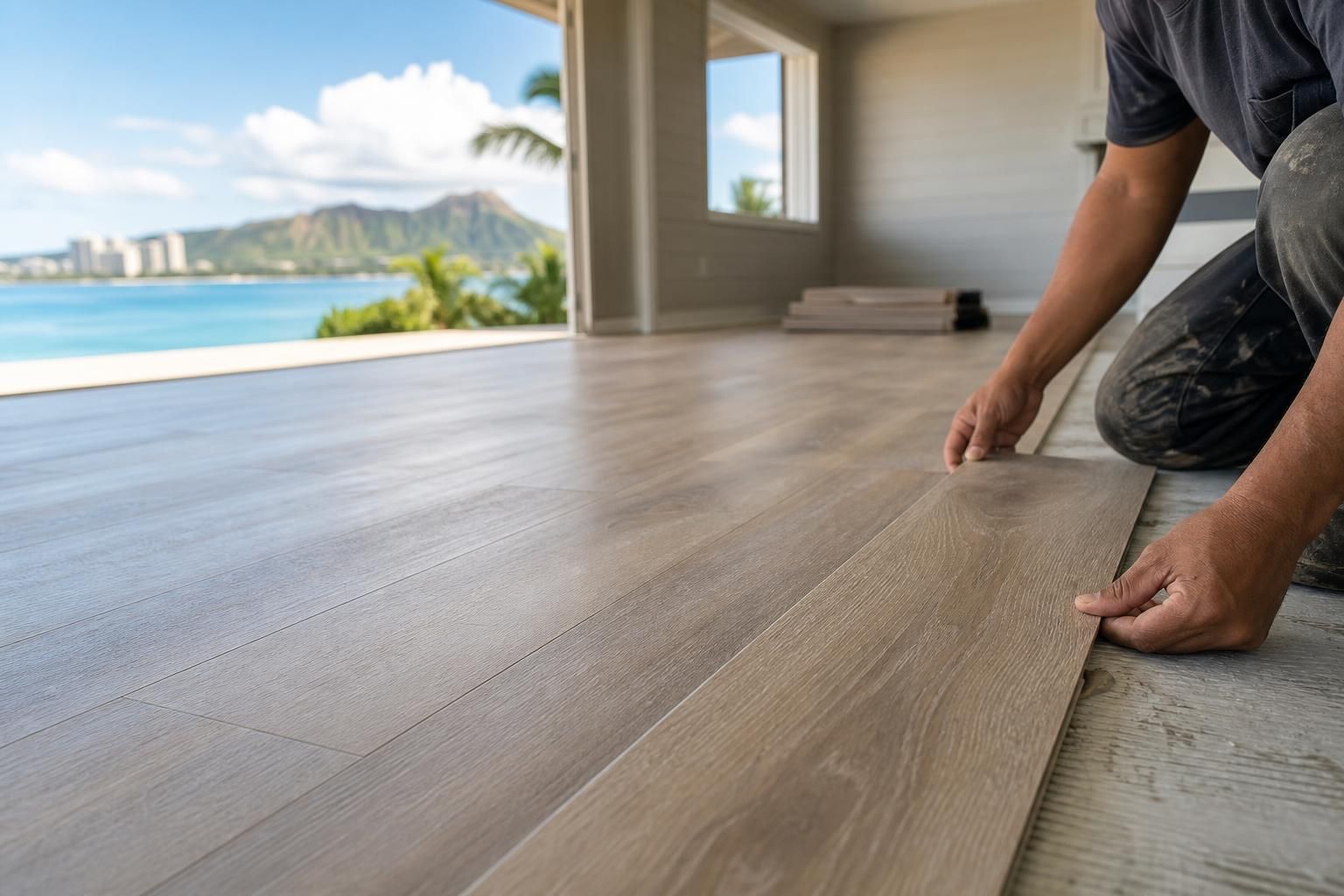
Vinyl plank flooring costs on Oahu depend on plank thickness, wear layer quality, and how much subfloor prep your home needs — not on a single national average. Older homes, condos on concrete slabs, units needing moisture barriers, and jobs with tricky access (stairs, elevators, tight parking for material delivery) all shift the price up or down. Because humidity, subfloor condition, and building requirements vary so much by neighborhood and building, the only way to get a firm number is to measure your actual square footage.
Key takeaways
- Installed cost scales with wear layer thickness, plank thickness, and subfloor prep — not just the flooring brand.
- Older homes, condos on concrete slabs, and units needing moisture barriers cost more due to added subfloor work.
- The only way to get an exact number is a quote based on your real square footage, not a general estimate.
What Drives Vinyl Plank Flooring Cost on Oahu
Cost swings based on a few concrete factors, not just the flooring brand.
- Wear layer thickness. Thin wear layers (6–8 mil) cost less but wear faster in high-traffic areers; 12–20 mil wear layers cost more and hold up better to sand, sun exposure, and pet claws.
- Plank thickness (mm). Rigid core planks in the 5mm–7mm range generally cost more than thinner glue-down vinyl but feel more solid underfoot and hide minor subfloor imperfections.
- Subfloor prep. Older Oahu homes with uneven concrete, moisture issues, or old tile that needs removal add labor before a single plank goes down.
- Underlayment and moisture barrier. Ground-floor units and homes near the coast often need a vapor barrier, which adds material and labor.
- Square footage and layout complexity. Long straight runs cost less per square foot than rooms with lots of closets, angles, or transitions between flooring types.
- Access and logistics. Stairs, elevator reservations and loading-dock windows in Honolulu high-rises, and furniture that has to be moved out and back all add time beyond the flooring itself.
- Tear-out and disposal. Removing old tile, carpet, or glue-down vinyl adds a step most estimates from photos alone miss.
- Special orders. Less common colors or wide-plank styles sometimes ship from the mainland, which adds island freight and lead time.
What Changes the Price by Project Type
| Project type | What typically adds cost | Notes |
|---|---|---|
| Standard room, existing flat subfloor | Minimal — straightforward install | Fastest turnaround, least prep |
| Whole home / multiple rooms | Furniture moving, transitions between rooms | Larger jobs can gain some labor efficiency per room |
| Condo unit (concrete slab) | Leveling, moisture barrier, elevator/loading-dock scheduling | AOAO sound-rating requirements can dictate underlayment choice |
| Older home with uneven or damaged subfloor | Leveling compound, old material tear-out | Prep work adds labor hours before install starts |
| Material only, no installation | None from labor, but buyer arranges tear-out and install | Buyer takes on subfloor prep and warranty risk |
These are the factors that move a job up or down, not a fixed scenario — a lanai-adjacent room, a unit with existing glue residue, or a request for a herringbone-pattern layout can all add steps beyond a typical job. A quote based on your actual square footage and site conditions is the only way to get an exact number.
Why Humidity and Climate Affect Cost (and Material Choice)
Hawaii's humidity is a real factor in flooring decisions, not just marketing language. High ambient moisture and temperature swings can cause some flooring materials to expand, contract, or warp over time if they aren't rated for humid environments. Vinyl plank flooring is generally more moisture-tolerant than solid hardwood, which is one reason it's a common choice in island homes and rental units. The U.S. Environmental Protection Agency notes that indoor humidity above roughly 60% creates conditions where moisture-related material problems become more likely, which is relevant for ground-floor units and homes without strong AC.
That moisture tolerance is also why vapor barriers and proper acclimation of planks before installation matter more here than in drier climates — skipping that step is a common reason installations fail early, and a common reason simple jobs turn into jobs with added prep.
Condo Owners: AOAO Approval Adds a Paperwork Step, Not Necessarily Cost
Many Oahu condo associations (AOAOs) require flooring specs — material type, sound rating (IIC), and sometimes underlayment details — before approving a flooring change. This doesn't usually change the flooring material itself, but it does add lead time if your paperwork isn't ready when you submit to the board, and it can steer you toward a thicker sound-rated underlayment that adds a small amount of material cost. Vinyl plank with a sound-rated underlayment is a common choice for condo approval because manufacturers publish IIC ratings that boards can review.
If you're a condo owner, ask any supplier or installer whether they can provide board-ready specs. Oahu Flooring Quote writes these specs for AOAO board approval as part of its process, which is worth confirming with any provider before you commit.
Vinyl Plank vs. Other Flooring: What Actually Drives the Difference
| Flooring type | Durability | Humidity tolerance | Install complexity |
|---|---|---|---|
| Vinyl plank (LVP/SPC) | High — resists dents and scratches with adequate wear layer | High — engineered for moisture resistance | Low to moderate — floats or glues down, forgiving of minor subfloor flaws |
| Laminate | Moderate — wear layer less durable long-term | Moderate — can swell if exposed to standing water | Low — similar floating install to vinyl plank |
| Solid hardwood | High if maintained, but sensitive to moisture damage | Low — prone to warping in high humidity | High — requires acclimation, sanding, and finishing |
| Engineered hardwood | High | Moderate — better than solid wood, still moisture-sensitive | Moderate — easier than solid wood, still needs skilled install |
| Ceramic/porcelain tile | Very high — resistant to scratches and moisture | High — but harder, colder underfoot | High — requires substrate prep, grout curing time |
Vinyl plank tends to sit in the middle of the complexity range while offering the best combination of moisture tolerance and softer underfoot feel, which is part of why it's popular for Oahu kitchens, bathrooms, and rental units.
How to Get an Accurate Number for Your Project
A list of cost drivers is useful for understanding what you're paying for, but actual quotes depend on your home's layout, existing flooring, and access (stairs, elevators, parking for material delivery). The only reliable way to get a real number is to have someone measure your actual square footage rather than estimate from a floor plan. Bringing or requesting samples you can physically touch also matters — color and texture read differently under LED showroom lighting versus your own natural light, and vinyl plank samples are inexpensive for a supplier to provide before you commit to a full order.
Frequently Asked Questions
Q: How much does vinyl plank flooring cost per square foot on Oahu?
Cost depends on subfloor condition, plank thickness, wear layer quality, and square footage — there's no single figure that applies to every home. The only way to get an exact number is a free quote measured against your actual square footage.
Q: Is vinyl plank flooring good for humid climates like Hawaii?
Yes, vinyl plank is generally more moisture-tolerant than solid hardwood, which is why it's common in island homes, condos, and rental units. Proper acclimation and, in some cases, a vapor barrier still matter for long-term performance.
Q: Do Oahu condo associations require special approval for vinyl plank flooring?
Many AOAOs require flooring specs, including sound (IIC) ratings, before approving a flooring change. This is a paperwork step that can add lead time and may steer underlayment choice, rather than something that changes the flooring material itself.
Q: What makes vinyl plank flooring cost more in some Oahu homes than others?
Subfloor prep is the biggest variable — uneven concrete, old tile removal, or moisture barrier needs all add labor hours beyond the material itself. Layout complexity, like closets and transitions, plus access issues like stairs or elevator scheduling in high-rises, also affect labor time.
Q: Is it cheaper to buy vinyl plank material only and hire my own installer?
Buying material only can lower your total spend if you already have a trusted installer, since you're only paying for the flooring itself. However, without professional installation, warranty coverage and subfloor prep quality can vary, which can add cost later if problems surface.