How to Hire a Flooring Installer on Oahu
Key takeaway
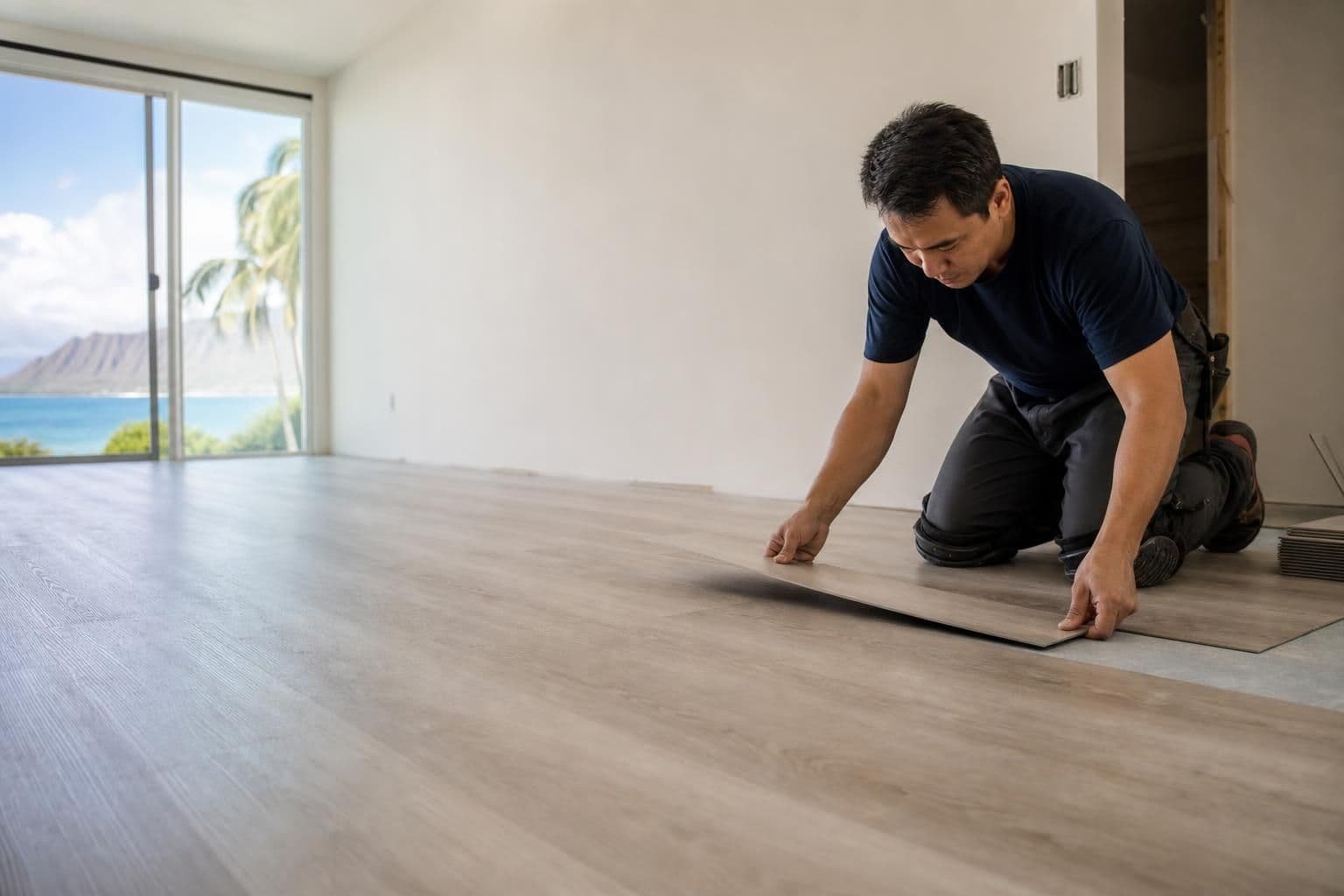
To hire a flooring installer on Oahu, verify the contractor's license through the state's Contractor License Board, get a written quote priced to your actual square footage rather than a phone estimate, and confirm they've handled your specific material (vinyl plank, tile, or hardwood) in Hawaii's humidity before signing anything. A licensed installer should also know whether your building requires AOAO board approval if you own a condo. The right installer treats those three steps as routine, not as red tape.
Key takeaways
- Confirm the installer holds an active Hawaii contractor license before any deposit changes hands.
- Insist on a quote based on measured square footage, not a rough phone or online estimate.
- If you're in a condo, ask about AOAO paperwork before you pick a material, not after.
Verify the License and Insurance Before You Sign Anything
Hawaii requires anyone performing construction work beyond minor, incidental repairs to hold a license issued through the state's Contractor License Board, and that license is searchable by name or license number online. A legitimate flooring installer will give you their license number without hesitation. If someone hesitates, quotes cash-only work, or can't produce proof of liability insurance, that's a reason to keep looking, not a minor inconvenience to work around.
You can check license status directly through the Hawaii Department of Commerce and Consumer Affairs before scheduling any in-home visit. This takes a few minutes and catches most problems before they become expensive ones.
Get Quotes Based on Actual Square Footage, Not Guesses
A quote that's built from a photo or a rough room count is a guess dressed up as a number. Installers who measure the actual footprint — including closets, transitions, and waste factor for cuts — give you a figure that holds up on install day instead of growing once material shows up short or the crew finds an uneven subfloor under the old flooring. If you want a sense of how pricing is typically built out on this island, this guide to getting an accurate flooring quote walks through what measurement-based pricing actually includes.
Ask for the quote in writing, broken into material line items and labor line items separately. That split lets you compare bids apples-to-apples instead of guessing what's bundled together, and it makes it easy to spot which bid accounts for extras like tear-out and disposal of the old flooring, moving furniture out of the room, or carrying material up stairs in a walk-up building.
Ask About Moisture and Underlayment for Oahu's Climate
Honolulu's average relative humidity sits in the 60–70% range most of the year, and salt air adds a corrosion factor that mainland installation habits don't account for. An installer who's worked on Oahu should ask about your building's slab moisture, your unit's proximity to the coast, and whether you're above a parking garage or on grade — because the underlayment and acclimation period change based on those answers, and so does the labor involved in prepping the subfloor first.
For high-rise or coastal condos specifically, sound-rated and moisture-resistant underlayment often isn't optional; it's a building requirement, and meeting a stricter IIC rating usually means a thicker, more involved underlayment install. This breakdown of underlayment for condo vinyl flooring covers what boards typically ask for. The EPA's guidance on moisture and indoor air quality is a useful general reference if you want to understand why humid climates need different flooring prep than dry ones.
Condo Owners: Confirm AOAO Approval Steps Early
If you live in a condo, your installer needs to know your building's AOAO rules before demo day, not during it. Most Oahu associations require submitted specs — sound rating, underlayment type, sometimes manufacturer documentation — before flooring work is approved, and boards can take weeks to review a submission. Asking a prospective installer "have you submitted paperwork to an AOAO board before?" is a fair, direct screening question, and a vague answer is worth noting.
An installer experienced with Oahu condos should also know your building's elevator reservation rules and loading-dock hours, since a high-rise with a single service elevator and a tight delivery window will need more scheduling coordination than a ground-floor unit — and that affects how a job gets staged, not just how it's approved.
What Drives Installation Costs on Oahu
There's no single number that applies to every room, every building, or every material — the real cost of a flooring job moves with several factors specific to this island. Instead of a price range, here's what actually separates a straightforward job from an expensive one:
| Material | Durability | Moisture Tolerance | Install Complexity | Typical Lead Time |
|---|---|---|---|---|
| Vinyl plank | High; handles daily wear well | Excellent; a common choice for coastal or ground-floor units | Low to moderate; floats over most subfloors with minimal prep | Usually in stock or short order |
| Tile | Very high; long service life | Excellent; unaffected by humidity | Higher; layout complexity, cuts, and leveling add labor | Longer for imported or special-order tile |
| Engineered or solid hardwood | Moderate to high depending on finish | Lower; needs careful acclimation and humidity control | Highest; acclimation time, underlayment, and upper-floor material handling all add steps | Often longest, especially for special-order species or finishes |
A few Oahu-specific factors move the labor and material side of any of these:
- Subfloor condition — older homes and condos often need leveling or moisture mitigation before new flooring goes down, which adds time regardless of material.
- Building access — high-rises with limited elevator reservations or restricted loading-dock hours take longer to load in and stage than a ground-floor home.
- AOAO requirements — sound-rated underlayment mandated by a condo board adds a material and labor step that a single-family home wouldn't need.
- Material tier — a builder-grade vinyl and a premium wide-plank hardwood require very different handling, waste factor, and finishing steps.
- Stairs and furniture moving — carrying material up flights or clearing rooms before install adds labor hours.
- Tear-out and disposal — removing old flooring, especially tile or glued-down material, is its own line item before install even starts.
- Island freight — special-order material not stocked locally has to ship in, which affects both lead time and cost.
A full breakdown of what drives labor pricing in this market is covered in this flooring installation cost guide for Honolulu, and vinyl-specific considerations are covered separately in this vinyl plank guide. The only way to get an exact number for your project is a quote measured against your actual space — everything above explains what moves that number, not what it will be.
Red Flags When Vetting an Installer
Watch for these patterns before you commit to a contractor:
- Pressure to sign same-day or a "today-only" discount
- Refusal to put the quote in writing with a material/labor breakdown
- No physical showroom or samples you can see and touch before ordering
- Vague answers about license number or insurance coverage
- No mention of acclimation time for the material before installation begins
None of these alone is automatically disqualifying, but two or more together is a reason to get a second quote.
Questions to Ask Before Hiring
Bring this short list to any consultation or phone call:
- What's your Hawaii contractor license number, and can I verify it?
- Is this quote based on measured square footage, or an estimate?
- Have you installed this material in condos before, and do you provide AOAO-ready specs?
- What underlayment do you recommend for this building, and why?
- What's the acclimation time for this material before install day?
An installer who answers all five without deflecting is worth moving forward with. If you're still comparing materials before you even get to installer vetting, resources on quartz countertops and custom cabinets can help narrow down what you're pricing in the first place, and a free quote measured to your actual square footage is a reasonable next step once you know what you're comparing bids against.
Frequently Asked Questions
Q: Do I need a licensed contractor for flooring installation on Oahu?
Yes, for any job beyond minor, incidental work, Hawaii law requires the work be performed under a licensed contractor. You can confirm a contractor's license status through the state's Contractor License Board before hiring.
Q: How much does it cost to hire someone to install vinyl plank flooring on Oahu?
There's no flat figure that applies across the board — the installed cost depends on subfloor condition, building access, whether AOAO-required underlayment applies, and the material tier you choose. A measured quote against your unit's actual footprint is the only way to get an exact number for a specific job.
Q: How long does condo flooring approval take before installation can start?
Timelines vary by association, but board review of flooring specs commonly takes several weeks, which is why it's worth submitting paperwork before ordering material. Ask your installer whether they can prepare AOAO-ready specs as part of the quote process.
Q: Should I get more than one flooring quote before hiring?
Yes — comparing at least two quotes that are both based on actual measured square footage, rather than rough estimates, is the most reliable way to spot pricing outliers or missing scope. A written material/labor breakdown makes that comparison straightforward.
Q: What's the difference between buying material only and hiring a full installer?
Buying material only means you handle installation yourself or with your own contractor, while a full-service arrangement includes connecting you with a licensed installer for the whole job. Homeowners who want a single point of contact from quote to delivery typically choose the full-service route to avoid coordinating separate vendors.