What Affects Flooring Installation Cost in Honolulu
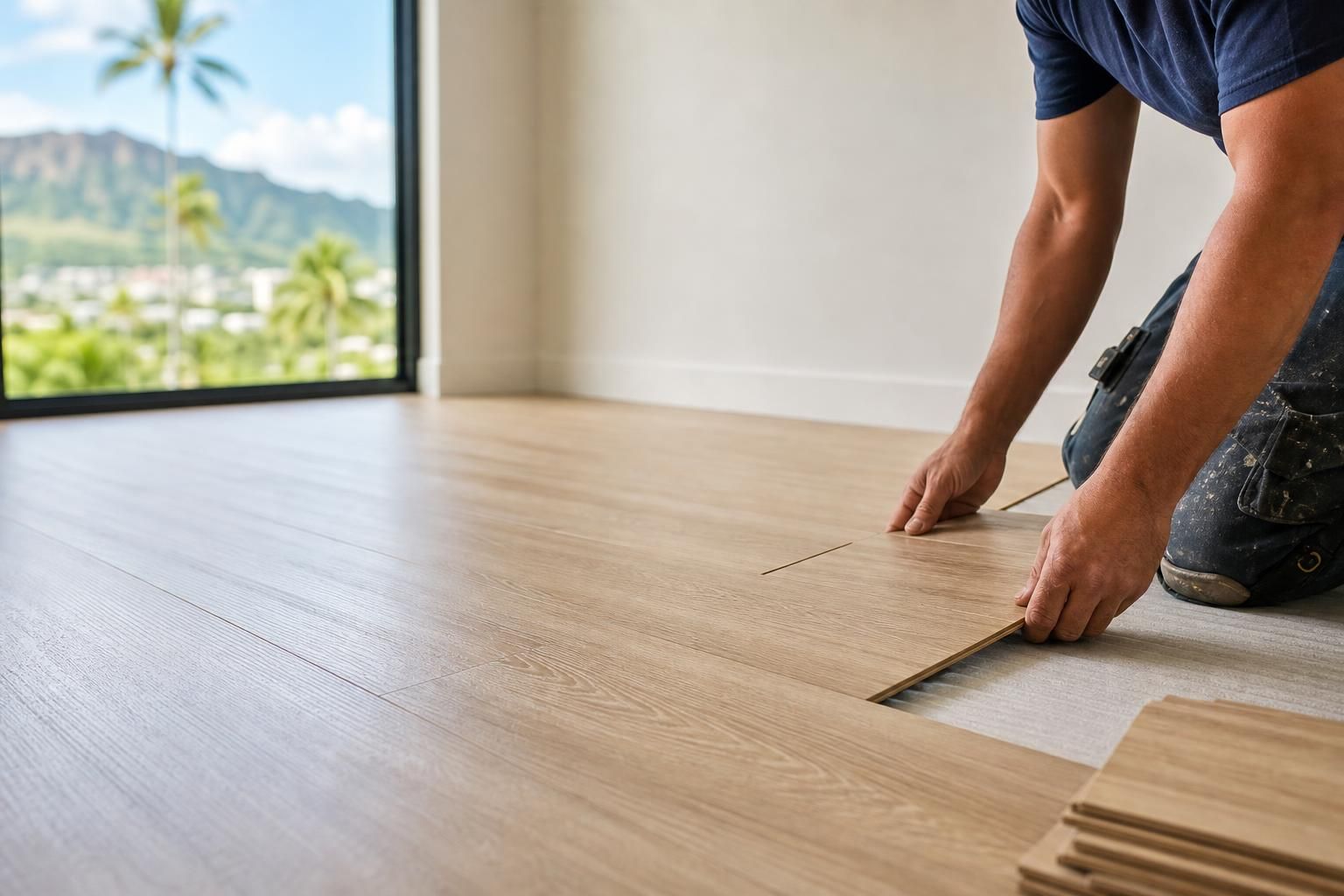
Key takeaway
Flooring installation cost in Honolulu depends on the material chosen and how much subfloor prep the space needs, not on a flat rate that applies to every home. Vinyl plank tends to be the least labor-intensive option, while tile and engineered hardwood take more install time and often need extra moisture-proofing steps common in island homes. The only way to get an exact number for a specific unit or house is a quote based on the actual square footage, since stairs, moisture barriers, and old flooring removal all change the total.
Key takeaways
- Vinyl plank is usually the least labor-intensive option to install in humid, salt-air conditions, which is part of why it's the go-to choice for so many Oahu homes.
- Removing old flooring, leveling a subfloor, or adding a moisture barrier adds labor time before the new material can even go down.
- Condo projects need AOAO-ready specs and sound-rating documentation before a board will approve the work, which adds lead time if it's not prepared upfront.
What Drives Flooring Installation Cost in Honolulu
Three factors move the price more than anything else: material choice, subfloor condition, and access. A ground-floor single-family home with a flat concrete slab is the simplest scenario to install in. A high-rise condo with an elevator reservation, old adhesive to scrape off, and a sound-mat requirement from the building's house rules takes more labor even if the flooring material is identical — elevator booking windows and loading-dock restrictions in many Honolulu towers mean material has to be staged and moved in stages rather than all at once.
Humidity and salt air also shape material recommendations more than they would on the mainland. Oahu's average relative humidity sits well above mainland norms for most of the year, which is one reason solid hardwood is harder to keep stable here and why moisture-tolerant materials get recommended more often in coastal climates — a pattern the U.S. Environmental Protection Agency also flags in its guidance on controlling indoor moisture to prevent mold growth.
What Changes Between Flooring Types
Rather than a single price tag, each flooring type carries a different mix of durability, moisture tolerance, and install complexity — and those are the factors that actually move a quote.
| Flooring type | Moisture tolerance | Install complexity | Best fit for |
|---|---|---|---|
| Vinyl plank (LVP/SPC) | High — handles humidity and minor water exposure well | Low — floats over most subfloors with minimal prep | Condos, rentals, humid rooms, high-traffic areas |
| Laminate | Moderate — sensitive to standing water | Low to moderate | Budget remodels, low-moisture rooms |
| Tile (porcelain) | Very high | High — mortar bed, layout, and cut work add time | Bathrooms, lanais, kitchens |
| Engineered hardwood | Moderate to high, depending on construction | Moderate | Living areas with stable humidity control |
| Solid hardwood | Low — reacts to humidity swings | High — often needs acclimation and climate control | Rare on Oahu; needs strict climate control |
Vinyl plank tends to be the material most homeowners land on for whole-condo or whole-house jobs because it holds up in humidity, resists the minor flex of older subfloors, and comes in a wide range of finishes. A closer look at what changes its install complexity room by room is in this vinyl plank flooring cost guide.
Labor vs. Material Factors
Material tier is only part of the equation; labor covers everything else, and labor is where most of the variation between two seemingly similar jobs shows up. Labor effort swings based on:
- Removal and disposal of existing flooring (carpet pad, old tile, glued-down vinyl)
- Subfloor leveling or moisture barrier installation
- Baseboard removal and reinstallation
- Stairs, closets, and cut-outs around cabinetry or plumbing fixtures
- Building logistics — elevator booking, parking, and material staging in condos
A straightforward one-bedroom condo refresh with no subfloor issues is the simplest version of any material's install. A whole-house job with furniture moving, old tile demo, and multiple room transitions takes considerably more labor even with the same flooring product.
Extra Factors Condo and Older-Home Owners Should Plan For
Condo buildings on Oahu almost always require paperwork before flooring work starts. AOAO boards commonly ask for the flooring's sound transmission rating (an IIC number) and sometimes a moisture barrier spec, especially for units above the ground floor. Getting these specs written correctly the first time avoids a rejected application and a second round of board review, which can add weeks to a project timeline.
Older single-family homes on Oahu may also need:
- Termite damage repair before new flooring goes down (a common finding once old carpet or vinyl comes up)
- Leveling compound where a slab has settled unevenly over decades
- Asbestos testing on flooring installed before the 1980s, which the Environmental Protection Agency recommends checking before disturbing old vinyl or tile
Special-order materials — a specific plank finish or a tile pattern not held in local stock — also add island freight and lead time that a mainland retailer's listed price won't reflect. None of these show up in a generic online estimate, which is why in-person or photo-based assessment matters more than a national average.
Choosing Material for Hawaii's Climate
Vinyl plank and porcelain tile handle Oahu's humidity and occasional water exposure better than solid hardwood or carpet in most rooms. Laminate is a middle-ground option but is more sensitive to standing water than vinyl. For kitchens and bathrooms, many homeowners pair new flooring with a countertop refresh in the same visit — quartz countertops are a common pairing since both materials are quoted from the same measurements and installed on a similar timeline.
Contractors licensed to work in Hawaii are required to carry a state contractor's license, and homeowners can verify a contractor's license status through the Hawaii Department of Commerce and Consumer Affairs before signing any agreement — a step worth taking regardless of who ends up doing the installation.
How to Get an Accurate Quote
Square footage, room count, current flooring type, and building type (condo vs. single-family) are the four pieces of information that turn a general estimate into a real number — and a real number only comes from measuring the actual space, not from a table of averages. A free quote priced for actual square footage typically comes back within 24 hours once that information — or a few photos — is submitted, which is a faster and more precise answer than any online calculator can give.
Frequently Asked Questions
Q: What is the average cost to install flooring in Honolulu?
There isn't a single average that applies across the board — vinyl plank is generally the fastest and least labor-intensive to install, while tile and hardwood take longer due to subfloor prep and moisture-proofing steps. The exact number depends on subfloor condition, material choice, and building access, which is why a quote against actual measurements is the only reliable figure.
Q: Is vinyl plank cheaper than tile in Hawaii?
Vinyl plank generally costs less to install than porcelain tile because it floats over most subfloors with minimal prep, while tile requires a mortar bed and more layout and cut work. Vinyl also installs faster in most rooms, which lowers labor time further.
Q: Do condos on Oahu need special approval for new flooring?
Most AOAO boards require a sound rating (IIC) spec and sometimes a moisture barrier detail before approving flooring work. Getting these specs prepared in advance avoids delays from a rejected first submission.
Q: How much does removing old flooring add to the cost?
Removing old carpet, tile, or glued-down vinyl adds labor time depending on how the old material is attached and whether the subfloor needs leveling afterward. Concrete slabs with old adhesive residue usually take longer to prep than a plywood subfloor.
Q: Can I get a flooring cost estimate without an in-person visit?
Yes — providing square footage, current flooring type, and a few photos is usually enough for an initial quote, which can then be confirmed against actual measurements before installation begins.