What to Ask a Flooring Contractor Before Hiring
Key takeaway
Before hiring a flooring contractor on Oahu, ask to see their current Hawaii contractor license number, get a written quote based on your actual measured square footage (not a phone estimate), and confirm in writing who handles subfloor prep, moisture testing, and cleanup. A contractor who answers these three questions clearly and without hesitation is far more likely to finish the job on schedule and on budget than one who talks around them.
Key takeaways
- Verify the contractor's Hawaii license number directly with the state before signing anything.
- Get the quote in writing, tied to your measured square footage, with material and labor broken out separately.
- Ask specifically about moisture barriers and subfloor prep — Oahu's humidity and slab conditions cause more flooring failures than the flooring material itself.
Confirm the license, insurance, and who's actually doing the work
Hawaii requires contractors performing flooring, cabinet, or countertop installation above a certain project size to hold a valid license through the state. Ask for the license number and check it yourself through the Hawaii Department of Commerce and Consumer Affairs Professional and Vocational Licensing division rather than taking a business card at face value — license status, complaints, and expiration dates are searchable there. Also ask whether the person quoting the job is the person who will be on-site, or whether the work gets subcontracted out. On multi-trade projects (flooring plus electrical, for example), ask who is the single point of contact if something needs to change mid-job — juggling three separate crews with three separate opinions is one of the most common sources of delay and miscommunication on remodels.
Ask exactly how they measure and price the job
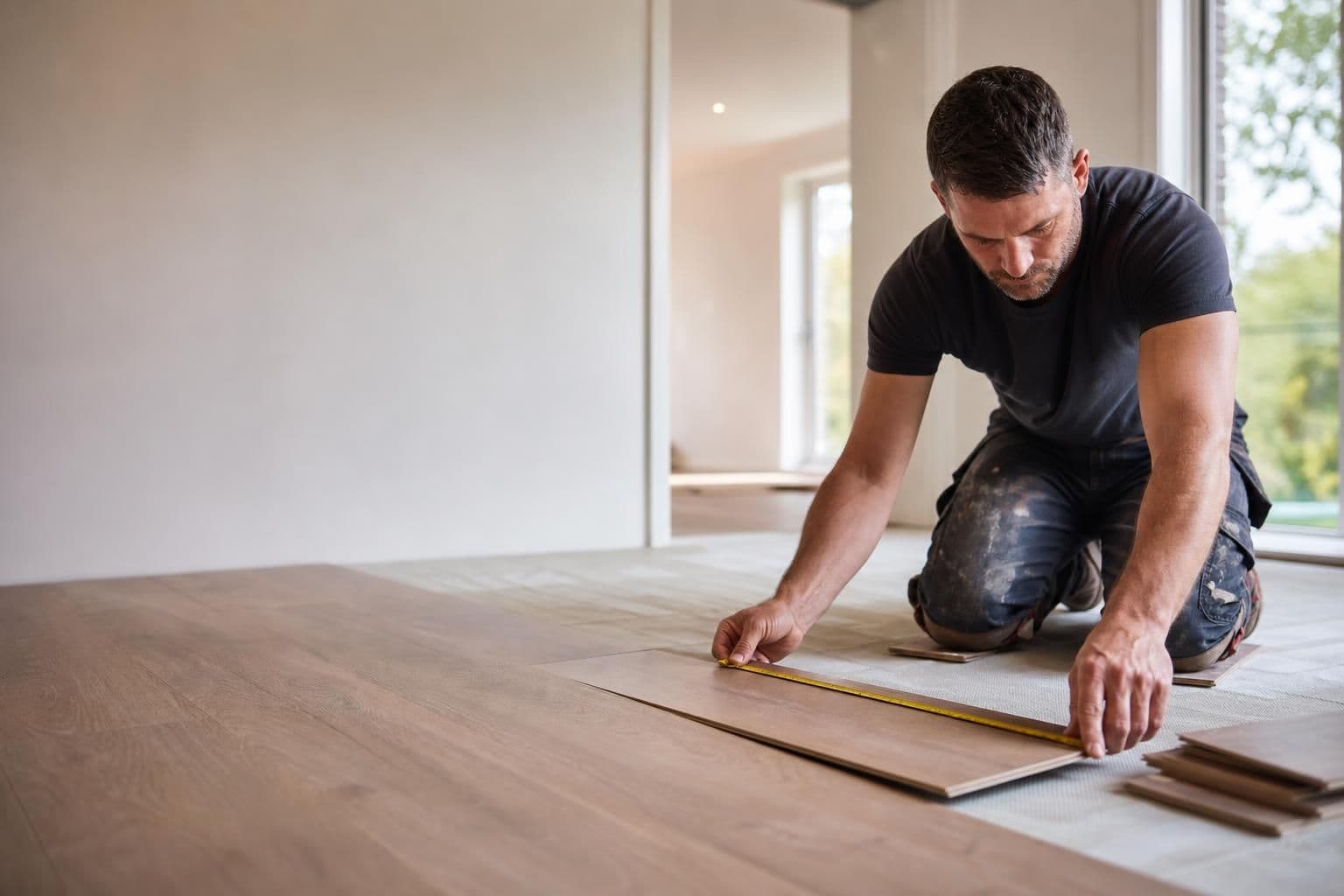
A contractor should be willing to measure your actual square footage — not eyeball it — before giving you a number you can rely on. Ask whether the quote includes a waste factor (typically 5–10% extra material for cuts and pattern matching), whether furniture removal and old flooring disposal are included, and whether the price is broken into material and labor lines or bundled together. What actually moves the number on Oahu has less to do with the product itself and more to do with the conditions around it: subfloor levelling in older homes, whether the building is a Honolulu high-rise with elevator or loading-dock booking limits that slow material staging, the material tier you choose, how many stairs or how much furniture has to be moved, tear-out and disposal of the old surface, and freight timing on any special-order material shipped to the island. For countertops, slab selection and edge profile complexity do the same work that subfloor condition does for flooring. The only number that means anything for your project comes from a free quote measured against your actual space — everything else is a planning range. If you want a sense of how those cost drivers break down further, this site's vinyl plank flooring cost guide for Oahu walks through the line items in more detail.
Get the warranty and material details in writing
Ask what warranty covers the installation labor versus what's covered by the manufacturer on the material itself — these are almost always two separate warranties with different lengths and different claim processes. Ask what happens if a plank or slab is damaged during install: does the contractor absorb the cost of replacement material, or is that billed back to you? Also ask to see or touch a physical sample of the exact product being quoted, not a photo — color and texture can look different on a screen than in your actual lighting.
Ask about subfloor prep and moisture, especially in Hawaii
Oahu's humidity, salt air, and slab-on-grade construction in many neighborhoods make subfloor moisture one of the most common causes of flooring failure — buckling, adhesive breakdown, or mold underneath the surface. Ask whether the contractor tests moisture levels before installation and what underlayment or vapor barrier they use. The U.S. Environmental Protection Agency notes that controlling moisture is the single most effective way to prevent mold growth indoors, which is exactly why subfloor prep matters more here than in drier mainland climates. If your home was built before 1978, also ask whether the contractor is certified to handle lead-safe renovation practices, since disturbing old flooring or trim can expose lead-based paint — the EPA's Lead-Safe Certification program covers what that certification requires.
Ask about condo and AOAO paperwork if you live in a condo
If you own a condo, ask whether the contractor has experience preparing the flooring specs — sound rating (IIC), thickness, underlayment type — that most Oahu AOAO boards require for approval before work can start. A contractor unfamiliar with this process can add weeks of delay while paperwork gets redone, and a higher-rated underlayment to meet board minimums is one more factor that shifts the scope of a job. This site's guide on Honolulu condo AOAO flooring rules breaks down what boards typically ask for, which is worth reading before your first board submission.
Ask about the payment schedule and red flags
A reasonable payment schedule is tied to project milestones — deposit, materials delivered, work substantially complete — not a large upfront payment before any work or ordering has happened. The Federal Trade Commission's consumer guidance on hiring contractors recommends avoiding anyone who pressures for full payment upfront or refuses to put the payment schedule in writing. Ask what happens if you need to cancel or pause the project, and whether deposits are refundable before materials are ordered.
Ask how changes and timeline delays get handled
Ask what the process is if you want to change a material selection mid-project, and who absorbs the added cost if a delay is caused by the supplier versus the installer — island freight timing on special orders can push a schedule out well beyond what a mainland supplier would quote. Ask for a realistic start-to-finish timeline in writing, including how many days are allotted for acclimation of the flooring material to your home's humidity before installation begins — this step is often skipped by contractors unfamiliar with island climate conditions, and skipping it is a common cause of plank gapping or cupping later.
Frequently Asked Questions
Q: What questions should I ask a flooring contractor before signing a contract?
Ask for their Hawaii license number, a written quote based on measured square footage, details on subfloor moisture testing, the warranty terms for labor versus material, and a milestone-based payment schedule.
Q: How do I verify a flooring contractor's license on Oahu?
Search the contractor's name or license number through the Hawaii Department of Commerce and Consumer Affairs Professional and Vocational Licensing division, which lists license status and any complaint history.
Q: Why does subfloor moisture matter so much for flooring on Oahu?
Oahu's humidity and common slab-on-grade construction make moisture the leading cause of flooring failure, so a contractor should test moisture levels and use an appropriate vapor barrier before installing new flooring.
Q: What should a flooring quote include besides the measured square footage?
A complete quote should separate material and labor costs, note the waste factor percentage, specify who handles furniture removal and old flooring disposal, and state the warranty terms in writing.
Q: Do condo owners need anything extra when hiring a flooring contractor?
Yes — most Oahu AOAO boards require written specs on sound rating, thickness, and underlayment before approving a flooring project, so ask upfront whether the contractor has prepared this kind of paperwork before.