Is It Cheaper to Buy Flooring Yourself and Hire an Installer?
Key takeaway
Buying flooring materials yourself and hiring a separate installer can look like the leaner path on paper — you skip a supplier's markup and shop for deals directly — but it often costs more in the end once you factor in mismatched materials, no single point of accountability, and installers charging extra to work with product they didn't supply or inspect. For most Oahu homeowners, a bundled quote that includes both material and labor, priced against actual measurements, ends up close in cost and far less risky.
Key takeaways
- Buying materials separately can trim the upfront material bill, but installers commonly charge more to handle materials they didn't source or vet — often enough to erase the savings.
- Warranty coverage gets messy fast: manufacturers and installers each point to the other side if a floor fails, and you're the one stuck in the middle.
- A bundled quote — material plus labor priced to your actual square footage and unit conditions — usually closes most of the gap while keeping one party responsible for the result.
What "Buy It Yourself, Hire Separately" Actually Means
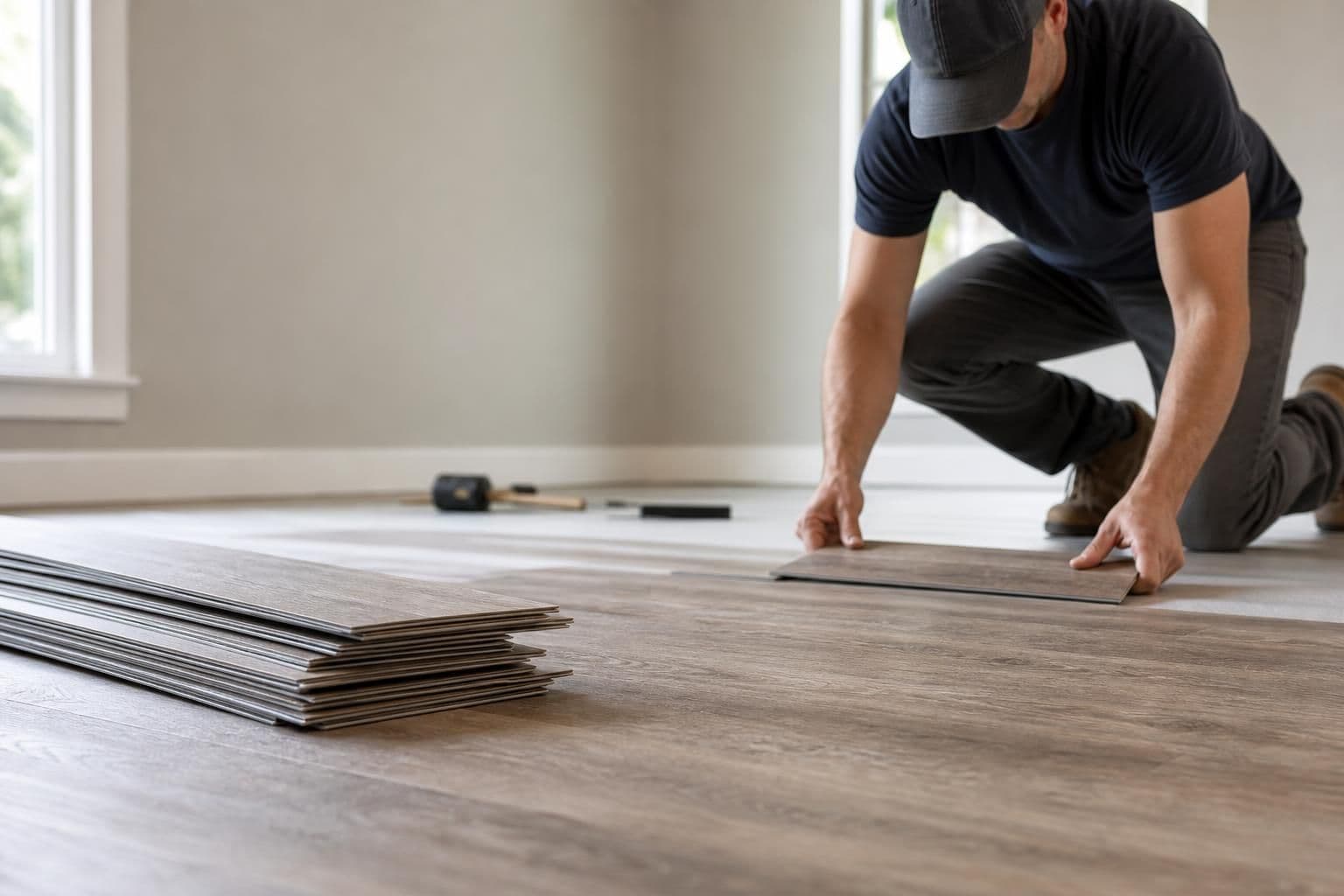
This approach splits a flooring project into two transactions: you purchase planks, boxes, or slabs from a retailer or online seller, then hire an independent installer (found through a classifieds site, referral, or general contractor) to lay it. The appeal is obvious — you can shop sales, compare multiple retailers, and theoretically negotiate labor separately from material cost.
The catch is that the two halves of the job are no longer connected. The installer didn't spec the product, doesn't know its expansion rate, moisture rating, or subfloor requirements, and has no relationship with the manufacturer if something goes wrong.
What Drives the Total on Each Route in Oahu
Rather than a fixed split between "material cost" and "labor cost," what actually moves the total is a handful of job-specific factors — and they hit each route differently:
- Subfloor condition. Many Oahu homes and older condos have uneven or moisture-compromised subfloors. A bundled installer typically inspects this before quoting; a labor-only installer working with materials you already bought may discover the problem mid-job and charge extra to fix it.
- Waste and dye-lot matching. DIY buyers frequently order based on room dimensions without building in overage for cuts, diagonal layouts, or pattern matching. A shortfall means a second order that may not match the first shipment's dye lot — a risk a bundled supplier manages for you.
- Moisture barrier and climate rating. Oahu's humidity and salt air call for underlayment and vapor protection matched to the specific product. When material and labor come from different sources, nobody automatically checks that the barrier spec matches the flooring spec.
- Unit access. Walk-up units are simpler to move material into than high-rise condos with elevator reservations and loading-dock windows. An installer who wasn't part of the original order may not have budgeted time for building logistics, which shows up as delays or added labor.
- Liability for unfamiliar product. Installers commonly price labor-only jobs higher than jobs where they supplied the material themselves, because they're taking on responsibility for a product they didn't choose or inspect.
Once these factors are priced in, the "split" route and a bundled quote frequently land close to the same total — the difference is that the bundled route puts one party on the hook for the outcome. For a deeper look at what specifically moves vinyl plank pricing on Oahu, see this Oahu vinyl plank flooring cost guide.
Where the Supply-and-Hire Approach Backfires
Three failure points show up repeatedly:
- Wrong product for the climate. Oahu's humidity and salt air call for flooring rated for moisture and dimensional stability. A homeowner who orders based on price alone can end up with planks that gap, cup, or delaminate within a year — and an installer who simply installs what's handed to them, without flagging the mismatch.
- Underestimated quantity. DIY buyers frequently order based on room dimensions without accounting for waste, diagonal cuts, or pattern matching, then wait weeks for a second shipment that may not match the dye lot of the first — and on special orders, that second shipment may also be delayed by island freight schedules.
- No single point of accountability. If the floor fails, the retailer says the installation was wrong; the installer says the product was defective. You're left mediating between two businesses that have never spoken to each other.
When Buying Materials Yourself Actually Saves Money
The split approach can genuinely make sense in a few situations:
- You're doing a small, low-risk area (a closet, a laundry room) where a bad outcome is cheap to fix.
- You already have a trusted installer who's willing to inspect and approve the specific product before starting.
- You're comfortable handling manufacturer warranty claims yourself if a defect surfaces.
Outside of those cases, the labor surcharge for handling unknown materials plus the risk of a mismatched product usually erases the savings.
Warranty and Liability Risks to Weigh
Most flooring manufacturer warranties require installation according to specific written instructions — subfloor moisture readings, acclimation time, expansion gaps at walls. If an independent installer doesn't follow the manufacturer's spec sheet exactly (because nobody handed it to them), a warranty claim can be denied outright. The Federal Trade Commission's guidance on hiring contractors recommends getting scope of work, materials, and warranty responsibility spelled out in writing before work starts — precisely the paperwork that gets skipped when material and labor come from two unrelated parties.
Building science research from agencies like the U.S. Department of Energy also notes that flooring failures in humid coastal climates are frequently tied to moisture management at the subfloor, not the product itself — another reason the installer and the material spec need to be coordinated, not purchased independently.
Condo Owners: An Extra Wrinkle
If you own a unit in an Oahu condo, your AOAO board likely requires documentation — IIC sound rating, moisture barrier spec, sometimes a licensed contractor's name — before flooring work can begin. When materials and labor are sourced separately, getting a single, consistent packet of specs for board approval means chasing down a retailer's product sheet and an installer's license and insurance certificate separately, then reconciling them yourself. A bundled quote that already accounts for AOAO paperwork, elevator booking, and loading-dock scheduling removes that step entirely.
Getting an Apples-to-Apples Comparison
If you want to actually test whether splitting the job saves money, price both routes against the same square footage and the same product spec — not a generic online listing versus a full-service quote for a different material grade. The only number that means anything is one priced against your actual measurements, subfloor condition, and building access — not a generic estimate. A free quote, with an answer within 24 hours, gives you a real bundled figure to compare against whatever a retailer and independent installer would charge separately.
Frequently Asked Questions
Q: Is it always cheaper to buy flooring materials yourself?
Not usually. Buying materials on your own can lower the upfront material bill, but installers often charge more to work with materials they didn't supply, which frequently cancels out the discount once subfloor prep, waste, and moisture-barrier matching are factored in.
Q: What's the biggest risk of buying flooring separately from installation?
Warranty denial. Manufacturers often require specific installation steps — subfloor moisture checks, acclimation time, expansion gaps — and an installer unfamiliar with your exact product may skip steps that void coverage.
Q: Can I bring my own flooring to an installer and just pay for labor?
Some installers will do this, but expect a labor-only surcharge for the added liability, and confirm in writing who's responsible if the product fails to perform as expected.
Q: Does buying in bulk from a big-box retailer save money over a bundled quote?
Sometimes on the sticker figure alone, but bundled quotes account for waste, delivery, subfloor prep, and installer coordination that a per-box retail price doesn't include, so the final totals are often closer than they first appear.
Q: Do condo boards care whether flooring and installation come from the same source?
AOAO boards generally care about documentation — moisture barrier specs, sound ratings, licensed contractor proof — not the purchase path, but getting consistent paperwork is easier when one party handles both material and installation.