Cabinet Makers in Kapolei: How to Choose the Right One
Key takeaway
A good cabinet maker in Kapolei should be licensed to work in Hawaii, show you actual door and box samples rather than only photos, and give you a written quote based on your kitchen's real measurements before any deposit changes hands. Kapolei's mix of newer tract homes, townhomes, and condo developments each come with different approval steps, so the right cabinet maker also needs to know whether your project requires board paperwork or just a standard permit. The fastest way to compare options is to request quotes from two or three shops using the same measurements and material tier.
Key takeaways
- Confirm the shop holds a valid Hawaii contractor license before signing anything — state law requires one for most jobs over a small dollar threshold.
- Ask whether cabinet boxes are plywood or particleboard; moisture resistance matters more in Hawaii than on the mainland.
- Request a quote built from your actual kitchen dimensions, not a generic estimate, so you're comparing real numbers.
What to Check Before Hiring
Kapolei has grown fast over the last two decades, and that growth brought in a wide range of cabinet shops, general contractors who sub out cabinetry, and big-box installers. Before narrowing your list, verify three things:
- License status. Hawaii's Department of Commerce and Consumer Affairs requires a contractor license for most construction work, and you can look up any contractor's license number through the Hawaii DCCA license search before signing a contract.
- Material construction. Ask whether the cabinet boxes are plywood or particleboard/MDF. Plywood holds up better under Oahu's humidity swings and is worth asking about directly rather than assuming.
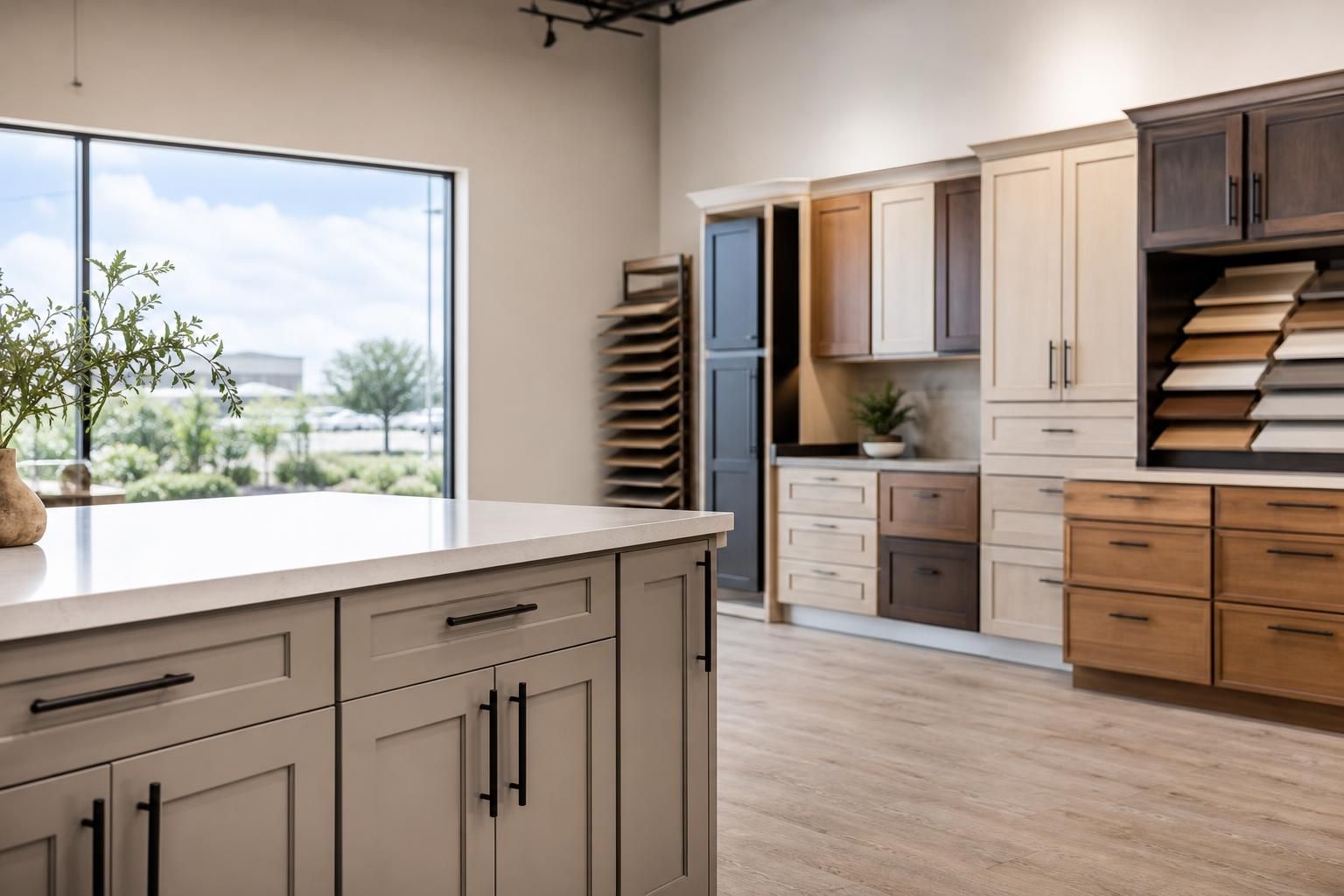
- Portfolio and samples. A shop that can hand you a physical door sample — not just a photo on a tablet — lets you check finish quality and weight before you commit.
If you want a deeper walkthrough of vetting cabinet shops across the island, this guide to choosing cabinet makers in Honolulu covers the same vetting steps in more detail.
Custom, Semi-Custom, or Stock: What's the Difference
These three terms get used loosely, and the difference changes both your options and your timeline.
- Stock cabinets come in fixed sizes and finishes, ready to order from a catalog. Fastest option, least flexibility.
- Semi-custom cabinets start from stock sizes but allow modifications — extra drawers, adjusted widths, different hardware. The National Kitchen & Bath Association uses this tier distinction as an industry standard when describing cabinetry options to consumers.
- Custom cabinets are built to your exact kitchen dimensions, layout, and finish spec, with no size constraints beyond the room itself.
A galley kitchen or an awkward Kapolei townhome layout often benefits from semi-custom or full custom work, since stock sizes rarely fill odd corners cleanly. If your kitchen is narrow, see what layout works best for a galley kitchen before you finalize a cabinet order.
Kapolei-Specific Considerations
Kapolei's housing stock is younger than much of Honolulu, with many homes and townhomes built from the 1990s onward, plus a growing number of condo and multi-family developments near the Kapolei Commons and Ko Olina corridors. That mix changes what a cabinet maker needs to plan for:
- Newer construction, straighter walls. Many Kapolei homes have more consistent framing than older Honolulu bungalows, which can simplify installation — but it's still worth confirming square corners before ordering custom boxes.
- AOAO or HOA approval. If you're in a condo or townhome association, board approval may be required before cabinet or layout changes, especially if plumbing or electrical moves. Getting the spec sheet right the first time avoids a second submission cycle.
- Humidity and salt air exposure. Kapolei runs drier than windward areas like Kailua, but moisture-resistant box construction and finish still matter for kitchen and laundry cabinetry anywhere on Oahu, per general guidance from the U.S. EPA on indoor moisture control.
How the Quote and Design Process Should Work
A straightforward cabinet quote process has a few predictable steps, regardless of which shop you use:
- Measurement. Someone measures your actual kitchen, laundry, garage, or built-in space — not a rough guess from a floor plan.
- Material and style selection. You choose door style, finish, and hardware, ideally from physical samples.
- 3D preview or layout drawing. A visual layout before production catches spacing problems early.
- Written quote. Priced against your real square footage and chosen materials, with a clear timeline.
- Production and install. Lead times vary by whether cabinets are stock, semi-custom, or fully custom.
Oahu Flooring Quote runs this process with one point of contact from the first call through delivery, which matters most at step 3 and 4 — fewer handoffs means fewer measurement errors carried into a cut list. A free quote request is priced for your actual square footage and typically answered within 24 hours.
Questions Worth Asking Before You Commit
- Is the box plywood, particleboard, or MDF, and what's the warranty on the finish?
- Who installs the cabinets — in-house crew or a subcontractor?
- Will you provide a 3D layout before production starts?
- How do you handle AOAO or HOA paperwork if my project needs board approval?
- What's the lead time from signed quote to delivery?
Hardware and color choices also affect how a kitchen reads once cabinets are installed. If you're deciding on finishes, this guide to cabinet hardware that lasts and this guide to matching cabinet color to flooring are worth reading before you lock in a spec. If you're pairing new cabinets with a quartz countertop, this breakdown of quartz countertops in Kapolei covers what homeowners in the same area should know about slab selection and edge profiles.
Frequently Asked Questions
Q: Do I need a licensed contractor for cabinet installation in Kapolei?
Hawaii requires a contractor license for most construction work above a small dollar threshold, which covers the majority of cabinet installation jobs. You can verify any contractor's license status through the Hawaii Department of Commerce and Consumer Affairs before signing a contract.
Q: What's the difference between custom and semi-custom cabinets?
Semi-custom cabinets start from standard stock sizes with limited modifications like extra drawers or adjusted widths. Custom cabinets are built entirely to your kitchen's dimensions and layout with no size constraints beyond the room itself.
Q: How long does it take to get cabinets made and installed in Kapolei?
Timelines depend on whether cabinets are stock, semi-custom, or fully custom, plus whether any AOAO or HOA approval is needed first. A written quote should include a specific timeline rather than a general estimate.
Q: Can a cabinet maker also help with AOAO approval paperwork for a condo?
Some suppliers prepare cabinet and layout specs written specifically for board review, which speeds up approval compared to submitting a generic cut sheet. Ask upfront whether this is included before choosing a shop.
Q: Should I choose plywood or particleboard cabinet boxes in Hawaii?
Plywood generally holds up better under humidity and moisture exposure than particleboard or MDF, making it a stronger choice for kitchens, laundry rooms, and garage cabinetry across Oahu. Ask any shop directly which construction they use before comparing quotes.