What Is a Two-Tone Kitchen Cabinet?
Key takeaway
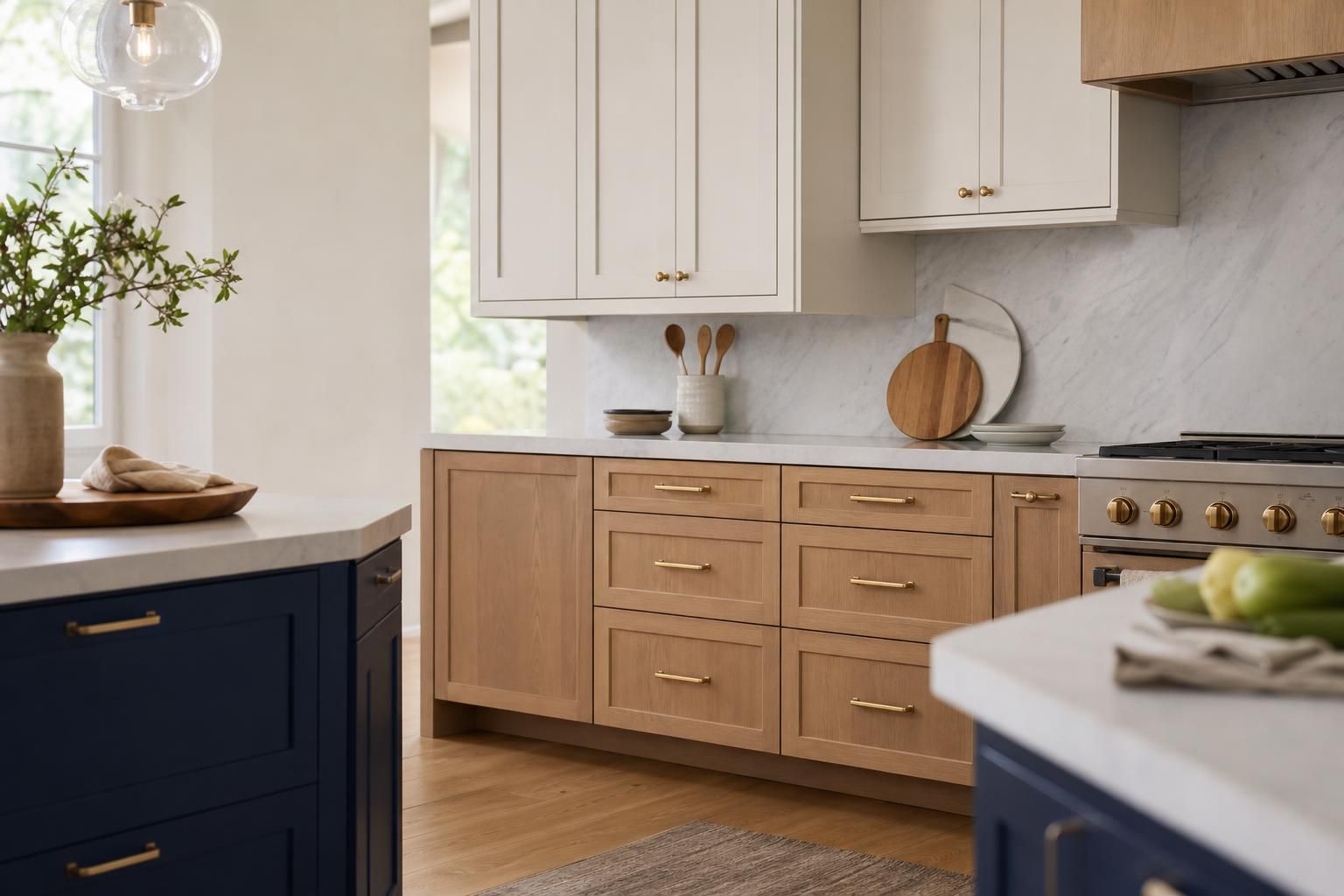
A two-tone kitchen cabinet layout uses two different colors or finishes across the cabinetry instead of one uniform color — typically a darker or bolder shade on the lower cabinets and a lighter shade on the uppers, or a contrasting color on the island only. The split is usually planned by cabinet function (base vs. wall, island vs. perimeter) rather than mixed randomly, which keeps the kitchen looking designed instead of accidental. It's a cabinet-finish strategy, not a specific brand or product line.
Key takeaways
- Two-tone kitchens split color by zone — usually island vs. perimeter, or base vs. wall cabinets — not cabinet-by-cabinet at random.
- The most common pairing is a darker, saturated color below and white or a light neutral above, which keeps a small kitchen feeling open.
- Matching the cabinet split to your flooring and countertop undertones matters more than the color trend itself.
How a Two-Tone Layout Is Usually Split
Most two-tone kitchens follow one of three splits, and picking the right one depends on the room's layout more than personal taste alone.
- Base vs. wall cabinets — lower cabinets in a deeper color, upper cabinets in white or a light neutral. This is the most common approach because it grounds the room visually without making it feel heavy.
- Island vs. perimeter — the island gets a standout color (navy, forest green, charcoal) while the rest of the kitchen stays neutral. This works well in open-concept layouts where the island reads as a piece of furniture.
- Accent wall of cabinetry — one run of cabinets, often a pantry wall or a bank of uppers near a window, gets the contrast color while everything else matches.
In a galley kitchen, where both walls face each other in a narrow space, designers often lean toward the base-vs-wall split specifically because a dark color on both lower runs can make the walkway feel tighter — keeping the uppers light helps the room breathe.
Why Homeowners Choose Two-Tone Over a Single Color
A single-color kitchen is simpler to spec, but two-tone solves a few practical problems at once. Darker lower cabinets hide scuffs, fingerprints, and the general wear that happens at counter height where hands, pots, and cleaning products make contact daily. Lighter upper cabinets keep the ceiling line from feeling boxed in, which matters in kitchens with standard 8-foot ceilings common in older Oahu homes.
There's also a resale and flexibility angle: a fully dark kitchen can read heavy or trendy in a way that ages faster, while two-tone lets you commit to one bold color at the base and keep the rest timeless. If you're not sure which combination fits your space, a cabinet layout guide for small kitchens is worth reading before locking in colors, since cabinet size and color both affect how big a room feels.
Popular Two-Tone Color Pairings
Certain pairings show up repeatedly because they hold contrast without clashing:
- Navy or dark green base cabinets with white or off-white uppers
- Charcoal or black lower cabinets with a warm wood-tone upper (often open shelving instead of full cabinets)
- Two neutral tones — like a warm greige base with a crisp white upper — for a subtler effect
- A wood-tone island paired with painted perimeter cabinets, which blends the two-tone idea with a natural-material accent
The contrast level is a design choice, not a rule. A high-contrast pairing (black and white) reads modern and graphic. A low-contrast pairing (two close neutrals) reads calmer and works better in smaller kitchens where strong contrast can visually chop up the space.
Matching Two-Tone Cabinets to Flooring and Countertops
Cabinet color doesn't exist on its own — it has to work with the floor and the counter, and this is where a lot of two-tone plans go wrong. A common mistake is choosing two cabinet colors that each look good alone but fight with the flooring's undertone once installed. Vinyl plank flooring with warm, honey-toned wood grain generally pairs better with a warm white or greige upper cabinet than a stark, cool white, because the two undertones otherwise read as mismatched rather than intentional.
Quartz countertops add a third surface to coordinate. A busy, veined quartz pattern usually looks best against one quiet cabinet color and one neutral, rather than two strong colors competing with the stone. If you're planning the full material palette at once, this guide on matching cabinet color to flooring walks through undertone matching in more detail, and it's worth doing that step before ordering samples.
Does Two-Tone Cost More Than a Single-Color Kitchen?
Two-tone cabinetry can cost more than a single finish, but the reason isn't the color itself — it's the production and finishing steps behind it. A cabinet shop running two separate colors or stains through finishing is effectively running two finish batches instead of one, and custom color-matching (rather than a stock two-tone combo) adds time on top of that. Door style also factors in: a shaker door takes paint differently than a slab door, and some wood species accept stain unevenly, which affects how clean a two-tone transition looks.
Because every kitchen's cabinet count, door style, and finish choice is different, the only accurate number comes from a quote built against your actual cabinet layout and material selection — not a published average, which would be wrong for most kitchens anyway. Oahu Flooring Quote prices custom cabinets against the real layout and gives an answer within 24 hours, with samples you can see and touch at either Honolulu showroom before committing to a color pairing.
Two-Tone Cabinets in Condos and Rentals
Condo kitchens on Oahu have less room to play with than single-family homes, so the split matters even more. In a galley or one-wall condo kitchen, a two-tone base-vs-wall split tends to outperform an island accent simply because there's often no island to work with. For rental or investment properties, some owners choose a two-tone look specifically because the lighter upper cabinets photograph better for listings while the darker, tougher-looking base hides daily wear between tenants.
If the project involves an AOAO-managed building, cabinet color itself isn't usually a board-approval issue the way flooring underlayment or sound ratings are — but if the remodel also touches plumbing, electrical, or structural elements near the cabinets, that's a separate approval process worth starting early. For flooring-specific AOAO rules, the AOAO flooring guide on the site's blog covers what boards typically require.
Design Tips for Choosing a Two-Tone Combination
A few practical guidelines keep a two-tone kitchen from feeling disjointed:
- Keep the darker tone on the lower half of the room — it visually anchors the space and hides wear.
- Limit the palette to two colors plus hardware finish; a third cabinet color usually overcomplicates the room.
- Choose hardware that reads well against both colors, not just one — a mismatched hardware finish is a common two-tone misstep. The cabinet hardware finish guide covers which finishes hold up and read well across mixed cabinet colors.
- Bring an actual sample of your flooring and countertop to compare against cabinet swatches in natural light, since cabinet renderings and showroom lighting can shift how a color reads at home.
According to the U.S. Environmental Protection Agency, indoor humidity and sunlight exposure can affect how painted and finished wood surfaces age over time, which is one more reason to see finish samples in person rather than relying on a screen rendering, especially in a coastal climate like Oahu's.
Frequently Asked Questions
Q: Is two-tone cabinetry a passing trend?
Two-tone kitchens have been a mainstream design option for over a decade, most commonly as a base-vs-wall split. The specific colors in fashion shift, but the underlying idea — contrasting lower and upper cabinets — has stayed consistent rather than cycling in and out quickly.
Q: Can I do two-tone cabinets with RTA (ready-to-assemble) cabinets instead of custom?
Yes, as long as the RTA line offers both colors you want in the same door style, since mixing door styles across a two-tone kitchen usually looks unintentional. Custom cabinets give more flexibility for exact color matching; see this RTA vs. custom cabinet comparison for the tradeoffs.
Q: Should the island or the perimeter get the bolder color?
Either works, but the island is the more common choice for a bold accent color because it's a self-contained piece that doesn't affect the rest of the room's resale neutrality. A bold perimeter color is a bigger commitment since it touches more of the kitchen's visible surface area.
Q: Do two-tone cabinets make a small kitchen look bigger or smaller?
Done correctly — light on top, darker on the bottom — two-tone can make a small kitchen feel taller and more open than an all-dark kitchen would. Two dark tones stacked top and bottom tend to shrink the perceived space, especially under standard ceiling heights.
Q: Does two-tone work with open shelving instead of upper cabinets?
Yes, and it's a common combination — painted lower cabinets with open wood shelving above instead of upper cabinet doors. The guide to styling open shelving covers how to keep that combination looking intentional rather than cluttered.