Vinyl Plank vs Tile Flooring for Hawaii Homes
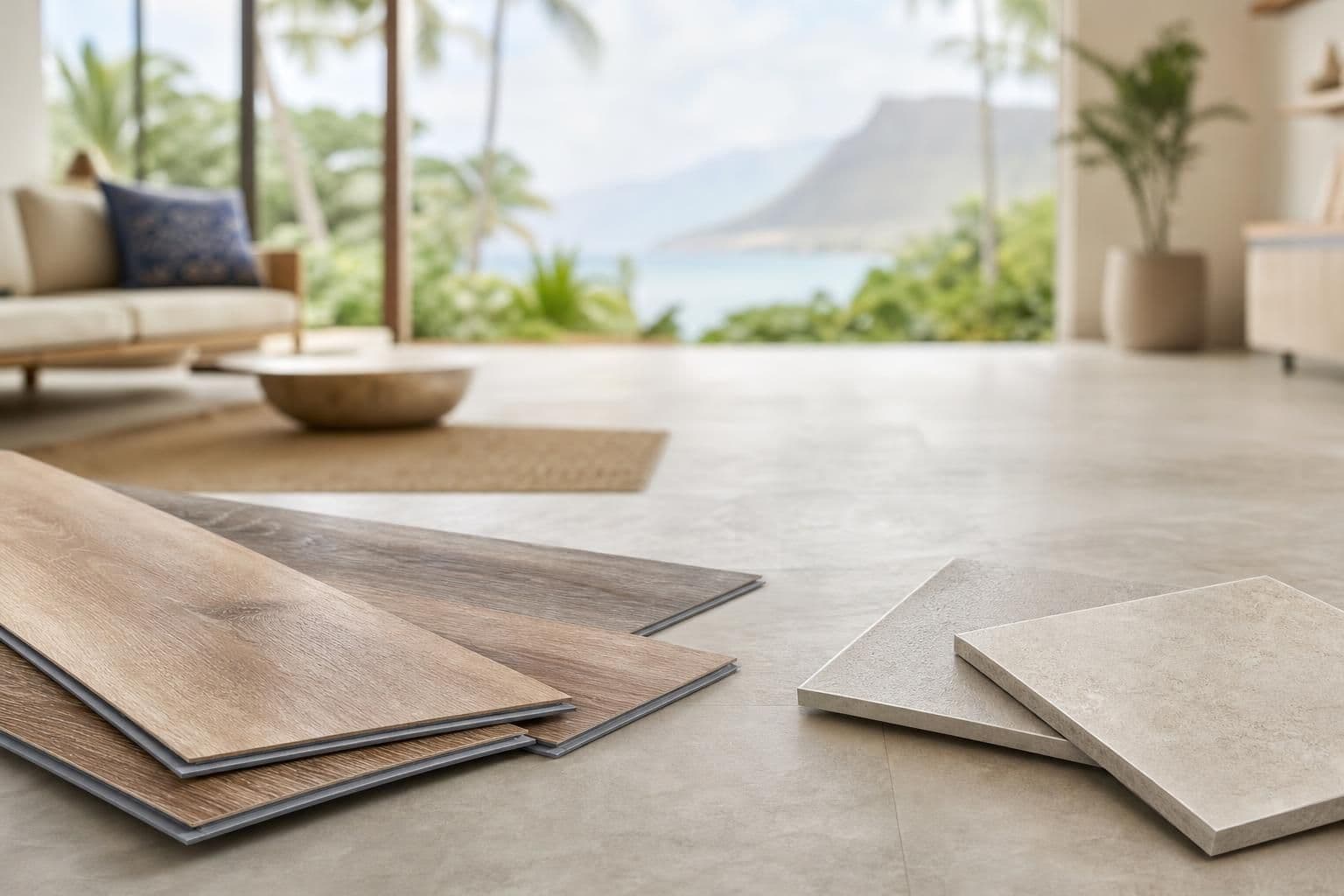
Key takeaway
For most Oahu homes, vinyl plank flooring wins on comfort, installation speed, and tolerance for humidity swings, while tile wins on scratch resistance and long-term durability in high-traffic or wet areas like lanais and showers. Tile is the better pick where constant moisture or UV exposure is a factor; vinyl plank is the better pick for living areas, bedrooms, and condos where sound rating, weight, and quick turnaround matter. Neither is universally "better" — the right choice depends on the room, the building, and what's under your existing floor.
Key takeaways
- Vinyl plank handles Hawaii's humidity and salt air better than most people expect, but tile still outperforms it in direct water exposure and full sun.
- Condo buildings often require a minimum sound rating (IIC/STC) that favors cushioned vinyl plank with underlayment over hard tile.
- Subfloor condition — not the flooring material itself — is usually the biggest factor in both cost and how the finished floor performs.
How Vinyl Plank and Tile Actually Perform in Hawaii's Climate
Oahu's combination of high humidity, salt air near the coast, and homes that cycle between air conditioning and open windows puts real stress on flooring. Tile is inorganic and essentially immune to moisture damage — it won't swell, cup, or support mold growth the way organic materials can. Vinyl plank is also waterproof at the surface layer, but the core material and the adhesive or click-lock seams can react to prolonged standing water or extreme heat buildup near west-facing windows, which is common in North Shore and Kapolei homes with strong afternoon sun.
The EPA's guidance on indoor air quality and moisture control notes that trapped moisture under any flooring type is what drives mold risk, not the flooring material itself — which is why subfloor prep matters more than the finish layer in both cases.
Comfort, Noise, and Condo Rules
This is where the two materials diverge sharply for Oahu's condo-heavy housing stock. Tile is hard underfoot and transmits impact noise — footsteps, dropped items — directly through the slab to the unit below. Many AOAO boards require a minimum Impact Insulation Class (IIC) rating before they'll approve a hard-surface flooring swap, and tile alone often can't meet that threshold without an underlayment system added below it.
Vinyl plank with an attached or separate acoustic underlayment typically clears these thresholds more easily, which is one reason it's become the default recommendation for condo renovations across Honolulu high-rises. If you're navigating a board approval, our guide on Honolulu condo AOAO flooring rules covers what documentation boards usually ask for.
What Actually Drives the Cost Difference
Rather than publish a number that would be wrong for your specific home, it's more useful to know what moves the price on either material:
- Subfloor leveling — older Oahu homes, especially pre-1980s construction, often have uneven slabs or plywood subfloors that need self-leveling compound before either material can go down correctly.
- Tear-out and disposal — removing old tile is labor-intensive and generates heavy debris; removing old vinyl or carpet is faster and lighter.
- Elevator and loading-dock restrictions — Honolulu high-rises often limit delivery windows and require material to go up in smaller loads, which affects labor time more than material cost.
- AOAO-required underlayment — a sound-rated underlayment adds a layer of material and labor that a single-family home wouldn't need.
- Material tier and island freight — special-order tile or wide-plank vinyl shipped to Oahu carries freight costs that standard in-stock material doesn't.
- Furniture moving and stairs — multi-story homes or heavily furnished rooms add labor time regardless of which material you choose.
The only accurate number comes from measuring your actual square footage and site conditions — that's what a free quote is for, priced for your actual square footage with an answer within 24 hours.
Installation Time and Disruption
Vinyl plank generally installs faster than tile because there's no thinset curing time, no grout curing time, and many products click together without adhesive. A single room can often be finished and walked on the same day. Tile installation requires the mortar bed to cure, then grout to cure, which typically means the space is unusable for a day or more between steps — a bigger consideration for rental units or homes with only one bathroom.
Side-by-Side Comparison
| Factor | Vinyl Plank | Tile |
|---|---|---|
| Moisture tolerance | Waterproof surface; core can be affected by standing water over time | Essentially impervious to moisture |
| Comfort underfoot | Warmer, softer, better for bare feet | Cold and hard, especially with AC on |
| Sound/AOAO approval | Easier to meet condo IIC/STC minimums with underlayment | Often needs added underlayment to qualify |
| Installation time | Faster, often single-day per room | Slower, requires mortar and grout cure time |
| Best suited for | Living areas, bedrooms, condos, rentals | Lanais, showers, high-sun entryways |
| Long-term scratch resistance | Lower than tile; can show wear in high-traffic zones | Higher; resists scratching and gouging |
Which Rooms Call for Which Material
Not every room in a Hawaii home needs the same flooring. Lanais, pool decks, and shower surrounds that see constant water and direct UV exposure are typically better served by tile, which won't fade or soften under sun the way some vinyl products can over many years. Living rooms, bedrooms, hallways, and condo units generally do better with vinyl plank for the comfort, noise control, and faster turnaround. If you're deciding room by room, it can help to compare how each option holds up against other categories — our breakdown of LVP versus laminate and engineered wood covers how lifespan expectations differ by material.
A Note on Subfloor Prep
Whichever material you choose, an uneven or moisture-compromised subfloor is the most common reason a new floor fails early — not the flooring product itself. The National Wood Flooring Association and most manufacturers require subfloor moisture testing before installation precisely because skipping this step is the leading cause of warranty claims across flooring types, not just wood. Budgeting time (not necessarily a large expense) for a moisture check and leveling pass before either material goes down will save a redo later.
Frequently Asked Questions
Q: Is vinyl plank flooring as durable as tile in Hawaii's climate?
Vinyl plank holds up well against humidity and daily wear, but tile is more resistant to scratching, direct sun exposure, and standing water over the long term. For interior living spaces, vinyl plank's durability is generally sufficient; for lanais or shower areas, tile is the more resilient choice.
Q: Does tile or vinyl plank need a special underlayment in Oahu condos?
Many Honolulu condo AOAO boards require a minimum sound rating (IIC/STC) before approving hard flooring, and vinyl plank with an underlayment system typically meets that requirement more easily than tile alone. Check your building's specific flooring policy before ordering material.
Q: Can vinyl plank flooring handle salt air near the coast?
Vinyl plank's surface layer is waterproof and doesn't corrode, making it a reasonable choice for coastal Oahu homes, though ventilation and subfloor moisture control still matter. Homes right on the water with frequent airborne salt exposure should also pay attention to door and window seals, not just the flooring choice.
Q: Which is better for a rental property, vinyl plank or tile?
Vinyl plank is often preferred for rentals because it installs faster, minimizing vacancy time between tenants, and is simpler to spot-repair if a plank is damaged. Tile lasts longer but repairs typically require matching grout and tile stock, which can be harder to source years later.
Q: Do I need to replace the whole floor if only one plank or tile is damaged?
Not usually — both vinyl plank and tile can often be spot-repaired if you have matching material on hand, though tile repairs require more labor due to grout removal and resetting. Keeping a box of leftover material from the original installation makes future spot repairs much easier.