How to Choose Flooring Color to Make a Room Look Bigger
Key takeaway
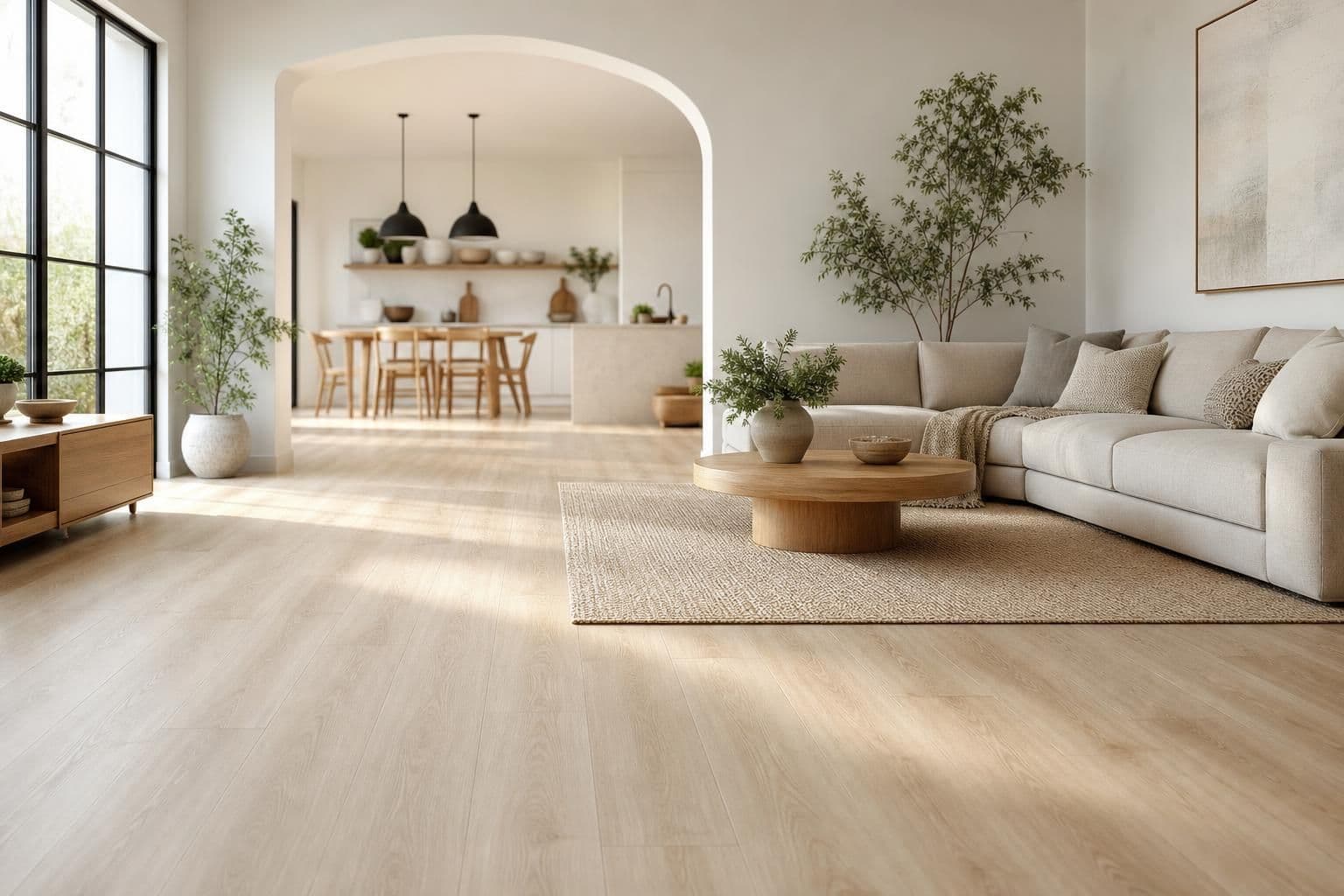
Light, low-contrast flooring in a color close to your walls and trim makes a room read as larger because the eye can't find a hard stopping point where floor meets wall. Cooler, mid-to-light tones with a matte-to-satin sheen reflect more ambient light and reduce visual "noise" from seams and grain, while dark or high-contrast floors visually shrink a space by drawing a hard line around its edges.
Key takeaways
- Light, low-contrast tones that closely match wall color make floor-to-wall boundaries disappear, expanding the perceived space.
- Matte or satin sheens diffuse light evenly; high-gloss floors bounce light unevenly and can highlight every seam and scratch.
- Running planks in long, continuous lines toward a room's longest sightline stretches the eye further than color alone can.
Why Color Changes How Big a Room Feels
A room's perceived size is mostly about contrast and light, not square footage. When flooring is much darker or much lighter than the walls, the eye registers a boundary line and mentally "closes" the room at that edge. Reduce that contrast and the boundary softens, so the floor and walls read as one continuous plane. This is the same principle used in commercial and hospitality design to make compact spaces feel open, and it applies just as directly to a lanai-adjacent living room or a small condo galley kitchen.
Light reflectance also matters. Lighter surfaces bounce more ambient and natural light around a room, which is why the Munsell Color System, the standard reference many designers use to describe how light or dark a color reads, is often cited when comparing flooring and paint values side by side. A floor with a higher light reflectance value simply pushes more light back into the room instead of absorbing it.
Best Flooring Colors for Small or Dim Rooms
- Warm light oak or driftwood tones — reflect light without looking clinical, and hide dust better than pure white.
- Soft greige or sandy beige — a safe middle ground that reads larger in rooms with mixed lighting, common in older Oahu homes with smaller windows.
- Cool light gray — works well in rooms with strong natural light or ocean views, since it won't compete with bright daylight the way a warm tone can.
- Whitewashed or bleached wood-look vinyl — the highest-reflectance option, best for windowless bathrooms, laundry rooms, or interior hallways.
Avoid stark white flooring in high-traffic zones; it shows scuffs fast and can look institutional rather than expansive.
Sheen and Finish Matter as Much as Color
A satin or matte finish spreads light evenly across the surface, which is what creates the soft, open look most homeowners want. High-gloss finishes reflect light in sharp points instead, which can make a small room feel busy and can exaggerate every seam, footprint, and piece of furniture reflected in the floor. For vinyl plank specifically, most residential lines are manufactured in matte or low-sheen finishes for exactly this reason, and they also resist showing scratches better over time — something worth knowing if you're comparing options after reading about keeping vinyl plank looking new.
Plank Direction and Size Change the Math
Color does the heavy lifting, but plank orientation and width add or subtract inches visually:
- Run planks the long way. Installing boards parallel to a room's longest wall or main sightline stretches the eye down that axis.
- Choose wider planks in small rooms. Fewer seams per square foot means less visual clutter, which reads as more open space than the same color in narrow strips.
- Keep the same flooring from room to room. Changing floor color at every threshold chops an open floor plan into smaller-feeling segments — a common issue in single-wall Oahu kitchens that flow directly into the living area.
- Match trim and baseboards close to the wall color, not the floor. This keeps the visual boundary at the ceiling line instead of the floor line, which is where most rooms actually feel cramped.
Where This Gets Tricky in Oahu Homes and Condos
Natural light varies a lot by unit and orientation here — a North Shore cottage with jalousie windows gets very different daylight than a Kakaako high-rise unit with one lanai-facing wall. That's why a color that opens up a well-lit Kailua living room can look flat or dim in a shaded Honolulu condo. The Department of Energy notes that daylighting design — how much natural light actually reaches a space — significantly affects how interior finishes read, which is one more reason to view flooring samples in the room itself rather than under showroom lighting alone.
If you're also working out room flow as part of a larger project, this pairs naturally with planning a kitchen layout that doesn't feel boxed in, since layout and flooring color are solving the same visual problem from two angles.
A Simple Way to Test Before You Commit
Bring a sample into the actual room at different times of day — morning trade-wind light and evening lamp light can shift a color noticeably. Lay it flat, not propped against a wall, and view it from the doorway, which is usually the first sightline a visitor sees. If you're comparing several tones or vendors, keep the comparison consistent by checking finish, thickness, and warranty side by side, not just color — a shortcut covered in more detail in how to compare flooring quotes apples to apples. Underlayment choice can also subtly affect how a floor sits and reflects light at the edges, which is worth a look if you're deciding between options in the best underlayment for vinyl plank flooring.
Frequently Asked Questions
Q: Does dark flooring always make a room look smaller?
Not always — dark flooring paired with dark or matching walls can create a cohesive, enveloping look in a larger room. It's high contrast between floor and wall, not darkness alone, that tends to shrink the perceived size of a small space.
Q: Should flooring match wall color exactly to make a room look bigger?
It doesn't need to match exactly, just stay close in value (lightness or darkness). A floor two or three shades off from the wall still blurs the boundary line effectively.
Q: What's the single best flooring color for a small condo?
A warm light oak or soft greige tone with a matte finish tends to work across the widest range of lighting conditions, especially in units with limited natural light.
Q: Does plank width really affect how big a room looks?
Yes — wider planks create fewer visible seams per square foot, which reduces visual clutter and makes the floor read as one continuous surface rather than a patchwork of lines.
Q: Can the same flooring color look different in two rooms of the same house?
Yes, because light reflectance depends on window orientation, bulb color temperature, and even nearby wall colors. That's why testing a sample directly in the room, at different times of day, matters more than judging it under showroom lighting.