Best Countertop for an Outdoor Kitchen in Hawaii
Key takeaway
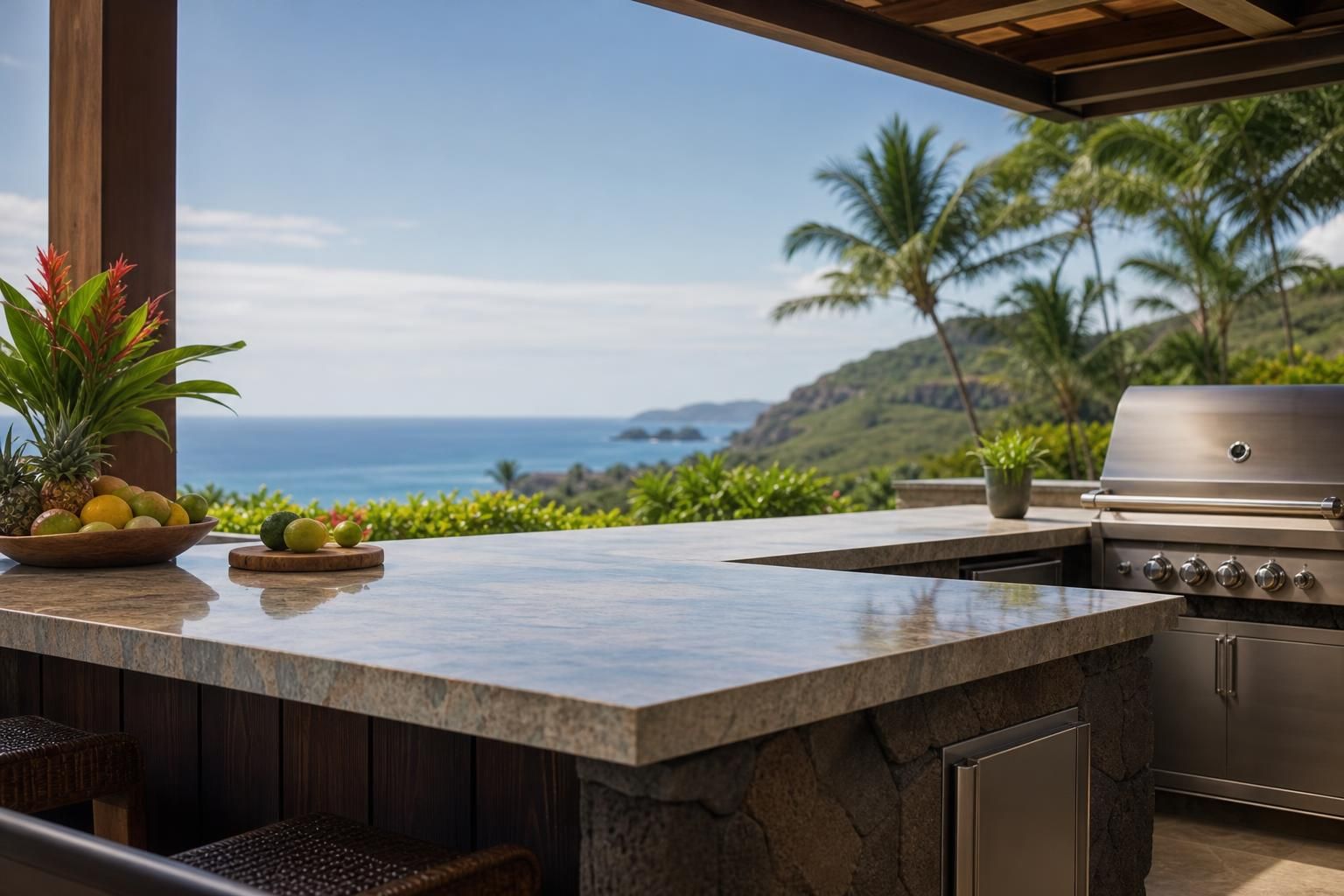
For a covered lanai kitchen out of direct sun, quartz performs well and matches an indoor kitchen's look. For a fully exposed outdoor kitchen that takes all-day sun and salt spray, porcelain slab or granite is the more durable choice, because quartz's resin binder can fade or craze under prolonged UV exposure. The right pick depends less on "best material" in general and more on how much sun and salt air the specific spot actually gets.
Key takeaways
- Quartz is fine under a roofed lanai but isn't rated for full, unshaded sun exposure long-term.
- Porcelain slab and granite handle direct UV and salt air with the least long-term risk.
- Edge profile, sealing schedule, and overhang for bar seating matter as much as the material itself.
Why Hawaii's Outdoor Conditions Change the Answer
Most national buying guides assume a mainland backyard with seasonal weather. Oahu outdoor kitchens deal with near-constant UV exposure, salt-laden air near the coast, and humidity that rarely drops. The National Weather Service classifies Hawaii's trade-wind climate as persistently humid with some of the highest average solar irradiance in the U.S., which is exactly the combination that stresses resin-based and unsealed materials fastest. A countertop that's rated "outdoor safe" for Arizona or Florida isn't automatically rated for salt spray on a North Shore lanai.
The two variables that matter most are sun exposure and proximity to salt air, not just "indoor vs. outdoor."
Material Comparison for Oahu Outdoor Kitchens
| Material | Direct UV exposure | Salt-air resistance | Maintenance | Best fit |
|---|---|---|---|---|
| Quartz | Can fade/craze over years in full sun | Good if sealed, but not UV-rated | Low, no sealing needed | Covered lanai, shaded kitchens |
| Granite | Stable in full sun | Very good | Periodic resealing | Fully exposed outdoor kitchens |
| Porcelain slab | Excellent, UV-inert | Excellent | Very low | Full sun, coastal spots |
| Concrete | Stable but porous | Fair, needs sealing | Moderate, re-seal often | Covered or semi-covered areas |
| Stainless steel | Excellent | Excellent | Low, shows scratches | Grill stations, prep zones |
Porcelain and granite top the list for anything that isn't shaded, because neither depends on a polymer resin that breaks down under sustained ultraviolet light. Quartz's engineered-stone formula typically blends crushed quartz with a resin binder, and it's that binder — not the stone itself — that's vulnerable outdoors. The Natural Stone Institute notes this distinction when comparing engineered and natural materials for exterior use.
Covered Lanai vs. Fully Exposed Kitchen
This is the real fork in the decision, more than the material list above:
- Covered, shaded lanai (roof overhang, pergola with solid cover): Quartz works, holds color, and lets you match an interior kitchen for a seamless look between indoor and outdoor space.
- Partially covered (some direct afternoon sun): Granite is the safer middle ground — it tolerates intermittent sun without the long-term fade risk quartz carries.
- Fully exposed, no overhead cover: Porcelain slab or granite only. Skip quartz here regardless of brand or warranty language, since UV breakdown is a property of the resin, not a specific product line.
If you're comparing this decision against an indoor or commercial setup, the trade-offs are laid out in more detail in this comparison of commercial kitchen countertop materials, which covers heat and impact resistance alongside UV concerns.
Edge Profile, Overhangs, and Bar Seating
Outdoor kitchens on Oahu often include a bar or eating ledge facing the yard or pool. Overhang depth affects both comfort and structural support — too much unsupported overhang on any slab material risks cracking under weight. If you're planning seating at the counter, it's worth checking the standard bar countertop overhang guidance before finalizing a layout, since the support requirements differ from a standard kitchen counter.
Eased or bullnose edges are generally a better outdoor choice than sharp square edges — they resist chipping from pool furniture, grill tools, and the general bumping that happens in an open-air space more than an interior kitchen sees.
What Actually Drives the Project's Scope
Beyond the slab itself, a few Oahu-specific conditions tend to add steps to an outdoor countertop install:
- Substrate and cabinet base: Outdoor cabinet boxes need to be moisture- and insect-resistant, which changes the base structure the countertop sits on.
- Seams and support: Island layouts with a grill cutout or sink often need additional bracing under the slab, especially with granite's weight.
- Freight on special orders: Less common slab colors or porcelain patterns may need to be special-ordered and shipped to Oahu, which adds lead time more than it adds complexity.
- Sealant and resealing schedule: Granite and concrete need a periodic reseal in outdoor conditions; porcelain and stainless do not.
These variables are the reason a real quote has to be based on your actual layout and sun exposure rather than a generic number — they're covered in more depth in what actually drives renovation cost on Oahu.
Maintenance by Material
- Quartz (covered use only): Wipe clean, avoid prolonged standing water, no sealing required.
- Granite: Reseal on a regular schedule (check with an installer for frequency based on sun/salt exposure), clean with pH-neutral stone cleaner.
- Porcelain: Wipe clean, resists staining and etching, virtually no sealing needed.
- Concrete: Reseal more frequently than granite, watch for hairline cracking near seams.
- Stainless steel: Wipe clean, use non-abrasive pads to avoid visible scratching over time.
Frequently Asked Questions
Q: Can you use quartz countertops outdoors in Hawaii at all?
Yes, but only under a solid roof or deep overhang that blocks direct, sustained sun. Full sun exposure over years can fade color and cause surface crazing in the resin binder, regardless of brand.
Q: Is granite better than quartz for a Hawaii outdoor kitchen?
For anything in direct sun or near salt spray, granite generally outperforms quartz because it doesn't rely on a UV-sensitive resin. For a shaded, covered lanai, quartz performs just as well and gives a more uniform look.
Q: Does salt air damage outdoor countertops on Oahu?
Salt-laden air accelerates wear on porous or unsealed surfaces and can corrode metal fixtures faster near the coast. Sealed granite, porcelain, and stainless steel handle salt exposure with the least maintenance.
Q: What's the most maintenance-free outdoor countertop option?
Porcelain slab generally needs the least upkeep — it resists UV fading, staining, and scratching without a sealing schedule, which makes it a common pick for fully exposed outdoor kitchens.
Q: Do condo lanai kitchens need board approval for countertop changes on Oahu?
Many AOAOs require spec approval for lanai or exterior-facing renovations, similar to flooring changes. The process and paperwork differ from single-family homes, which is covered in the HOA vs. AOAO rules comparison.