Vinyl Plank Flooring in Mililani: What to Know Before Buying
Key takeaway
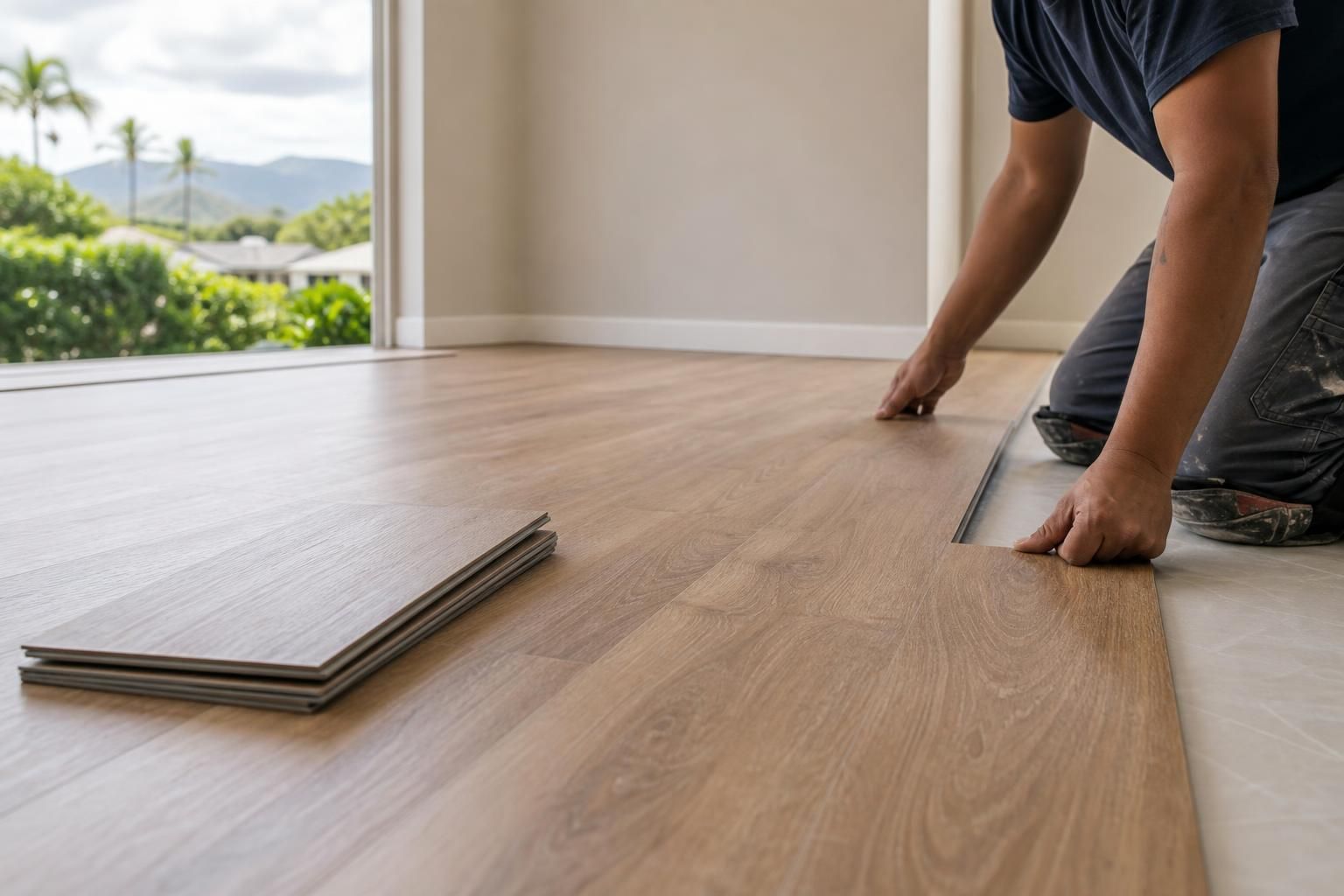
Vinyl plank flooring works well in Mililani homes because the material handles the island's humidity and temperature swings better than hardwood or laminate, and it holds up to the slab-on-grade foundations common in the neighborhood's older subdivisions. The right choice between rigid-core (SPC) and flexible-core (WPC) planks depends on your subfloor condition, not just your budget. A measured, in-home quote is the only way to know what your specific installation will actually require.
Key takeaways
- Mililani's mostly slab-on-grade homes from the 1960s–1990s often need subfloor leveling before plank flooring will lay flat and lock properly.
- SPC (stone plastic composite) core handles moisture and heavier furniture better than WPC, which matters more in ground-floor rooms and lanais.
- Pricing depends on square footage, subfloor prep, and material tier — not a flat rate — so an accurate number only comes from measuring your actual rooms.
What Makes Mililani Different From Other Oahu Neighborhoods for Flooring
Mililani sits at a higher elevation than coastal Honolulu, which means slightly less salt air exposure than homes closer to the water, but humidity and temperature swings are still constant year-round across the island. Most homes in the area were built between the 1960s and 1990s as part of planned subdivisions, which means a lot of original slab foundations, builder-grade subflooring, and decades of prior flooring layers that may still be underneath whatever is down now.
Unlike condo buildings in town, most Mililani properties are single-family homes under the Mililani Town Association, which focuses on landscaping and exterior standards rather than interior flooring approval. If your project is in one of the newer townhome developments with an AOAO, you'll want the same kind of condo-ready documentation covered in guides on vinyl plank flooring in Kailua, where board approval requirements are more common.
Subfloor Conditions in Mililani Homes You Should Check First
Vinyl plank only performs as well as the surface underneath it. On a slab, that means checking for moisture, old adhesive residue, and unevenness before new planks go down. On raised foundations — more common in some of Mililani's older plantation-style streets — squeaky joists and gaps between subfloor panels need to be addressed first, or they'll telegraph through the new floor.
Common subfloor issues installers find in this area include:
- Low spots or ridges from decades-old concrete pours that need self-leveling compound
- Adhesive or mastic left behind from removed vinyl composition tile (VCT), which was standard in many 1970s–1980s builds
- Moisture readings that run high near exterior walls, especially in homes without updated vapor barriers
- Squeaks or flex in raised-foundation sections that need re-fastening before planks lock together
Skipping subfloor prep is the single biggest reason floating vinyl plank floors fail early — not the material itself.
Choosing Between SPC and WPC Vinyl Plank for Mililani's Climate
Vinyl plank comes in two main rigid formats: SPC, built on a stone-composite core, and WPC, built on a wood-composite core. SPC is denser, more resistant to denting under heavy furniture, and holds up better to moisture, which makes it the more common choice for kitchens, entries, and ground-floor living spaces across Oahu. WPC has a softer, slightly warmer feel underfoot and can be a reasonable choice for bedrooms where moisture exposure is lower.
Humidity is a constant factor either way. Average relative humidity on Oahu typically stays well above 60% year-round according to NOAA's climate data for Hawaii, which is why manufacturers build expansion gaps and acclimation periods into their installation instructions rather than treating vinyl plank like a rigid, fixed material. Planks that aren't allowed to acclimate to room temperature and humidity before installation are more likely to buckle or gap later. For homes with heavy sun exposure through sliding doors or large windows, it's also worth reading how vinyl plank flooring responds to direct sunlight on Oahu before finalizing a color or finish.
What Actually Drives the Cost of a Mililani Installation
There's no honest flat number for vinyl plank flooring in Mililani, because every home has a different combination of factors that change labor and material needs. What actually moves the price on a real quote includes:
- Subfloor prep — leveling compound, moisture barriers, or old adhesive removal add time and material
- Tear-out and disposal — removing existing carpet, tile, or old vinyl, and hauling it away
- Square footage and room layout — more cuts around cabinets, islands, and closets add labor
- Stairs — each stair nosing and riser takes more time per square foot than open floor space
- Furniture moving — whether rooms need to be cleared before crews arrive
- Material tier — wear layer thickness and core type affect both price and durability
- Special orders — certain colors or wider planks may need to be freighted in from off-island, which affects lead time
The only way to get a number that actually applies to your home is a quote measured against your real square footage and conditions — not a published average that has to guess at all of the above.
Steps to Get an Accurate Quote for Your Mililani Home
A useful quote process starts with real measurements, not a phone estimate. Expect it to look something like this:
- Share your room dimensions or have someone measure on-site
- Note any existing flooring that needs to be removed
- Flag stairs, built-ins, or tight layouts that affect labor
- Choose a material tier based on room use and foot traffic
- Get a written quote back that reflects your actual square footage, not a generic estimate
If you're also updating cabinets or countertops as part of the same project, coordinating material and installer scheduling together tends to go more smoothly than treating them as separate jobs — something covered in more detail in guides on countertop installers in Mililani.
Frequently Asked Questions
Q: Is vinyl plank flooring a good choice for Mililani homes specifically?
Yes — Mililani's mix of slab foundations and consistently humid conditions suits vinyl plank better than hardwood or laminate, provided the subfloor is properly leveled and prepped before installation.
Q: Do Mililani homes need special moisture barriers under vinyl plank?
Many do, especially on slab foundations near exterior walls where moisture readings run higher. A contractor should test subfloor moisture before installation rather than assuming a barrier is or isn't needed.
Q: How long does vinyl plank flooring installation typically take in a Mililani home?
Timelines vary with square footage, subfloor condition, and whether tear-out of existing flooring is needed, so there's no fixed timeframe that applies to every home — it depends on what the crew finds once work starts.
Q: Can vinyl plank flooring be installed over existing tile in Mililani homes?
In many cases yes, as long as the tile is flat, stable, and free of major cracks, though an installer needs to evaluate the specific surface first since uneven grout lines can telegraph through thinner plank products.
Q: Does vinyl plank flooring need acclimation time before installation on Oahu?
Yes — manufacturers generally recommend letting planks sit in the room's actual temperature and humidity for a set period before installation, which helps prevent gapping or buckling once the floor is down.