Does Vinyl Plank Flooring Fade in Sunlight on Oahu?
Key takeaway
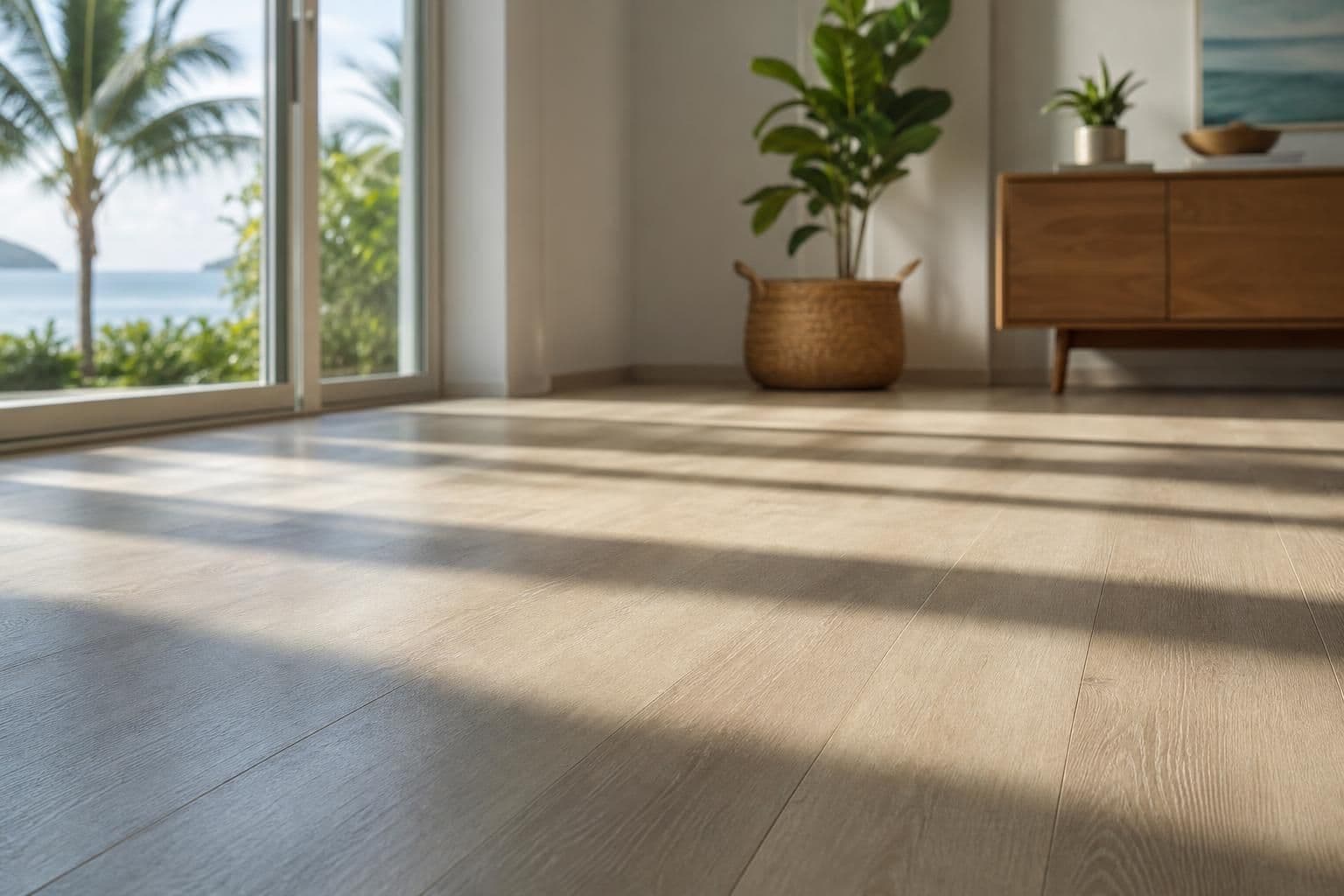
Yes, vinyl plank flooring fades in direct sunlight, and Oahu's UV exposure makes it happen faster than in most mainland climates. The fading comes from ultraviolet light breaking down pigments in the wear layer and printed design layer, not from heat alone, so the floor areas that get the most unfiltered sun — near sliding lanai doors, west-facing windows, and skylights — fade first and fade unevenly compared to furniture-covered or shaded areas.
Key takeaways
- UV light, not just heat, is what breaks down color in vinyl plank — the effect builds up over months of daily exposure, not from one sunny afternoon.
- Fading on Oahu shows up fastest along lanai sliders, west-facing rooms, and skylight footprints, often as a visible line between sun-exposed and covered flooring.
- A UV-rated wear layer, window treatments, and rotating rugs or furniture slow fading noticeably; no vinyl plank is fully fade-proof in direct tropical sun.
Why Sunlight Fades Vinyl Plank in the First Place
Vinyl plank flooring is built in layers: a clear wear layer on top, a printed design layer underneath that, and a vinyl core below that. Ultraviolet radiation penetrates the wear layer and slowly breaks apart the pigment molecules in the printed layer, a chemical process called photodegradation. The same mechanism fades outdoor furniture cushions and car dashboards — it's cumulative, which is why a floor can look fine for a year or two and then show a visible shift.
Heat speeds up the chemical reaction but isn't the root cause. A floor under a UV-blocking window film can sit in a hot room for years and barely change color, while an unprotected floor in a cooler but sun-drenched room will still fade. The U.S. EPA's UV Index guidance explains how UV intensity varies by location and time of day — and Hawaii sits at a latitude where UV levels run higher, and more consistently, than in most of the continental U.S.
Why Oahu's Sun Is a Harder Test Than Most Mainland Homes See
Oahu's year-round sun angle and lack of a true off-season mean floors here log more cumulative UV hours per year than flooring in temperate climates. NOAA's climate data for Hawaii consistently shows the islands near the top of the UV index scale for most of the year, not just in summer. Combine that with homes built for airflow — sliding lanai doors, jalousie windows, large glass openings to catch the trade winds — and vinyl plank here is exposed to more direct, unfiltered sunlight than a comparable floor in a house with smaller, shaded windows.
This is also why fading complaints on Oahu tend to cluster in specific spots rather than across an entire floor:
- The strip of flooring just inside sliding lanai doors
- West- and south-facing rooms that catch afternoon sun
- Skylight footprints in kitchens and hallways
- Condo units on upper floors with less shade from neighboring buildings
If you're choosing flooring for a sun-heavy transition space, the same UV exposure that fades color also accelerates wear, which is covered in more detail in the site's guide to flooring that holds up on a lanai.
What Actually Slows Down Fading
A few factors make a measurable difference, and they're worth asking about before you buy:
- Wear layer thickness and UV inhibitors. Thicker wear layers with built-in UV stabilizers resist color breakdown longer than thin, budget-grade layers. This is a spec worth asking about by name, not just a general "is it good quality" question.
- Window treatments. Blinds, UV-filtering window film, and sheer curtains block a large share of the UV radiation before it ever reaches the floor — the single most effective fix for a sun-heavy room.
- Furniture and rug rotation. Rugs and furniture left in one spot for years create a visible outline once the surrounding floor fades. Rotating them every season evens out the exposure.
- Color choice. Darker, more saturated colors tend to show fading as a visible contrast faster than lighter, more neutral tones, simply because the color shift is easier to see against a darker baseline.
None of these make a floor fade-proof. They slow the rate and even out where it happens, which matters most in rooms with permanent, unblockable sun exposure like glass-walled lanais.
Can Faded Vinyl Plank Be Matched or Repaired?
Not reliably. Vinyl plank color comes from a printed layer created at manufacture, and that exact print run isn't something installers can replicate on-site. If a few planks fade faster than the rest — for example, the row closest to a sliding door — the only real fix is replacing those planks with new material from the same product line, and even then, a few years of production gap can mean a visible shift between old and new.
This is one of several reasons it helps to order a little extra material at installation and store it properly, so replacement planks come from the same dye lot if a UV-damaged section needs patching down the road. It's also why getting the specs right before ordering matters — something covered in the site's guide on getting an accurate flooring estimate, since underordering a sun-exposed room often means a mismatched patch later.
Checking Samples Under Real Light Before You Decide
Showroom lighting is almost never the same as the light in a sun-facing lanai room. If fading is a real concern for your space, it helps to see and feel actual samples rather than judge from a photo or a small swatch online — color saturation and sheen both read differently under direct sun than under indoor lighting. The site's guide on what to bring to a Honolulu flooring showroom covers how to use a sample visit to check a product against the actual light conditions in your home, including taking samples home to set in the sun-exposed spot for a few days before committing.
For standards on how manufacturers test UV resistance, flooring products are often rated against accelerated weathering tests outlined by bodies like ASTM International, which publishes the testing standards many flooring manufacturers use to rate color stability under simulated sunlight exposure.
Frequently Asked Questions
Q: Does all vinyl plank flooring fade the same amount in sunlight?
No. Fade resistance depends on the wear layer's thickness and UV inhibitors, plus the color and saturation of the printed design layer. Darker, more saturated colors typically show visible fading sooner than lighter, neutral tones.
Q: How long does it take for vinyl plank to show fading?
It varies by sun exposure and product quality, but visible fading in a sun-heavy Oahu room — like next to a sliding lanai door — can show up within a year or two of daily direct sun, while shaded rooms may show little change for much longer.
Q: Will curtains or blinds really stop vinyl plank from fading?
Yes, meaningfully. Blocking direct UV exposure with blinds, curtains, or UV-filtering window film is one of the most effective ways to slow color breakdown, since the fading is driven by ultraviolet light reaching the floor, not ambient room heat.
Q: Can I fix a faded patch of vinyl plank without replacing the whole floor?
Sometimes, if you have matching planks from the same production run stored since installation. Without matched replacement material, a patched section is likely to look visibly different from the surrounding floor.
Q: Is vinyl plank more fade-resistant than hardwood on a sunny lanai-facing room?
Vinyl plank with UV inhibitors generally holds color better in direct sun than unfinished or lightly finished hardwood, but both materials fade under prolonged direct UV exposure. The bigger factor in either case is how much direct, unfiltered sun actually reaches that spot in the room.