SPC vs WPC Vinyl Flooring: Which Holds Up on Oahu?
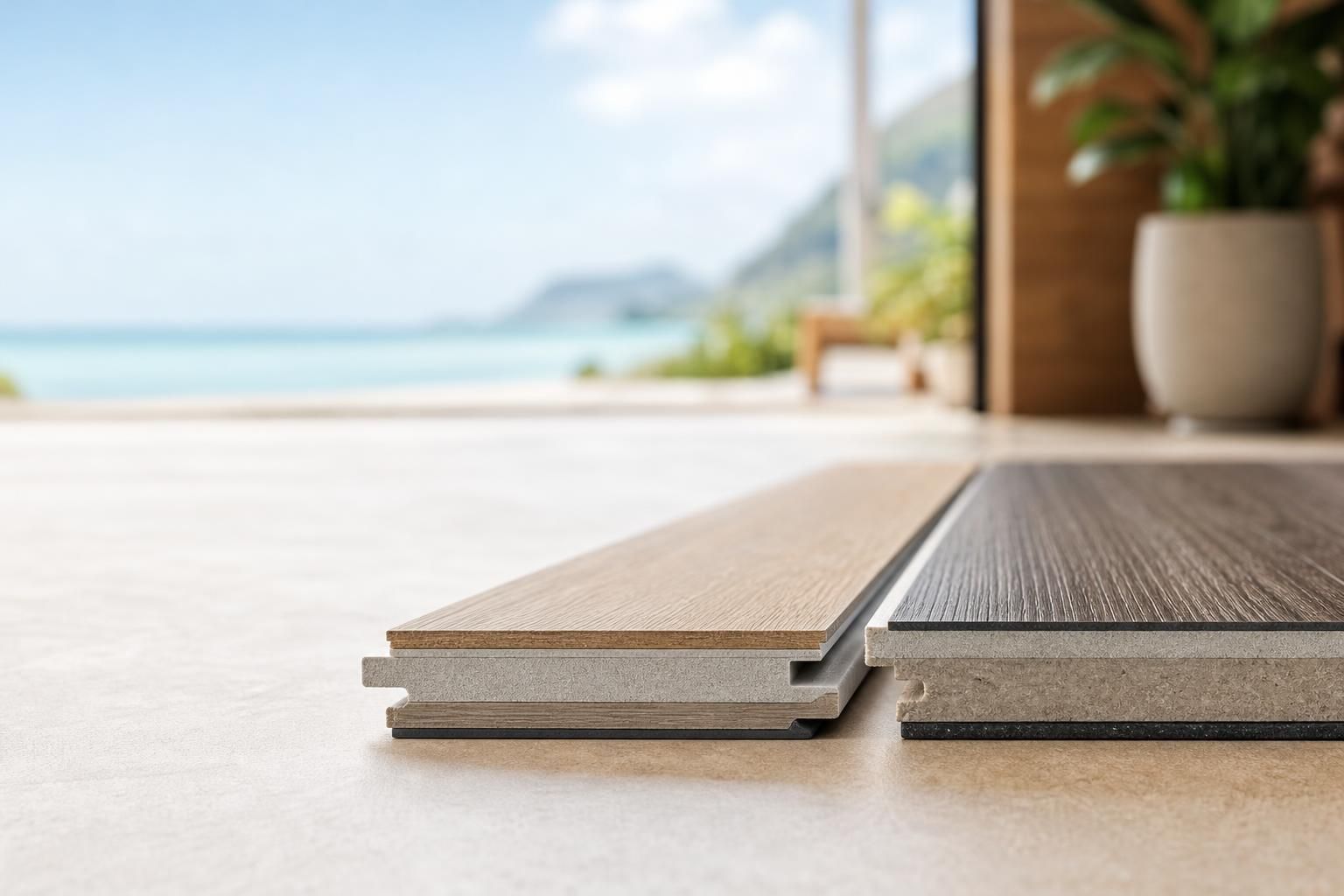
Key takeaway
SPC (stone plastic composite) vinyl flooring has a dense, mineral-filled core that resists dents, heat, and moisture better than WPC (wood plastic composite), which uses a lighter, foam-based core that's softer underfoot but less stable in hot, humid rooms. For most Oahu homes — especially ground-floor units, lanais-adjacent rooms, and rental properties — SPC is the more dependable choice, while WPC can work in low-traffic, climate-controlled bedrooms where comfort matters more than durability.
Key takeaways
- SPC's stone-based core resists heat and humidity-driven expansion better, making it the safer default for Oahu's warm, moist interior climate.
- WPC feels softer and quieter underfoot but dents more easily and can soften near sliding doors, windows, or un-air-conditioned rooms.
- Either core can meet Honolulu condo noise-rating rules, but the underlayment and installation method matter more than the core type itself.
What SPC and WPC Actually Are
Both are rigid-core vinyl plank products, not the flexible sheet vinyl from decades past. The difference is in the core layer sandwiched beneath the printed design and wear layer:
- SPC mixes limestone powder with PVC resin and stabilizers, producing a core that's dense, rigid, and roughly as hard as natural stone tile.
- WPC mixes wood pulp or bamboo fiber with foamed PVC, producing a core that's lighter, more flexible, and noticeably softer when you press on it.
That core difference drives almost every practical distinction between the two — comfort, sound, heat tolerance, and how forgiving each one is over an imperfect subfloor.
How They Compare Side by Side
| Factor | SPC | WPC |
|---|---|---|
| Core density | High — mineral-filled, rigid | Lower — foam-based, softer |
| Underfoot feel | Firm, closer to tile | Cushioned, quieter |
| Heat tolerance | Stable near windows, lanais, hot garages | Can soften or indent under direct sun/heat |
| Dent resistance | Better under heavy furniture, appliances | More prone to dents from point loads |
| Subfloor forgiveness | Needs flatter subfloor for best results | Slightly more forgiving over minor dips |
| Typical best use | Kitchens, living areas, condos, rentals | Bedrooms, low-traffic rooms, climate-controlled spaces |
Why Core Choice Matters More in Hawaii's Climate
Honolulu runs warm and humid nearly year-round, and interior temperatures near single-pane sliders or un-air-conditioned rooms can climb well past what mainland installation guidelines assume. According to NOAA's climate data for Honolulu, average relative humidity stays elevated across most months, which is exactly the condition that causes softer composite cores to expand, contract, or show gapping at the seams over time. SPC's stone-filled core resists that movement better, which is why it's become the more common recommendation for Oahu's ground-floor units, lanai-adjacent rooms, and any space that gets direct afternoon sun. If you're weighing vinyl against solid wood alternatives for the same reason, the comparison in vinyl plank vs. engineered wood in Oahu humidity covers the same heat-and-moisture logic from a different angle.
Noise, Condos, and AOAO Approval
Neither SPC nor WPC is automatically condo-compliant — what matters to an AOAO board is the assembly's tested Impact Insulation Class (IIC) rating, which depends on the underlayment and installation method as much as the plank itself. WPC's softer core gives it a slight natural advantage in sound dampening, but a well-chosen underlayment can bring an SPC floor to the same rating. Before ordering either product for a high-rise unit, check your building's specific requirement against what's outlined in Honolulu condo flooring noise-rating requirements, and if impact sound between floors is your main concern, reducing noise from vinyl plank flooring in condos walks through underlayment options that apply to both core types.
Durability and Everyday Wear
The wear layer on top — not the core — is what actually resists scratches and scuffs from daily foot traffic, and it's rated the same way regardless of whether the core underneath is SPC or WPC. Where the core type shows up is in dent resistance: a refrigerator foot or a dropped cast-iron pan is more likely to leave a lasting mark in a WPC floor's softer core than in SPC's denser one. The U.S. Consumer Product Safety Commission has published guidance on vinyl flooring materials and phthalate content, which is worth knowing if you're comparing products with different certifications — ask any supplier for the specific wear layer thickness and core composition in writing rather than relying on marketing terms alone.
Sunlight, Lanais, and Fading
Direct sun through sliding glass doors or skylights affects the printed wear layer, not the core, so SPC and WPC fade at similar rates under identical UV exposure. What differs is heat tolerance underneath that sun exposure — a WPC core sitting in a consistently hot spot is more likely to soften or telegraph subfloor imperfections over months than SPC. If fading near windows or lanai doors is your main concern independent of core type, does vinyl plank flooring fade in sunlight on Oahu breaks down what actually causes color change and how to limit it.
Which One Fits Your Project
A rental unit, a kitchen, or a condo near the ocean generally does better with SPC because of its stability under heat, moisture, and heavier furniture. A quiet upstairs bedroom in a climate-controlled home, where comfort underfoot matters more than dent resistance, is a reasonable place for WPC. Subfloor condition plays a role too — older Oahu homes with uneven slabs often need leveling work regardless of which core you choose, and that prep cost varies by property, not by product line. The only way to know what your specific rooms need — square footage, subfloor condition, and whether an AOAO filing applies — is a free quote built around your actual measurements, since core type is just one variable in what the finished floor will cost and how it performs.
Frequently Asked Questions
Q: Is SPC or WPC better for a kitchen?
SPC is generally the better fit for kitchens because its denser core resists moisture, heat near appliances, and point-load dents from dropped cookware better than WPC's softer core.
Q: Does WPC feel noticeably different underfoot than SPC?
Yes — WPC's foam-based core gives it a softer, slightly cushioned feel, while SPC feels firmer and closer to walking on tile.
Q: Can either SPC or WPC meet a condo's sound rating requirement?
Both can meet typical Impact Insulation Class requirements when paired with the right underlayment; the core material alone doesn't determine compliance, the full assembly does.
Q: Will SPC or WPC hold up better near a lanai door or window?
SPC handles heat and humidity swings near lanai doors and windows more reliably, since its mineral-filled core resists the expansion and softening that WPC's foam core can experience in sustained heat.
Q: Do SPC and WPC fade at different rates in direct sunlight?
No — fading comes from UV exposure on the printed wear layer, which behaves similarly on both core types; the core only affects heat tolerance, not color stability.