Quartz vs Soapstone Countertops: Which Fits Your Kitchen?
Key takeaway
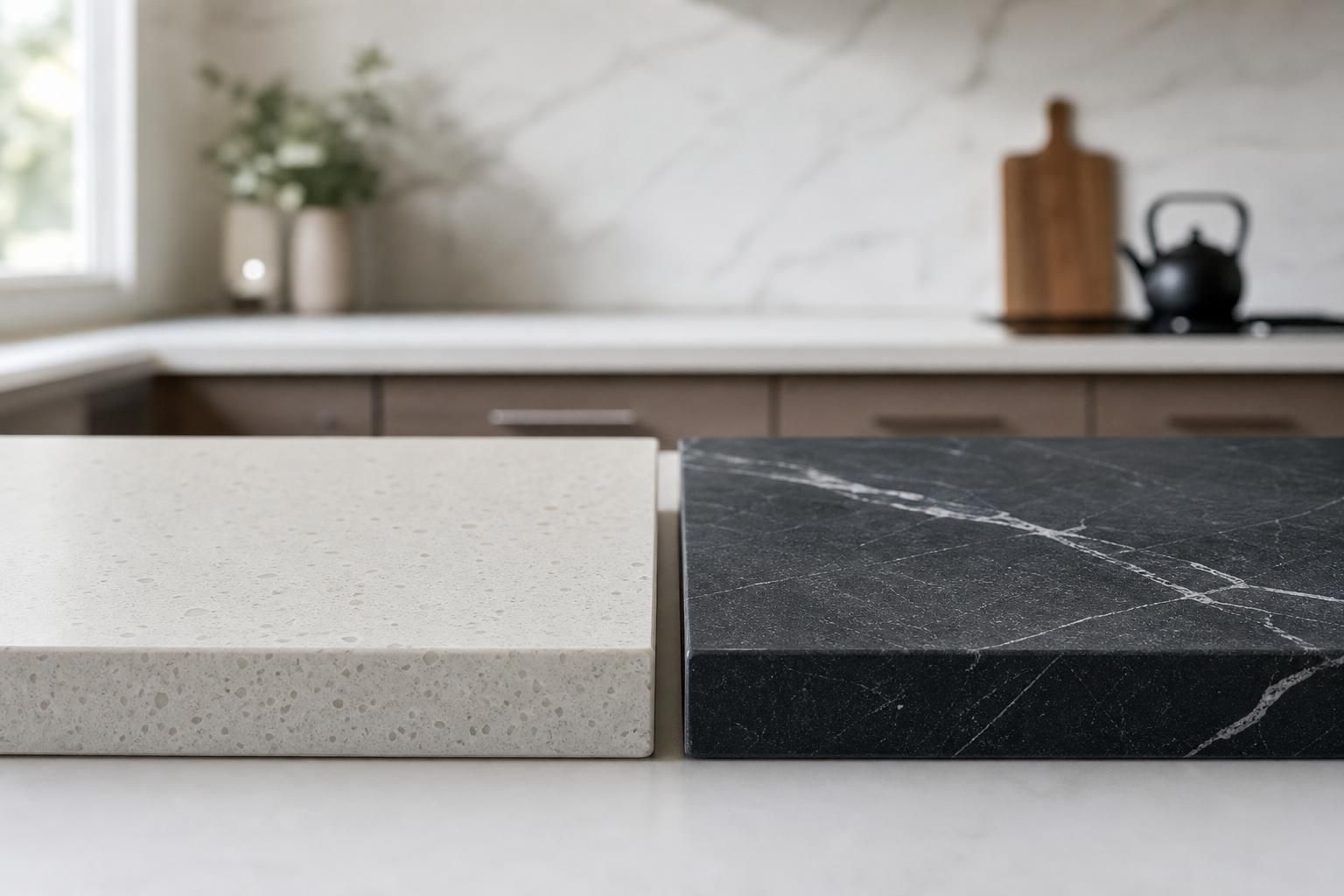
Quartz is an engineered stone that resists stains and scratches with almost no upkeep, while soapstone is a soft natural stone that develops a patina, needs periodic oiling, and can be sanded to repair damage. Quartz holds a more consistent, predictable look across a large kitchen; soapstone varies slab to slab and changes color as it ages. For most Oahu kitchens, the deciding factors are how much maintenance you want to do, how the surface should look in five years, and what the humidity and salt air in your home will do to it over time.
Key takeaways
- Quartz needs no sealing and resists stains; soapstone needs periodic mineral oil and will darken and develop scratches as part of its normal look.
- Soapstone handles direct heat better than quartz, which can discolor or crack near hot pans without a trivet.
- Quartz comes in far more consistent colors and patterns, useful for matching cabinets or flooring across an open kitchen.
What Each Material Actually Is
Quartz countertops are engineered from roughly 90-95% crushed natural quartz mixed with resins and pigments, which is why slabs look uniform from one end to the other — there's no quarry variation to account for. Soapstone is a quarried metamorphic rock made mostly of talc, which is what gives it that soft, almost soapy feel and makes it easy to scratch but also easy to sand out. The U.S. Geological Survey classifies soapstone (steatite) among metamorphic rocks valued historically for heat resistance, which is why it shows up in old wood-stove hearths and lab countertops.
Durability and Daily Wear
Quartz is engineered specifically to resist scratching, chipping, and staining, which is why manufacturers back it with long material warranties and why it's become a default choice in rental units and high-traffic kitchens. Soapstone is softer — a dropped cast-iron pan can dent it, and knives will leave marks if you cut directly on the surface — but because it's one consistent mineral all the way through, those marks can usually be sanded and re-oiled away rather than needing a slab replacement.
- Quartz: resists scratches, chips, and stains without sealing.
- Soapstone: scratches and dents more easily, but damage is repairable by sanding.
- Both: neither is indestructible; cutting boards and trivets extend either surface's life.
Heat and Daily Kitchen Use
This is where soapstone has a real edge: it's been used for stove surrounds and lab benches precisely because it tolerates direct heat well. Quartz contains resin binders, and manufacturers consistently warn against setting hot pots directly on the surface because heat can discolor the resin or cause thermal cracking. If your kitchen routine includes pulling pans straight off the stove and setting them down, that single habit is worth weighing before you choose.
Maintenance and Appearance Over Time
Quartz asks almost nothing of you day to day — wipe it down, no sealing, no oiling. Soapstone is a living surface: most owners apply mineral oil every few weeks at first, tapering off over time, to even out and darken the patina. If you like a surface that looks the same on day 2,000 as it did on day one, quartz does that. If you like watching a material age and deepen in color — the way some homeowners describe an old soapstone farmhouse sink — that's a feature, not a flaw, for soapstone fans.
Color, Pattern, and Matching Your Kitchen
Quartz is manufactured, so you can order the same pattern in multiple slabs and expect them to match — useful if you're also coordinating vinyl plank flooring or cabinet finishes across a large kitchen or an open floor plan. Soapstone runs in a narrow natural palette, generally grey-green to charcoal, and each slab has its own veining, so no two installations look identical. For buyers comparing options for a specific layout, the quartz countertops category covers the range of manufactured patterns available, and the Mililani-area buyer's guide walks through how pattern selection works for a typical kitchen.
Oahu Climate Considerations
Humidity and salt air don't damage either stone the way they can damage wood, but they do affect maintenance rhythm. Soapstone's oiling schedule can need to run slightly more often in a humid kitchen near the coast, and un-oiled spots will show water marks faster in a steamy island kitchen than they would in a dry climate. Quartz's non-porous surface is largely indifferent to humidity, which is part of why it's become the default recommendation in condo kitchens across Honolulu's high-rises, where board rules often favor low-maintenance, moisture-tolerant finishes. Condo owners dealing with AOAO paperwork specifically should see how condo flooring approval requirements intersect with material choice, since boards sometimes have opinions on both floors and countertop specs in a renovation package.
Side-by-Side Comparison
| Factor | Quartz | Soapstone |
|---|---|---|
| Maintenance | Wipe clean, no sealing | Periodic mineral oiling |
| Heat tolerance | Avoid direct hot pans | Handles direct heat well |
| Scratch/stain resistance | High, resists both | Scratches easily, stains minimally |
| Repairability | Professional repair only | DIY sanding restores surface |
| Color consistency | Very consistent, manufactured | Varies by slab, natural veining |
| Typical kitchen fit | Busy households, rentals, condos | Owners who like a hand-patina look |
How the Final Decision Usually Comes Down to Use
Homeowners who want a countertop that looks the same without upkeep, especially in a rental or a condo managed through an AOAO board, tend to land on quartz. Homeowners who are drawn to a natural surface that ages visibly and who don't mind a maintenance routine tend to choose soapstone, often in a single dramatic kitchen island rather than wall-to-wall counters. Either way, the only way to know what a specific slab size and edge profile will actually cost for your kitchen is to measure the space and get a quote against those real dimensions — a published per-square-foot number for either material would be wrong for your layout the moment your cabinets or edge style differ from the example. If you're also rethinking cabinet layout at the same time, the kitchen cabinet selection guide covers how counter material choice interacts with cabinet depth and overhang.
Frequently Asked Questions
Q: Is soapstone more expensive than quartz?
Cost depends on slab size, thickness, edge profile, and installation complexity rather than the material alone, so there's no single answer that applies to every kitchen — a measured quote against your actual layout is the only accurate way to compare the two for your project.
Q: Does soapstone need to be sealed like granite?
No. Soapstone isn't sealed; it's treated with mineral oil, which darkens the stone and evens out its color rather than creating a protective barrier the way sealant does on porous stones.
Q: Can quartz crack from a hot pan?
Yes, repeated or sudden heat exposure can crack or discolor the resin in quartz, which is why manufacturers recommend trivets or hot pads rather than setting cookware directly on the surface.
Q: Which material is better for a humid Oahu kitchen?
Both hold up fine in humidity, but quartz's non-porous surface needs less attention in a steamy or coastal kitchen, while soapstone may need slightly more frequent oiling to keep water marks from showing.
Q: Can scratches in soapstone be fixed without replacing the slab?
Yes. Because soapstone is a single consistent mineral, light scratches and dents can usually be sanded out and re-oiled, which is a repair option quartz doesn't offer in the same way.