Quartz Countertop Remnants Near Me: A Buyer's Guide
Key takeaway
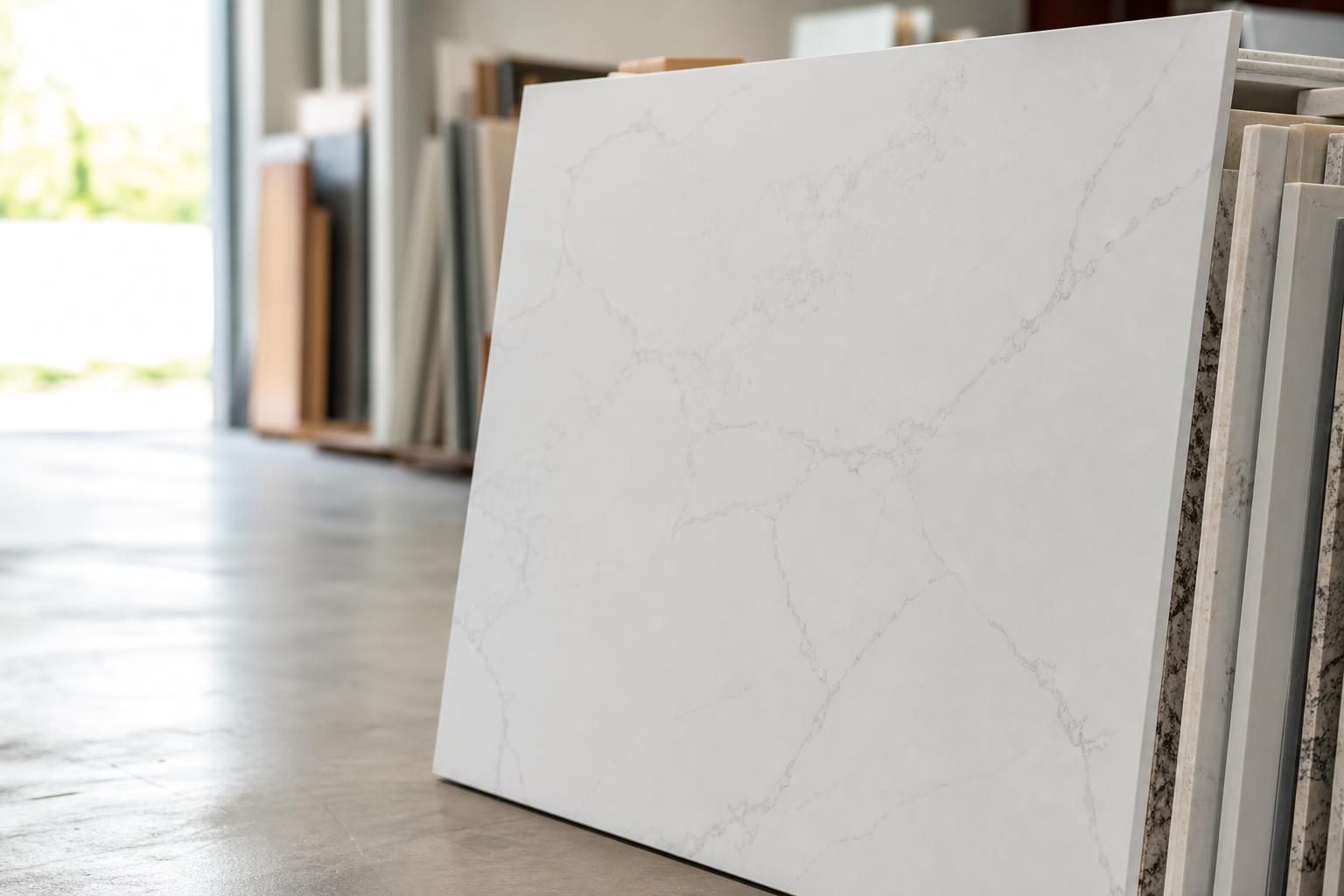
A quartz remnant is a leftover piece from a larger slab after a fabricator cuts a previous customer's countertop — usually anywhere from a couple square feet up to a full kitchen island size. Remnants are sold as-is, so the color and pattern selection is limited to whatever is currently sitting in a supplier's bone yard, but they're the fastest and most direct way to cover a small surface without ordering a full slab. On Oahu, the practical move is to call a supplier with physical remnants on hand — not a mainland warehouse — since freight on stone is slow and expensive to the islands.
Key takeaways
- Remnants fit small, self-contained projects best: vanities, wet bars, laundry counters, outdoor kitchen tops, and fireplace surrounds.
- Selection changes daily and isn't searchable online in real time — you need to see what's physically in the yard, in person or by photo request.
- Matching a remnant to existing quartz elsewhere in your home is unreliable because dye lots and slab batches vary, even within the same product line.
What Actually Counts as a Remnant
A remnant is the offcut piece after a fabricator pulls a countertop shape out of a full slab, which typically runs around 120 by 55 inches. What's left over depends entirely on what was cut before it — sometimes a large L-shaped piece big enough for an island, sometimes a narrow strip only wide enough for a bathroom vanity. Suppliers usually price remnants as a flat piece rather than by calculating a per-square-foot rate against a full slab, which is one reason they can move faster than custom orders.
Remnant yards are not catalogs. Unlike ordering a specific quartz color from a sample book, a remnant purchase means choosing from whatever physically exists that week. If you're flexible on exact color and want to move quickly, that's a feature. If you need to match an exact pattern already in your home, it's a limitation worth knowing upfront.
Where Remnants Come From and Why They're Cheaper to Source
Fabricators order full slabs because custom shapes rarely use 100% of the material — a kitchen with an island, perimeter counters, and a backsplash might leave a sizable offcut even on a well-planned job. Rather than scrap it, suppliers hold these pieces in a remnant area, sometimes called a bone yard, and sell them for smaller projects. Because the material was already purchased and shipped, remnants skip the island freight delay that comes with ordering fresh slabs from the mainland — a real factor here, since Oahu doesn't have local quarries or large-scale slab fabrication the way the mainland does.
This is also why remnant inventory is unpredictable. A supplier might have six usable pieces one month and two the next, depending entirely on what jobs were fabricated recently. If you're researching broader quartz cost drivers for a full kitchen, remnants are a different conversation — they're really a solution for secondary surfaces, not a primary kitchen countertop strategy unless you get lucky with size.
What Remnants Work Best For
Remnants make the most sense for:
- Bathroom vanities (single or double sink, since vanity tops rarely need a large continuous piece)
- Wet bars and wine nooks
- Laundry room folding counters
- Outdoor kitchen islands or lanai bar tops
- Small kitchen islands without a cooktop or sink cutout
- Fireplace hearths and surrounds
Bar tops in particular are a good remnant candidate because the overhang and depth requirements are modest — if you're sizing one, the standard bar countertop overhang is a useful reference before you commit to a remnant's dimensions. A piece that's technically "large enough" on paper can still come up short once you account for overhang, seams, and edge profile.
Searching for Remnants Near You on Oahu
Because remnant stock isn't something you browse online in real time, the fastest path is a phone call or showroom visit where someone can tell you what's physically available right now, including rough dimensions and thickness. Bringing a cabinet layout or rough measurements to that conversation saves a wasted trip — a remnant that looks big in a photo can be the wrong shape for your actual cutout.
Two Honolulu showrooms stocking quartz remnants let you put a hand on the actual piece before buying, which matters more with quartz than with painted surfaces — veining, fleck size, and sheen all look different under showroom lighting than in a photo. If the remnant you want needs an edge profile or sink cutout, that's a fabrication step on top of the remnant price itself, and it's where a licensed installer comparison becomes useful even for a small job.
Remnants and Condo Projects
Condo owners replacing a vanity or wet bar top still need to account for AOAO paperwork in most Oahu buildings, even for a small quartz surface — boards generally want the material spec and installer information regardless of project size. If your remnant purchase is part of a larger bathroom or kitchen update, it's worth bundling that documentation into one submission rather than filing twice. Fabrication dust and installer access windows in high-rises also tend to have building-specific rules, so confirming those before scheduling saves a rescheduled appointment.
Limitations to Know Before You Buy
Quartz is an engineered material made from crushed stone bound with resin, and color consistency depends on batch and dye lot — even the same product name can look slightly different between two remnants cut months apart. The Natural Stone Institute notes that engineered quartz surfaces are manufactured products, which is exactly why matching an old installation to a new remnant isn't guaranteed the way it might be with a natural stone slab cut from the same quarry block.
Fabrication of quartz also generates silica dust, and the Occupational Safety and Health Administration has published guidance on controlling crystalline silica exposure during stone countertop fabrication — a good reason to have cutting and edge work done by a shop with proper dust controls rather than attempting a DIY cut on a remnant piece at home.
If your project is larger than a single vanity or bar top, comparing quartz against soapstone or researching broader renovation cost drivers will tell you more than remnant shopping alone, since a full kitchen rarely fits on a single leftover piece.
Frequently Asked Questions
Q: What is a quartz countertop remnant?
It's the leftover piece of a quartz slab after a fabricator cuts a previous project's countertop shape out of it. Size and pattern vary by what was cut before, so remnant inventory changes constantly.
Q: Can I use a remnant for a full kitchen countertop?
Usually only if your kitchen is small or the layout doesn't require a continuous run longer than the remnant piece. Most remnants suit single surfaces like vanities, bar tops, or small islands rather than full L-shaped or U-shaped kitchen counters.
Q: Will a remnant match my existing quartz countertop?
Not reliably. Quartz color and veining vary by manufacturing batch, so even the same product name ordered months apart can look slightly different side by side.
Q: Do I still need AOAO approval for a small remnant project in a condo?
In most Oahu buildings, yes — boards typically want material specs and installer details regardless of project size. Bundling that paperwork with any other bathroom or kitchen work in the unit is usually more efficient than filing separately.
Q: How do I find out what remnants are currently in stock?
Remnant inventory isn't typically listed online in real time, so calling or visiting a showroom with your rough dimensions is the most reliable way to see what's physically available that week.