How to Find Flooring Installers Near Me on Oahu
Key takeaway
A "near me" search for flooring installers on Oahu should turn up licensed contractors who work regularly in your specific town — Honolulu high-rise experience is different from a Kailua single-family job or a Mililani townhouse — and who can show you material samples before you commit. The fastest way to confirm quality is to check the contractor's Hawaii license status, ask how they handle subfloor prep in older homes, and get a quote based on your actual square footage rather than a generic estimate.
Key takeaways
- Verify any installer's license through the state contractor board before signing anything — Hawaii requires a C-31 or similar specialty license for flooring work.
- Condo and high-rise jobs need an installer who already understands AOAO sound-rating paperwork, not one learning it on your project.
- A quote tied to your real measurements and home conditions is more reliable than a flat estimate pulled from a general range.
What "Near Me" Should Actually Mean on Oahu
Proximity alone doesn't tell you much. An installer based in Kapolei who never works in Honolulu towers won't know how freight elevators, loading dock hours, and move-in insurance requirements change a job timeline. Someone used to North Shore cottages may not have handled a Waikiki high-rise's flooring underlayment rules.
"Near me" should really mean "familiar with my building type and town." If you live in a condo, search for installers with condo-specific experience, not just general flooring experience. If you're in an older plantation-era home, look for someone who routinely deals with uneven original subfloors rather than new-construction slabs.
Confirm the License Before Anything Else
Hawaii requires contractors doing flooring, cabinetry, or countertop installation to hold the appropriate specialty license issued by the state. You can look up any contractor's license status directly through the Hawaii Department of Commerce and Consumer Affairs license search tool. This takes less than five minutes and confirms the license is active, not expired or suspended.
A legitimate installer will give you their license number without hesitation. If someone resists sharing it, treat that as a red flag regardless of how good their samples or sales pitch look.
Questions That Separate a Real Pro From a Handyman
Before you hire anyone, ask these directly:
- Are you licensed and insured for flooring installation in Hawaii?
- Have you installed in condos or buildings with AOAO approval requirements?
- How do you handle subfloor leveling if the slab or original flooring is uneven?
- Who handles tear-out and disposal of the old material?
- What's your process if the job requires furniture moving or appliance disconnection?
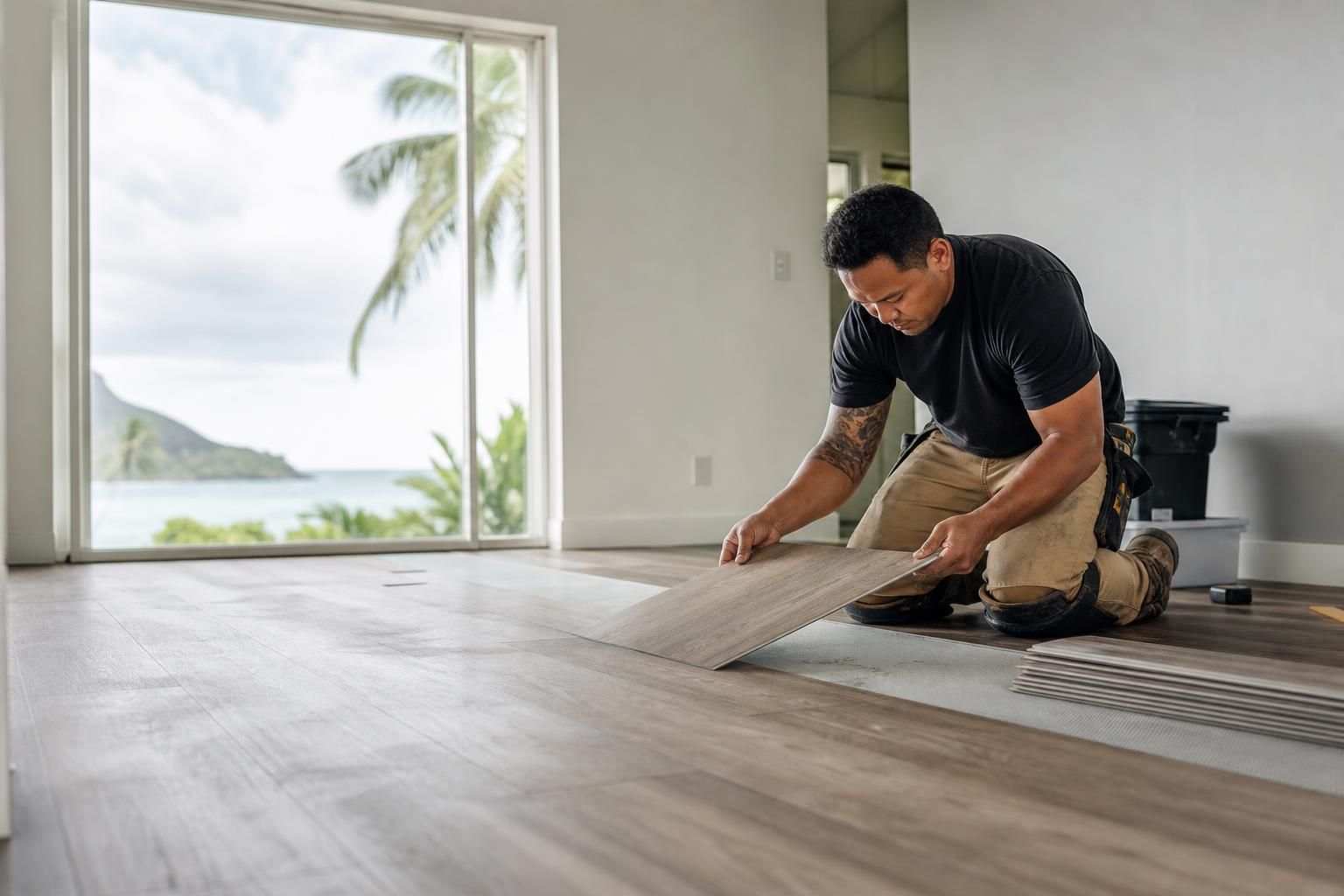
An installer's answers to the subfloor and disposal questions tell you more than their advertised specialty. Skipping subfloor leveling is one of the most common causes of vinyl plank flooring failing early — seams separating, clicking locks popping loose — especially in homes built before modern slab standards were common.
Local Conditions That Change the Job
Oahu's climate and housing stock create installation challenges a mainland installer wouldn't anticipate:
- Humidity and salt air affect how materials acclimate before installation, particularly near the coast.
- Older home subfloors in neighborhoods built decades ago often need leveling compound before new flooring goes down.
- Condo buildings usually require a minimum Impact Insulation Class (IIC) rating, verified through AOAO board paperwork before work can even begin.
- Elevator and loading dock scheduling in Honolulu high-rises can add days to a project if not booked in advance.
- Stairs and multi-story layouts change labor time and material handling regardless of square footage.
None of these show up in a quick phone estimate. They show up when someone actually measures your space and asks about your building.
What Actually Moves the Price (Not a Number You Can Quote)
Every flooring job on Oahu is priced differently because the variables above interact. A 900-square-foot condo on the 30th floor with strict AOAO sound requirements is a different job than the same square footage in a ground-floor single-family home. Tear-out of old tile, disposal fees, moving furniture, and whether material has to be special-ordered and freighted to the island all shift the final number — sometimes more than the flooring material itself does.
Because of that, any number quoted without seeing your space, your building rules, and your existing subfloor condition is close to a guess. The only reliable figure comes from a quote built against your real measurements and conditions. If you're prepping for that step, it helps to know how to get your home ready before an installer arrives — clearing rooms and noting any uneven spots in advance speeds up the first visit.
How to Compare Quotes Without Getting Burned
When you get quotes from more than one installer, compare these specifics rather than just the bottom-line total:
- Does the quote include tear-out and disposal of old flooring, or is that separate?
- Is subfloor leveling included if the installer identifies a problem during measurement?
- Does the quote account for stairs, closets, or transitions between rooms?
- If you're in a condo, does the installer already have experience submitting AOAO-ready specs?
- Is there a single point of contact, or will you be handed off between sales, measurement, and installation teams?
Services like Oahu Flooring Quote keep one person on your project from the first call through delivery, which cuts down on the back-and-forth that happens when a sales rep, a separate measurer, and an installer all handle different pieces of the same job. If you're specifically in Kailua or Mililani, local buying guides can help you understand what to check before buying vinyl plank flooring or how to choose a contractor in that area.
Signs an Installer Isn't Ready for Your Job
Watch for these warning signs during the quote process:
- They give a square-footage price over the phone without ever seeing the space.
- They can't explain how they'd handle a condo's noise-rating requirement.
- They don't ask about your subfloor condition or home age at all.
- They have no physical samples to show you, only photos.
Touchable samples matter more in Hawaii than people expect — humidity and lighting change how a plank or quartz slab reads in person versus on a screen, and a reputable supplier will have a showroom where you can feel the texture and check color under natural light.
Frequently Asked Questions
Q: How do I verify a flooring installer's license on Oahu?
Search the contractor's name or license number through the Hawaii Department of Commerce and Consumer Affairs license lookup tool. An active, unrestricted license confirms they're legally permitted to perform flooring work in the state.
Q: Do condo flooring installations need special approval?
Yes. Most Honolulu condo associations (AOAOs) require flooring to meet a minimum sound-rating standard and require submitted specs before installation begins, which an experienced installer should already know how to prepare.
Q: Can one installer handle flooring, countertops, and cabinets together?
Some referral services coordinate licensed installers across all three trades plus electrical, which simplifies scheduling on a full remodel, but the individual installation work is typically still done by trade-specific licensed crews.
Q: Why do quotes vary so much between installers for the same square footage?
Differences usually come from what's included — tear-out, disposal, subfloor leveling, and furniture moving aren't always itemized the same way, and two installers quoting the identical square footage can have very different scopes of work.
Q: Is it worth getting multiple quotes before hiring?
Yes, comparing at least two or three quotes helps you spot what's included versus excluded, and whichever quote is based on an actual in-person measurement rather than a phone estimate is usually the more accurate one.