Why Flooring Quotes Vary So Much on Oahu
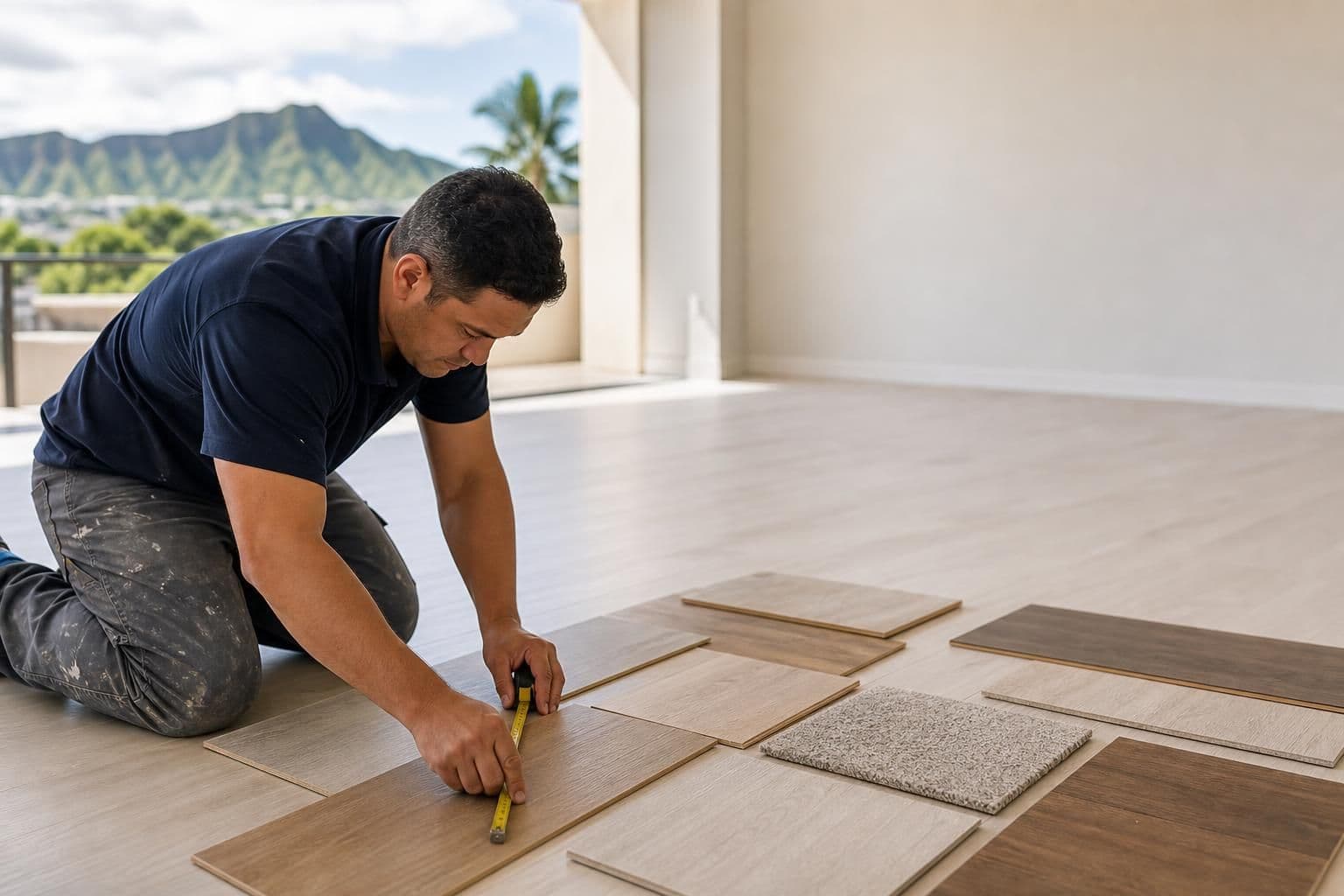
Key takeaway
Flooring quotes vary so much because three separate line items — material grade, labor complexity, and site conditions — each swing independently, and no two contractors bundle them the same way. A vinyl plank job quoted low and one quoted high can use the same brand of plank; the difference is usually subfloor prep, moisture barrier requirements, or what's included in "installation." The only real number comes from a free quote measured against your actual square footage, not a generic estimate.
Key takeaways
- Material grade and labor prep usually account for more price spread than the brand of flooring itself.
- Oahu conditions — humidity, salt air, and condo subfloor rules — add cost drivers that don't show up in mainland price guides.
- Always ask what's included (removal, moisture barrier, baseboards) before comparing two quotes side by side.
Material Costs Are the Biggest Swing Factor
Two vinyl planks can look identical in a showroom and land far apart in price because of wear-layer thickness, core density, and warranty backing. On Oahu, vinyl plank pricing spreads widely depending on whether the wear layer is residential- or commercial-grade and whether the core is a waterproof composite versus a standard WPC — heavier-duty specs push the job toward the higher end. Quartz countertop pricing depends heavily on slab grade, edge profile complexity, and whether the slab has to be special-ordered and freighted in from off-island, which adds lead time and cost. Custom cabinets are priced by linear foot or by box, so a "per square foot" comparison between two cabinet quotes can be misleading unless both use the same unit. These are the factors that move an Oahu quote up or down, not a fixed number — actual pricing depends on your layout, waste factor, and material choice. If you want a breakdown of what drives vinyl pricing specifically, our vinyl plank flooring cost guide covers grade tiers in more detail.
Labor and Installation Complexity
Labor is where quotes diverge even when material specs match exactly. A flat, dry, ground-level room takes far less labor than a condo unit with an uneven concrete slab, tight elevator or loading-dock access, or a requirement to haul out old flooring through a shared hallway. Installers price for the time they expect to spend, not just the square footage — so a small unit up an elevator with a scheduled loading-dock window can take longer, per square foot, than a larger single-story home with a driveway right at the front door. Stairs, furniture that has to be moved and reset, and tear-out and disposal of the old surface all add labor hours before a single new plank goes down. Our flooring installation cost guide for Honolulu walks through labor-only pricing separately from material, which is the clearest way to see where your money is actually going.
Site Conditions Unique to Oahu
Hawaii's climate changes what a "standard" installation requires. High ambient humidity and salt-laden air accelerate moisture movement through concrete slabs, so many installers on Oahu recommend or require a vapor barrier or moisture-mitigation step that mainland quotes may not include at all. The U.S. Environmental Protection Agency notes that uncontrolled moisture behind flooring and wall assemblies is a leading contributor to mold growth, which is why that extra prep step matters more here than in drier climates. Older Oahu homes also tend to need more subfloor leveling before a floating floor can go down flat. Skipping either step can make a quote look leaner on paper but raises the risk of the floor failing within a few years.
Condo and AOAO Requirements Add Their Own Costs
Condo owners face a layer of complexity that single-family homeowners don't: association-approved paperwork. Many Oahu AOAOs require specific underlayment or sound-transmission (IIC) ratings before a flooring change is approved, and getting those specs written up correctly the first time avoids a rejected application and a second round of contractor visits. Elevator reservations and loading-dock scheduling windows in Honolulu high-rises can also add time — and therefore labor cost — that a single-family install never encounters. A quote that doesn't account for AOAO documentation and building access logistics may look leaner initially but can cost more in delays once the board sends it back for revisions.
What's Included (or Left Out) of the Quote
The single biggest reason two quotes for the "same" job look wildly different is scope, not the material itself. Ask every contractor to confirm, in writing, whether these are included:
- Removal and disposal of existing flooring or countertops
- Subfloor leveling, patching, or moisture barrier
- Baseboards, transition strips, and thresholds
- Appliance or fixture disconnect/reconnect for kitchen jobs
- Permit or AOAO documentation fees
A quote missing three of these five items will always look leaner than one that includes them, even if the underlying materials are identical. The Federal Trade Commission recommends getting multiple written estimates for home improvement work specifically because verbal or vague quotes make apples-to-apples comparison nearly impossible.
How to Compare Quotes Apples-to-Apples
Once you have two or more quotes in hand, normalize them before deciding. Confirm the material grade or SKU is actually the same product, separate labor from material on each quote if the contractor hasn't already, and check that both quotes account for the same site conditions — subfloor prep, access logistics, tear-out. A quote priced against your actual project measurements — rather than a rough average — removes most of this guesswork from the start, which is the approach Oahu Flooring Quote uses when it responds within 24 hours of a request.
Frequently Asked Questions
Q: Why do two contractors quote such different prices for the same flooring job?
They're usually pricing different scopes, not different materials. One quote may include removal, subfloor prep, and baseboards while the other only covers the plank itself, so always compare what's included, not just the bottom-line number.
Q: Does Hawaii's climate really affect flooring cost?
Yes. Higher humidity and salt air increase the chance of moisture moving through concrete slabs, so many installers add a vapor barrier step that isn't standard in drier mainland climates, which adds to labor and material cost.
Q: Are condo flooring quotes usually higher than single-family home quotes?
They can be, mainly because of access logistics (elevators, loading-dock scheduling, hallway protection) and AOAO-required documentation like underlayment and sound-rating specs, not because the flooring material itself costs more.
Q: What determines vinyl plank flooring cost on Oahu?
Mainly wear-layer thickness, core type, and subfloor condition — a thicker commercial-grade wear layer or a slab that needs leveling before install both push a job higher. A firm number requires a quote based on your actual square footage and site conditions.
Q: Should I choose the lowest flooring quote I receive?
Not automatically. Confirm each quote covers the same scope of work first — removal, prep, and finishing details — since the lowest number often leaves out steps you'll end up paying for later.