How to Fix a Cabinet Door That Won't Close Properly
Key takeaway
Most cabinet doors that won't close properly can be fixed with a screwdriver and ten minutes: loosen the hinge mounting screws, square the door against the frame, and tighten the adjustment screws on the hinge cup to shift it up, down, in, or out. If the door still binds after adjustment, the problem is usually a swollen door panel, a sagging cabinet box, or a stripped screw hole — each has its own fix, covered below.
Key takeaways
- Start with the three adjustment screws on the hinge cup (height, side, depth) before assuming the door or box is damaged.
- In Oahu's humid climate, doors that stick seasonally are often swelling wood, not a hinge problem — a dehumidifier test will tell you which.
- If the hinge screws spin without tightening, the mounting hole is stripped and needs a wood-filler repair or a relocated screw, not a new hinge.
Check the Hinges First
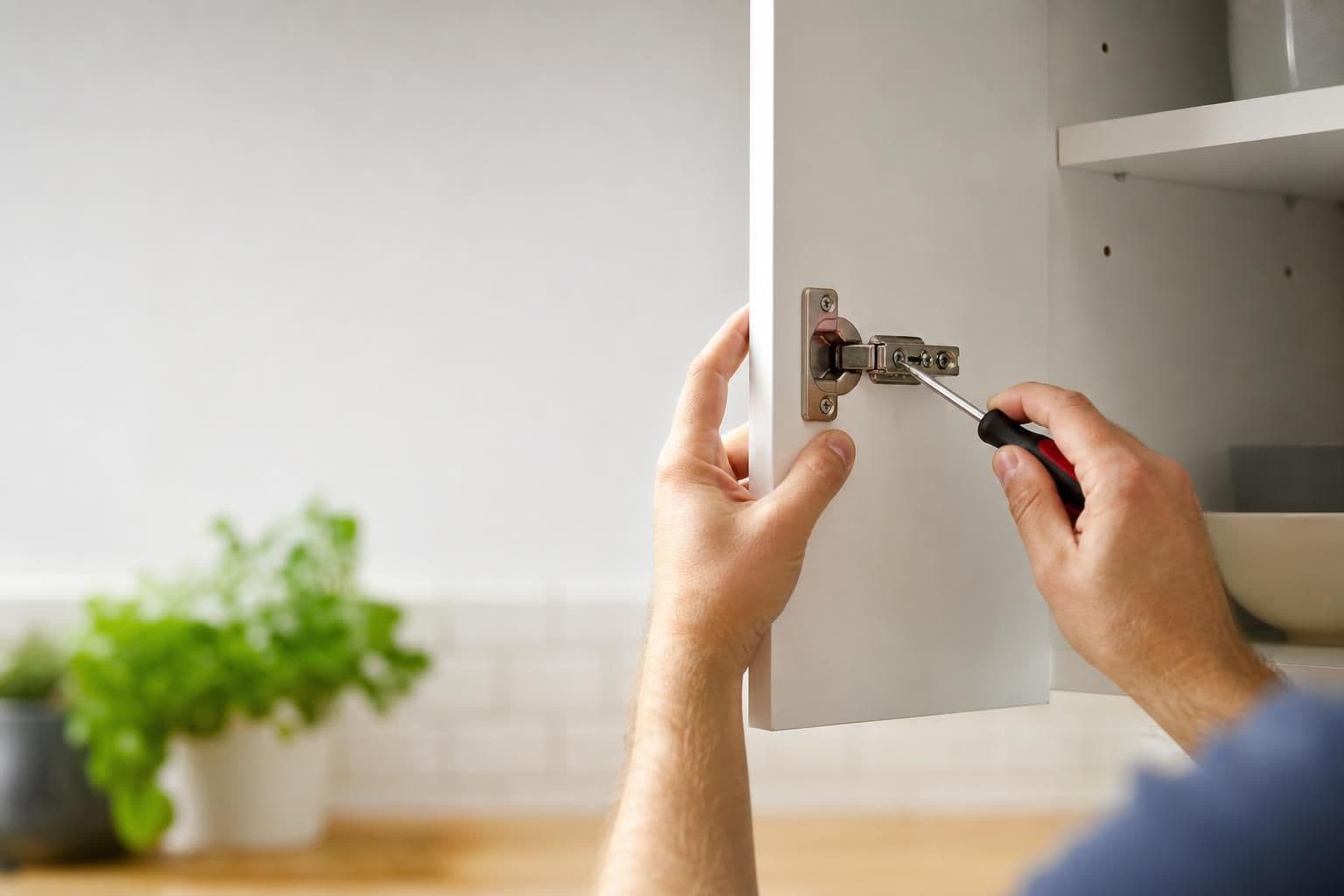
Nearly every "door won't close" complaint traces back to the hinge, not the door itself. Modern cabinet doors use concealed European-style cup hinges with two to three adjustment screws built into the hinge arm:
- Height screw — moves the door up or down relative to the frame.
- Side screw — shifts the door left or right, closing a gap on one side.
- Depth screw — pulls the door in or lets it sit out, fixing a door that sticks out past the cabinet face.
Turn each screw a quarter turn at a time and test the door after each adjustment. A door that's dropped on one corner usually needs the height screw on the top hinge turned a half-turn, then the bottom hinge checked to make sure the door still hangs square.
Tighten or Relocate Loose Screws
If the hinge plate wobbles when you push on it, the mounting screws have backed out or the pilot hole has worn larger than the screw threads. Spinning a screw without it biting into wood means the hole is stripped — turning it tighter won't help and can crack the hinge plate.
The standard repair: remove the hinge, fill the stripped hole with wood glue and toothpicks or a dowel, let it cure overnight, then re-drill a slightly offset pilot hole and reinstall. For a quick same-day fix, a slightly longer screw of the same thread diameter will sometimes catch fresh wood, but it's a stopgap, not a permanent repair.
Humidity Swelling Is an Oahu-Specific Problem
Solid wood and some engineered cabinet panels absorb moisture from the air and expand. Honolulu's average relative humidity runs high year-round, and it spikes further during rainy months, according to National Weather Service climate data for Honolulu. A door that closed fine during a dry spell and now rubs against the frame is often simply swollen, not misaligned.
Wood also loses and regains moisture seasonally, a process the USDA Forest Products Laboratory has documented in detail for how humidity cycles cause wood movement over time. If a door sticks only during wet weeks and closes fine when it's dry, resist the urge to keep re-adjusting the hinge — you'll just have to redo it again next season. Sanding a light swell line along the sticking edge, then sealing the raw edge with paint or clear finish, stops the cycle better than repeated hinge tweaks.
Check That the Cabinet Box Is Still Square
Older cabinet boxes — especially in homes with foundation settling or termite history, both common on Oahu — can rack slightly out of square over the years. A door that won't close on one corner while the opposite corner closes fine is a strong sign the box itself has shifted, not the hinge.
Test it with a tape measure: compare both diagonal measurements of the cabinet opening. A difference greater than about a quarter inch between the two diagonals means the box has racked. Hinge adjustment can mask a small amount of this, but a badly racked box usually needs a corner brace added inside the cabinet to pull it back square before the door will sit flush.
When the Door Panel Itself Is the Problem
Sometimes the hinge and the box are both fine and the door simply doesn't fit anymore:
- Warping — set the door on a flat surface and sight down its length; a visible bow usually means moisture exposure or a defective panel, and warped doors rarely flatten back out.
- Delamination — on laminate or thermofoil doors, edges that are peeling or bubbling near the hinge will throw off the fit even if the hinge is adjusted correctly.
- Wrong-size replacement — doors swapped during a partial remodel sometimes don't match the original cabinet opening by a fraction of an inch, which is enough to cause binding.
A door with real warping or delamination isn't a hinge-adjustment problem — it needs to be replaced or the box refaced. If you're weighing a full reface against replacing individual doors, the breakdown in this guide to cabinet refacing on Oahu walks through what typically makes sense for each situation.
Self-Closing and Soft-Close Hinges Need a Different Check
If the door closes by hand but won't stay shut or snaps too hard, the issue is usually the built-in spring or the soft-close damper, not alignment. Self-closing hinges have a tension mechanism that weakens over years of use; soft-close dampers can fail individually even when the hinge itself is fine. Both are generally replaced as a unit rather than repaired, and matching the hinge cup size and overlay type (full, half, or inset) matters more than brand when sourcing a replacement.
When to Stop Adjusting and Start Replacing
Hinge adjustment and box-squaring fix the vast majority of doors that won't close. It's worth stepping back and considering a bigger repair when:
- You've adjusted the same hinge more than two or three times and the door keeps drifting back out of alignment.
- Multiple doors on the same cabinet run are sagging, suggesting the box itself has settled or racked.
- The doors are original to an older kitchen and show swelling, delamination, or finish failure on more than one panel.
At that point, it's usually more efficient to price out new doors, a reface, or full cabinet replacement than to keep chasing adjustments. For a sense of what actually drives that cost — hinge count, door material, box condition — see what drives cabinet cost on Oahu. Oahu Flooring Quote provides free quotes based on actual project measurements, with answers within 24 hours, through the custom cabinets quote request if a repair turns into a replacement decision.
Frequently Asked Questions
Q: Why does my cabinet door close fine in the morning but stick by afternoon?
That pattern points to humidity, not hardware — wood and some panel materials expand as moisture in the air rises through the day. Sanding the sticking edge slightly and sealing it with paint or clear finish usually resolves it better than repeated hinge adjustments.
Q: Can I fix a stripped cabinet hinge screw hole without replacing the whole cabinet?
Yes. Fill the stripped hole with wood glue and toothpicks or a small dowel, let it cure overnight, then drill a fresh pilot hole slightly offset from the original and reinstall the hinge screw.
Q: How do I know if the problem is the hinge or the cabinet box?
Measure both diagonals of the cabinet opening with a tape measure; if they differ by more than roughly a quarter inch, the box has racked out of square and hinge adjustment alone won't fully fix the door.
Q: Are soft-close cabinet hinges repairable or do they need full replacement?
Soft-close dampers and self-closing springs typically fail as a sealed unit and are replaced rather than repaired, so match the hinge cup size and overlay type when buying a replacement.
Q: Is a cabinet door that won't close a sign I need new cabinets?
Not usually — most cases are a hinge adjustment or minor humidity swelling. It's worth considering replacement or refacing only when the same door keeps drifting out of alignment after repeated adjustments or several doors on one run show warping or delamination.