How to Fix a Scratched Vinyl Plank Floor
Key takeaway
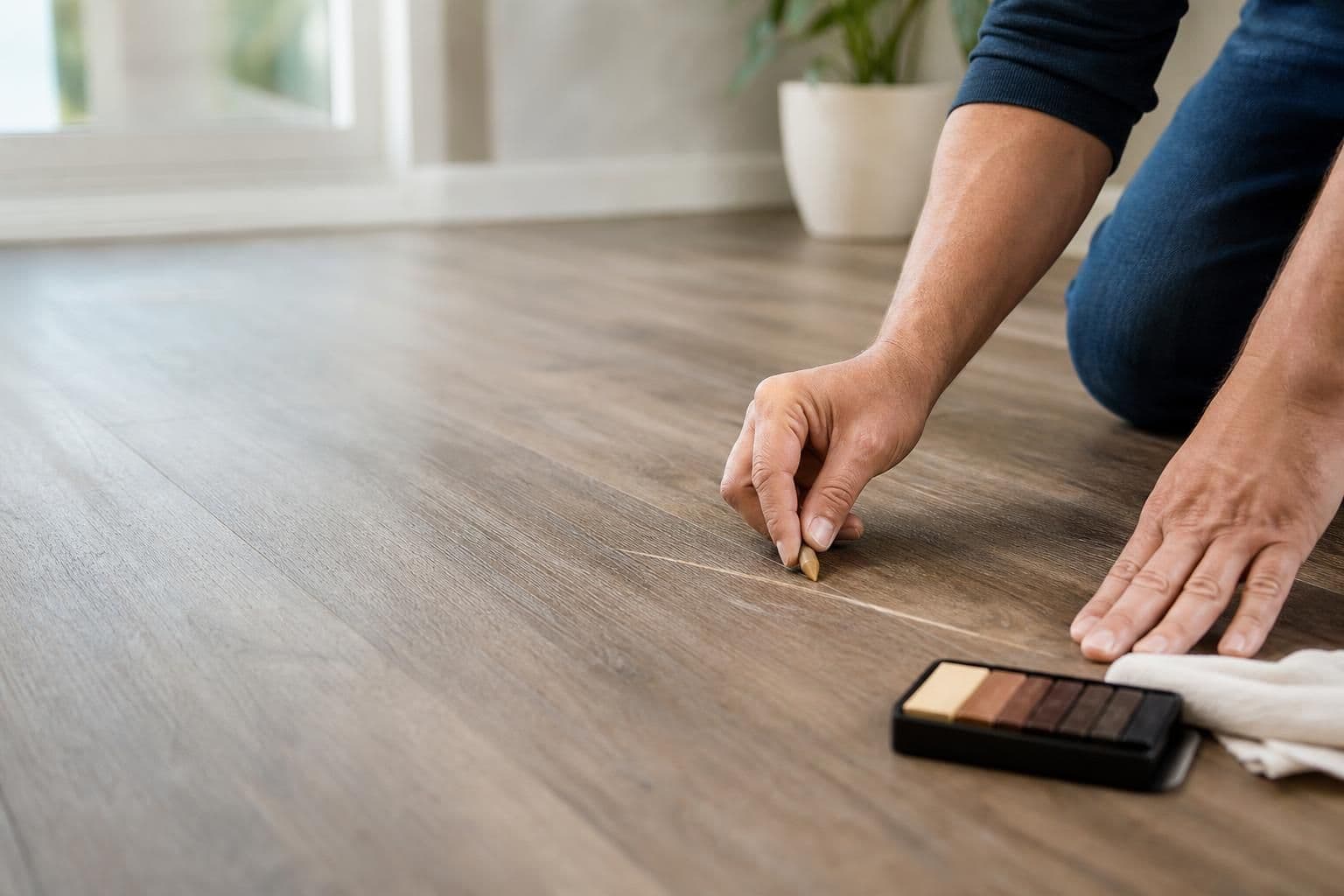
Light surface scratches on vinyl plank flooring can usually be buffed out with a vinyl repair compound or heat-and-fill kit, while deep gouges that expose the wear layer or backing typically need a color-matched putty stick or, if the plank is cut through, a full plank replacement. The right fix depends on how deep the scratch goes, not just how it looks from standing height.
Key takeaways
- Shallow scratches that don't catch a fingernail can often be minimized with a vinyl floor scratch repair kit or automotive-style scuff eraser.
- Deep gouges that reach the printed layer or core need a matching color putty or wax stick, applied and leveled while still workable.
- If a scratch has cut through the plank's wear layer in a high-traffic path, replacing that single plank is usually more durable than filling it.
Figure Out How Deep the Scratch Actually Is
Run a fingernail across the mark before deciding on a repair method. If the nail glides over smoothly, it's a surface scratch in the clear wear layer — the protective top coat that resists stains and UV. If the nail catches or you can see a lighter or darker line where the printed pattern is interrupted, the scratch has gone past the wear layer and into the print film or core.
This distinction matters because a light buffing compound won't do anything for a gouge, and a heavy-duty filler is overkill — and sometimes discoloring — on a scratch that would have buffed out on its own.
Fixing Light Surface Scratches
For scratches confined to the wear layer:
- Clean the area with a pH-neutral floor cleaner and let it dry fully — grit left in the scratch will scatter light and make it look worse. For general upkeep between repairs, see how to clean vinyl plank flooring the right way.
- Apply a small amount of vinyl floor scratch repair compound (sold in most flooring and home improvement stores) with a soft cloth, working in the direction of the plank's grain.
- Buff in small circles until the scratch blends into the surrounding sheen, then wipe away residue.
- For very fine hairline scratches, a dab of clear car wax or a specialty vinyl polish can restore enough gloss to hide the mark under normal lighting.
Avoid steel wool or abrasive scrub pads — they'll dull the finish around the scratch and create a new problem that's more visible than the original one.
Fixing Deep Gouges and Punctures
When a scratch has cut into the print layer or core, buffing won't fix it — you need to fill it.
- Clean and dry the gouge completely.
- Select a color-matched vinyl repair putty or wax fill stick. Most kits include a range of tones you can blend to match the plank; test on a scrap piece or an inconspicuous spot first.
- Warm the putty slightly if the kit calls for it, then press it into the gouge with a plastic putty knife, slightly overfilling since some material will settle or get scraped level.
- Scrape the excess flush with the surrounding surface using the edge of the putty knife or a credit card.
- Let it cure per the product's instructions — usually a few hours — before walking on it.
This works well for isolated gouges from dropped tools, furniture legs, or pet claws. It does not restore the plank's original wear-layer protection at that spot, so the filled area may show wear again sooner than the rest of the floor.
When Replacing the Plank Makes More Sense
Fillers are a cosmetic fix, not a structural one. Replace the plank instead of filling it when:
- The scratch is paired with a crack, chip, or lifted edge.
- The gouge is in a main walking path where a filled spot will get scuffed repeatedly.
- Multiple scratches cluster in one plank, making a clean color match unrealistic.
- The floor is a click-lock (floating) floor rather than glue-down, which makes single-plank swaps far more practical.
Floating floors are generally easier to repair plank-by-plank because you can work backward from a wall to reach the damaged piece, then reassemble. Glue-down floors usually require cutting out the damaged plank and setting a new one with adhesive, which is a more involved job best left to an installer.
Why Oahu Homes See More Scratches Than the Mainland Average
Sand tracked in from sandals and beach gear is a common culprit for accelerated scratching on Oahu — fine sand grains act like sandpaper under foot traffic and furniture legs. Homes near the shoreline also deal with higher ambient humidity, which the U.S. Environmental Protection Agency notes can affect indoor materials over time, including how flooring finishes wear. Keeping entry mats at doors and sweeping regularly cuts down on the grit that causes most fine surface scratching before it ever needs a repair kit.
Preventing the Next Scratch
- Use felt pads under all furniture legs and replace them once they wear thin or harden.
- Lift furniture instead of dragging it, especially chairs and dining tables.
- Keep pet nails trimmed and place mats under food and water bowls.
- Sweep or vacuum (with a hard-floor setting, not a beater bar) before mopping, since trapped grit is the main cause of fine scratching over time.
If your floor has scratches concentrated in one zone — say, in front of a kitchen island or along a hallway — that's often a sign the wear layer thickness wasn't matched to how the space actually gets used. That's a factor worth discussing before replacing worn flooring, alongside broader considerations covered in vinyl plank flooring pros and cons for Oahu homes.
When Repair Isn't Worth It Anymore
If scratches, discoloration, and wear are spread across most of the floor rather than isolated in a few spots, patch repairs stop making sense — you'll spend more time color-matching putty than the floor is worth keeping. At that point, look at the subfloor underneath before ordering new material; uneven or damaged subfloors are a common reason flooring wears unevenly in older Oahu homes, and it's worth reviewing how to prep a subfloor for vinyl plank flooring before you commit to a full replacement. A free quote from Oahu Flooring Quote, priced against your actual square footage, is one way to compare the cost of full replacement against ongoing patch repairs once damage gets widespread.
Frequently Asked Questions
Q: Can you buff out scratches on vinyl plank flooring?
Yes, if the scratch is confined to the clear wear layer on top. A vinyl floor scratch repair compound or fine polishing pad applied in the direction of the plank grain will usually reduce or eliminate light surface scratches.
Q: What household products fix minor vinyl floor scratches?
Car wax, a small amount of clear nail polish for a hairline mark, or a specialty vinyl floor repair kit can all minimize light scratches. None of these will fix a gouge that has cut through the wear layer into the print or core.
Q: Does WD-40 or olive oil hide scratches on vinyl plank floors?
Oil-based household products can temporarily darken a scratch and make it less visible, but they leave a residue that attracts dirt and can affect the floor's slip resistance, so they aren't a lasting fix. A proper vinyl repair compound is a better long-term option.
Q: Can a single scratched vinyl plank be replaced without redoing the whole floor?
Yes, especially with click-lock floating floors, where you can often disassemble planks back to the damaged one, swap it, and reassemble. Glue-down floors require cutting out the damaged plank, which is a more involved repair usually done by an installer.
Q: How do you prevent vinyl plank floors from scratching in the first place?
Use felt pads on furniture legs, keep entry mats at doors to catch sand and grit, trim pet nails, and vacuum with a hard-floor setting before mopping. Most fine surface scratching comes from trapped grit ground in by foot traffic, not from single dramatic impacts.