Can You Install Quartz Countertops Yourself?
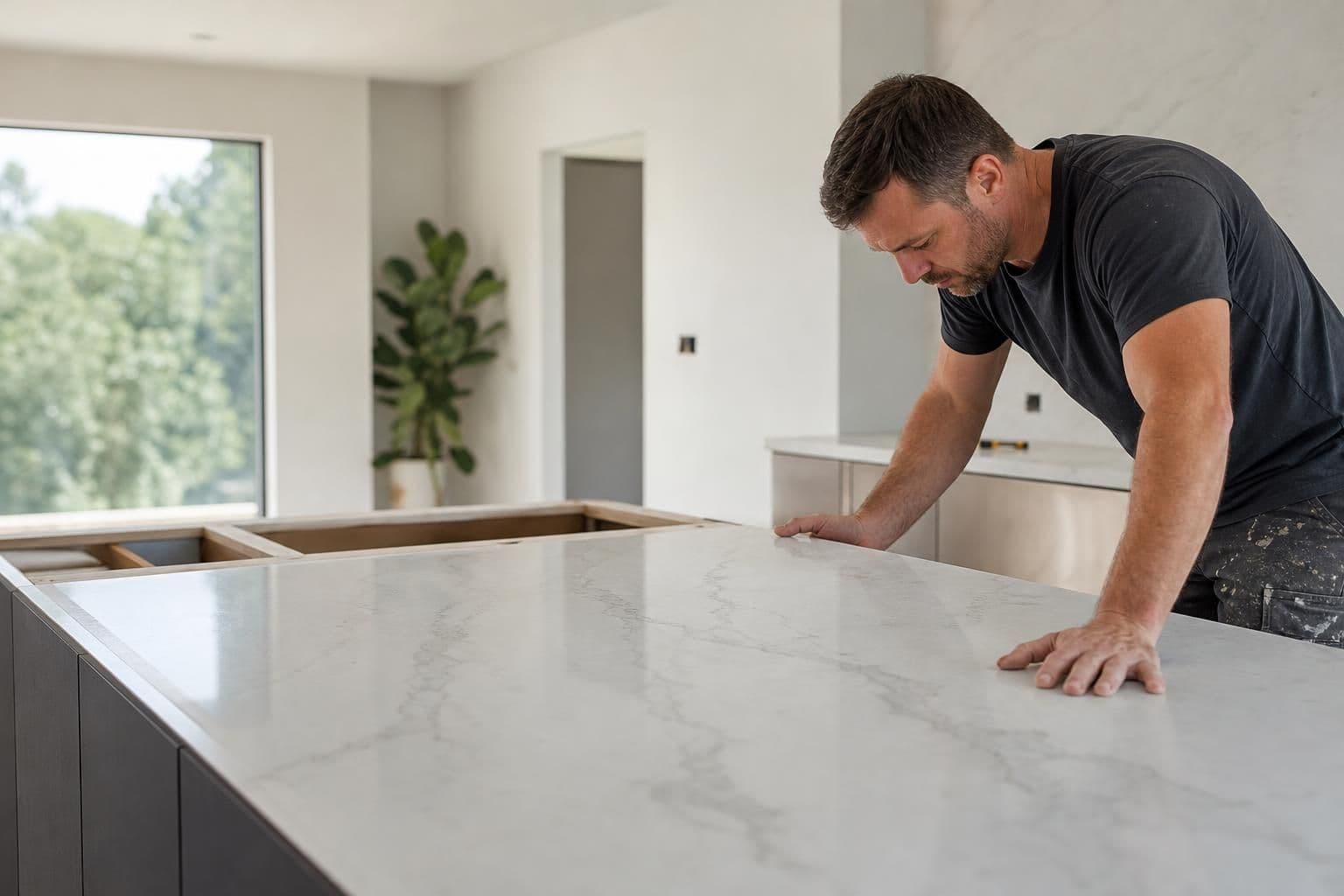
Key takeaway
Technically yes, but for most homeowners it isn't practical: engineered quartz slabs are heavy, rigid, and unforgiving of small measurement errors, and a wrong cut on a slab can't be patched the way a scratch in laminate can. Most DIYers can handle demo and prep work, but the templating, cutting, seaming, and setting of the slab itself is where professional tools and experience make the difference between a tight, level counter and one with visible gaps and cracked edges.
Key takeaways
- Quartz slabs typically weigh several pounds per square foot and require two or more people plus proper lifting equipment just to move safely.
- Cutting sinks, cooktop openings, and seams needs a wet saw with diamond blades — a standard circular saw will chip or crack the slab.
- A single measurement error can ruin an entire slab, since quartz can't be reshaped or patched like solid surface or laminate.
What DIY installation actually involves
Installing quartz isn't one job, it's a sequence of trades stacked together: removing the old counter, leveling the cabinet base, templating the exact cutouts, cutting the slab, moving it without cracking it, setting it on adhesive, and finishing seams so they're close to invisible. A homeowner can reasonably do the demo and even the cabinet-base prep. The templating and cutting stage is where most DIY attempts stall, because a quartz slab doesn't forgive a quarter-inch mistake the way wood or tile does.
Fabricators typically template a kitchen on-site with story poles or laser templating tools after cabinets are installed and appliances are on hand, specifically so the sink, cooktop, and faucet cutouts land in the right spot on the first cut. Skipping that step and working from paper measurements is the most common reason DIY slabs don't fit.
Why quartz is harder to DIY than tile or laminate
Quartz is engineered from crushed stone and resin, which gives it the hardness of natural stone with more consistency — but that hardness cuts both ways. The National Institute of Standards and Technology notes that engineered stone products are significantly denser than wood-based countertop materials, which is part of why they resist scratching and heat but also why they require diamond-tipped tools to cut cleanly. A standard masonry blade will chip the edge or crack the slab outright.
Weight is the other factor. A full kitchen's worth of quartz commonly runs into several hundred pounds once you add up all the pieces, and a single slab section is often too heavy and too rigid for one person to carry without flexing or dropping it. Professional installers use slab carts, suction cup handles, and sometimes a second set of hands just to move material from truck to kitchen without a crack forming along a stress point.
Where DIY installs commonly go wrong
- Seams that don't match. Quartz seams are filled with a color-matched epoxy, and getting the color and polish level right takes practice — a mismatched seam is permanent and visible every day.
- Overhangs that aren't supported. Unsupported overhangs beyond a few inches need corbels or brackets; without them, the edge can crack under weight from someone leaning on it.
- Cutouts in the wrong spot. A faucet or cooktop hole cut an inch off means a scrapped slab, not a patch.
- Sink weight underestimated. Undermount sinks need epoxy and clip support rated for the sink's full weight when filled with water and dishes — guidance on load limits is covered in how much weight a quartz countertop can hold.
- Leveling skipped. Older Oahu homes often have cabinet bases that have shifted slightly over decades; setting quartz on an unlevel base stresses the slab and can crack it over time.
When DIY makes sense and when it doesn't
If you're replacing a small vanity top with a pre-cut standard-size piece and no sink cutout, a careful DIYer with the right adhesive and clamps can sometimes manage it. A full kitchen run with a sink, cooktop cutout, seams, and overhangs is a different project entirely, and it's the one where a mis-cut costs you the whole slab, not just labor time.
Condo owners have an added wrinkle: AOAO boards on Oahu often want documentation on the material spec, weight, and installation method before work starts, and a self-install can complicate that approval if it isn't documented the way the board expects. The process for getting that paperwork right is covered in the guide on Honolulu condo flooring and AOAO approval — the same logic about having clear, board-ready specs applies to countertop swaps in a unit.
Comparing quartz to other countertop materials for DIY
Quartz sits at the harder end of the DIY-difficulty spectrum compared to laminate or butcher block, which can be cut with standard woodworking tools. It's closer in difficulty to natural stone slabs like granite or marble, since both need diamond-blade cutting and careful handling. If you're still deciding between materials, the comparison in quartz vs. marble countertops for Oahu kitchens walks through durability and maintenance differences that matter before you commit to a slab material at all.
What actually drives the cost of a professional install
Rather than a flat price, what changes the cost of a quartz install is the shape of the job: how many seams are needed, whether the sink is undermount or drop-in, how many cutouts for cooktops and outlets, whether cabinets need leveling first, and whether the slab is a special-order color that has to ship to Oahu rather than being stocked locally. Island freight timing on special-order slabs is a real factor here in a way it isn't on the mainland. The only way to know what your kitchen actually needs is a quote against your real measurements and layout — the free quote process is priced for your actual square footage, with an answer within 24 hours. If you're earlier in the planning stage, the guide on what to know before starting a countertop replacement on Oahu is a useful next read, and the quartz countertops page shows the options sourced through the Honolulu showrooms if you want to see finishes before deciding anything.
Frequently Asked Questions
Q: Can I cut a quartz countertop myself with a regular saw?
No. Quartz requires a wet saw with a diamond blade to cut cleanly; a standard circular or masonry saw will chip the edge or crack the slab.
Q: How heavy is a quartz slab to move alone?
A single slab section commonly weighs enough that it takes two people or mechanical lifting aids to move it safely — one person working alone risks dropping or flexing the slab, which can crack it.
Q: Is it cheaper to install quartz countertops yourself?
It can save on labor cost, but a mis-cut slab, cracked edge, or failed seam often costs more to replace than professional installation would have in the first place, since quartz can't be patched like laminate.
Q: Do I need a template before ordering a quartz slab?
Yes. Fabricators typically template the exact cutouts on-site after cabinets and appliances are in place, because working from paper measurements is the most common cause of a slab that doesn't fit.
Q: Can a DIY quartz install pass AOAO approval in a Honolulu condo?
It depends on the board's documentation requirements — some associations want specs on material, weight, and installation method before work begins, which can be harder to produce for a self-install than for one handled by a licensed installer.