What's the Quietest Flooring for an Upstairs Condo?
Key takeaway
The quietest flooring for an upstairs condo is rigid-core vinyl plank with an attached sound-rated underlayment, or vinyl plank installed over a separate cork or rubber underlayment — both combinations typically hit an Impact Insulation Class (IIC) rating of 50 or higher, which is the benchmark most condo association house rules require. Solid hardwood, tile, and thin laminate without added underlayment transmit the most footstep noise to the unit below and are the options most often rejected by boards. The right choice depends on your association's specific IIC/STC requirement, not just the flooring material itself.
Key takeaways
- Look for flooring rated IIC 50+ (often IIC 60+ for extra margin) — most AOAOs will ask for the number in writing, not just a product name.
- Vinyl plank with attached pad or a cork/rubber underlayment layer is the most reliable way to hit that rating without redoing the subfloor.
- Get the underlayment spec sheet before you buy flooring — it's what the board actually approves, not the plank color.
Why Footstep Noise Is a Bigger Problem in Condos Than Houses
In a single-family home, a noisy floor is your own problem. In a stacked condo building, hard-surface flooring transmits impact noise — footsteps, dropped items, dragged chairs — directly into the ceiling of the unit below through the concrete slab. Concrete actually carries impact noise farther than wood-framed floors do, which is why so many Oahu high-rises have stricter flooring rules than mainland wood-frame buildings. This is also why almost every AOAO on Oahu requires some form of underlayment or padding under any hard-surface flooring installed above the ground floor.
IIC and STC Ratings, in Plain Terms
Two ratings show up in condo house rules and it helps to know the difference:
- IIC (Impact Insulation Class) measures how well a floor assembly blocks impact noise — footsteps, heels, dropped objects. This is the number that matters most for upstairs neighbors.
- STC (Sound Transmission Class) measures airborne noise — voices, music, TV. It matters less for footstep complaints but sometimes appears in the same house rule.
These testing methods come from standards published by ASTM International, and IIC 50 has long been the baseline reference point used in U.S. multifamily construction guidance from agencies like HUD. Many Oahu condo boards simply adopt that same IIC 50 minimum, though some newer or higher-end buildings require IIC 60 or higher for any flooring above the first floor.
Best Flooring Options for a Quiet Upstairs Unit
Ranked roughly from quietest to loudest when installed with adequate underlayment:
- Rigid-core vinyl plank with attached pad — factory-bonded foam or cork backing plus a separate underlayment often reaches IIC 55–65.
- Vinyl plank over cork or rubber underlayment — a common, AOAO-friendly combination that meets most IIC 50+ requirements without raising floor height much.
- Engineered wood with an acoustic underlayment — quieter than solid hardwood but still needs a rated pad to pass board review.
- Carpet with pad — naturally the quietest option acoustically, though many owners skip it for humidity and allergen reasons in Hawaii's climate.
- Solid hardwood or tile without added underlayment — the loudest combination and the one most likely to get rejected or require costly remediation later.
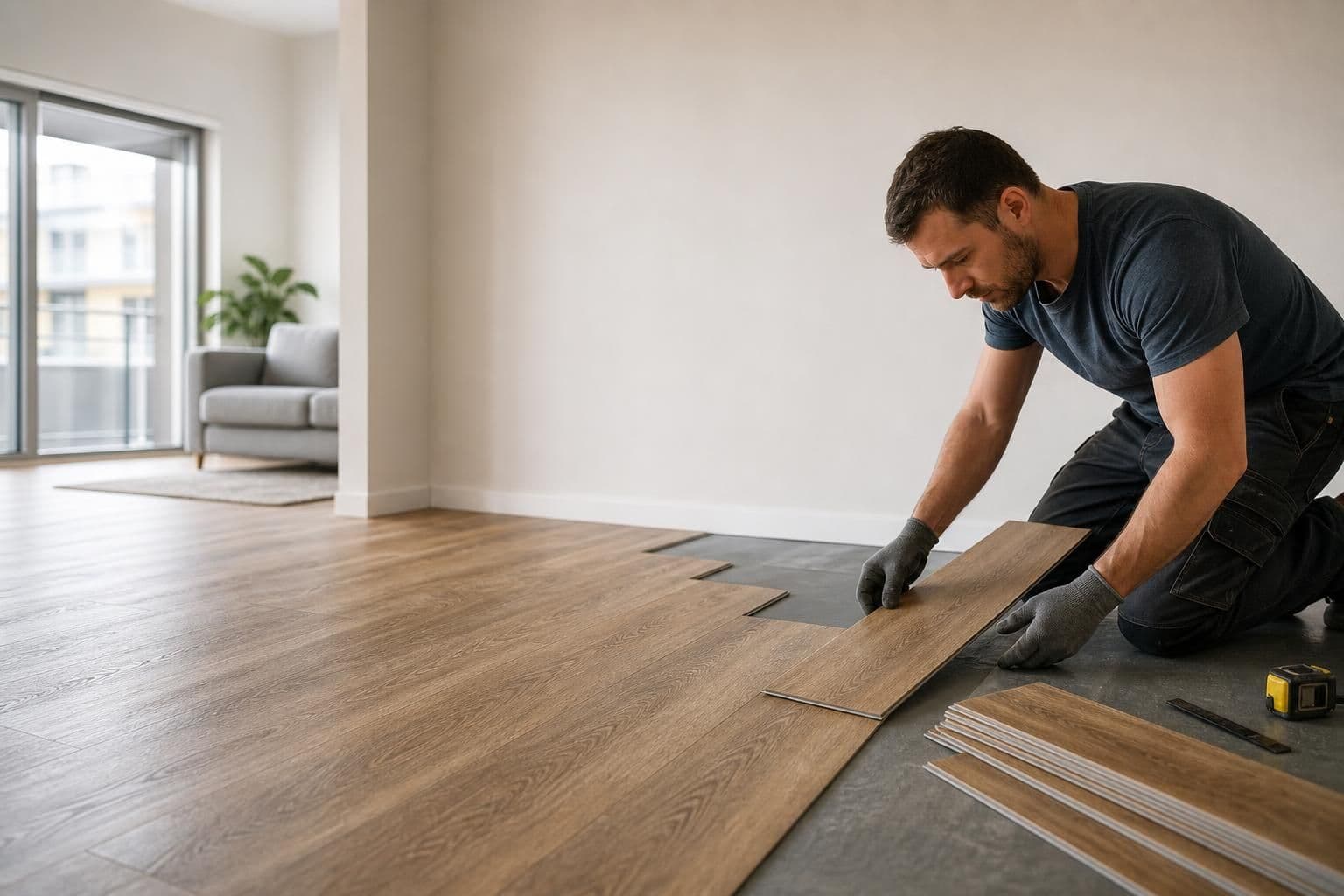
Vinyl plank tends to be the practical middle ground for Oahu condos: it resists humidity and salt air better than solid wood, comes in click-lock or glue-down formats that work over concrete slabs, and pairs easily with rated underlayment to hit IIC 50 or higher. For a broader look at how these materials compare on durability, moisture tolerance, and install complexity, see this vinyl plank flooring guide.
Underlayment Does More Work Than the Flooring Itself
A premium vinyl plank over a thin, unrated pad can still fail an IIC test, while a mid-range plank over the right cork or rubber underlayment can pass comfortably. The underlayment's density, thickness, and material — not the visible flooring surface — is what actually absorbs the impact energy before it reaches the slab. When a board asks for documentation, they usually want the underlayment's tested IIC number attached to the flooring assembly, not just a photo of the plank.
AOAO Approval: What Boards Usually Want to See
Most Honolulu condo associations require a written flooring application before installation begins, and the paperwork typically asks for:
- The flooring product name and thickness
- The underlayment product name and its tested IIC (and sometimes STC) rating
- Confirmation the installer will use the manufacturer's approved installation method
- Sometimes a certificate of insurance from the installer
Boards reject applications far more often for missing underlayment specs than for the flooring brand itself, so having that documentation ready before submission speeds up approval.
What Actually Drives the Cost of a Quiet Flooring System
There's no single number that applies across Oahu condos, since the same flooring assembly can land very differently depending on the building and the unit. What actually moves the number:
- Underlayment tier and brand. Some AOAOs name a specific rated underlayment product in their house rules rather than accepting any equivalent, which removes room to substitute a cheaper pad.
- Subfloor and slab condition. Older buildings often have uneven or pitted concrete slabs that need leveling compound before any underlayment goes down — skipping this step is the most common reason a "quiet" floor still transmits noise.
- Elevator and loading-dock access. High-rise buildings with limited elevator windows or a single loading dock shared by multiple units add time (and often scheduling fees) to get material and tools up to the unit.
- Tear-out and disposal. Removing existing tile, hardwood, or old carpet — and hauling it out through a high-rise elevator rather than a ground-floor door — adds labor that a single-family home tear-out doesn't.
- Furniture moving. Whether you clear the unit yourself or need the crew to shift and reset furniture affects labor time.
- Material tier and freight. Higher-end vinyl plank, engineered wood, or a specialty rubber underlayment not stocked locally may need to be special-ordered and freighted in, which adds lead time and cost versus in-stock options.
- Stairs or split-level layouts. Multi-level condos or townhomes add labor for carrying material and tools between floors.
Because every one of these varies by building and unit, the only reliable number comes from a free quote based on your actual square footage and building access — not a generic per-square-foot figure.
Frequently Asked Questions
Q: What IIC rating do most condo associations require for flooring?
Most Oahu AOAOs require a minimum IIC of 50, though some buildings set the bar at 60 or higher for upper floors. Check your specific house rules, since the requirement is set building by building, not citywide.
Q: Is vinyl plank quieter than laminate for a condo?
Vinyl plank is generally quieter than laminate at a similar quality tier because it's denser and pairs more predictably with rated underlayment, while thin laminate can sound hollow even with padding. The underlayment matters as much as the surface material in either case.
Q: Does carpet automatically meet AOAO sound requirements?
Carpet with pad usually exceeds most IIC 50 requirements without extra work, which is why some boards allow it in bedrooms even when they restrict hard flooring elsewhere. It still needs to be listed on the flooring application along with the pad specification.
Q: Can I install hardwood in an upstairs Oahu condo?
Solid hardwood can work if it's installed with a manufacturer-approved acoustic underlayment that achieves the required IIC rating, but it's the option most likely to need extra floor buildup or board negotiation. Engineered wood with a rated pad is often an easier path to approval.
Q: Who decides if my flooring choice passes AOAO review?
The property management company or board reviews the written application against the association's house rules, usually checking the underlayment's tested rating rather than the flooring brand. Getting the IIC documentation from your supplier before submission avoids back-and-forth delays.