Best Quartz Countertop Colors That Hide Stains
Key takeaway
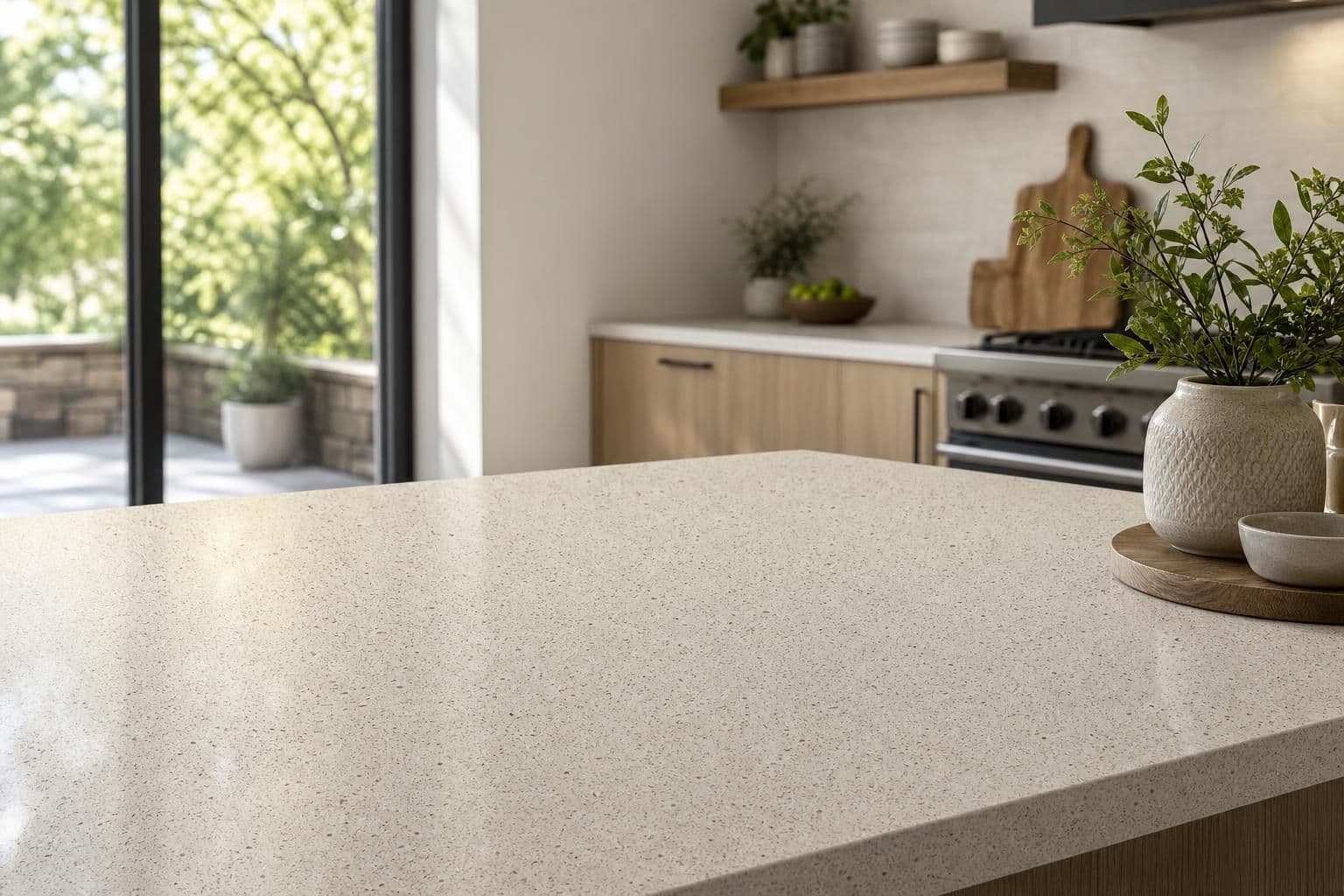
Quartz colors with a mix of speckles, veining, or flecks in mid-tone grays, beiges, and browns hide stains best because the busy pattern breaks up light and camouflages spills, water spots, and crumbs. Solid, flat colors — especially pure white or jet black — show every fingerprint and drip because there's nothing in the pattern to distract the eye. The color itself matters less than the pattern density and tone; a mid-tone, multi-speckled surface will out-perform a "stain-resistant" solid color almost every time.
Key takeaways
- Multi-speckled mid-tone quartz (soft gray, greige, taupe, warm brown) hides spills and water spots better than any solid color.
- Pure white and pure black quartz are the hardest colors to keep looking clean day to day, even though quartz itself resists actual staining.
- What a quartz project runs on Oahu depends far more on pattern complexity, slab sourcing, and job-site conditions than on the base color itself — a project measured against the actual kitchen is the only way to know for sure.
Why Pattern Matters More Than Color
Quartz is engineered stone — crushed quartz crystal bound with resin and pigment under heat and pressure, which makes it non-porous. That non-porous surface means liquids like coffee, wine, or lemon juice sit on top instead of soaking in, so quartz doesn't stain the way natural stone or wood can. NSF International certifies many quartz surfaces for food-contact safety under sanitation standards, which is part of why quartz is common in both kitchens and bathrooms.
What actually shows on the surface day to day isn't a stain in the material — it's visible residue sitting on top: a water ring, a coffee drip, flour dust. A busy, high-contrast pattern hides that residue visually. A flat solid color has nothing to hide it behind, so the same drip that's invisible on a speckled slab stands out clearly on a solid one.
Colors and Patterns That Hide Stains Well
These general categories tend to perform best for daily camouflage, based on how much visual "noise" is built into the pattern:
- Soft gray with white and black flecks — a common workhorse pattern that hides water spots, oil splatter, and crumbs equally well.
- Greige or warm taupe with subtle veining — reads as a natural stone look while staying forgiving on everyday marks.
- Speckled brown or "mocha" tones — good for kitchens with heavy cooking use since grease marks blend into the darker flecks.
- Mid-tone gray with faint gold or beige veining — mimics marble's look but hides the same spots marble would show.
Avoid large, high-contrast veining on a stark white background if low maintenance is the priority — it looks striking in a showroom photo but shows dust and streaks under kitchen lighting far more than a busier, denser pattern.
Colors That Show Stains and Wear Faster
Two categories consistently need more wiping down, regardless of how well the quartz resists actual staining:
- Pure white or bright white quartz — every water spot, fingerprint, and food splatter reads as a dark mark against the bright background.
- Solid black or deep charcoal quartz — dust, hard water spots, and light scratches from utensils show up as light marks against the dark surface, and they're often more visible in direct sunlight, which matters in Oahu kitchens with lanai doors or big windows.
Neither of these colors is a bad quartz — they're just higher-maintenance choices that need wiping more often to look their best, especially in a busy family kitchen or a rental unit between tenants.
Matching Color Choice to How You Use the Kitchen
A rental or vacation property benefits most from a forgiving, speckled mid-tone that looks clean between cleanings without constant attention. A primary residence where the homeowner wipes counters after every use has more flexibility to choose a brighter or more dramatic slab since upkeep is more frequent. Commercial kitchens and condo common areas usually lean toward busier patterns for the same reason rentals do — less visible wear between cleanings means fewer complaints.
Cabinet color plays into this too. A dark or richly stained cabinet under a light speckled countertop creates enough visual contrast that minor countertop marks tend to disappear into the pattern rather than standing out against the cabinet line. Anyone planning both new counters and new cabinets at once has a chance to coordinate colors for exactly this effect — something worth discussing when reviewing custom cabinet options alongside slab samples.
What Drives Quartz Pricing by Pattern on Oahu
Pattern and color don't move the cost of a slab nearly as much as a few practical factors that vary from job to job. Instead of a flat number by pattern, it helps to know what actually pushes a project up or down:
- Slab availability and freight: Common speckled and veined patterns are usually stocked by local fabricators, while premium bookmatched or highly dramatic veining is often a special order that has to ship in from the mainland, adding lead time and island freight to the project.
- Cutting and waste factor: A busy, directional pattern that needs to be matched across seams wastes more of the slab than a simple, low-variation pattern, since more of the stone gets cut away to keep the pattern lined up.
- Fabrication precision: Dramatic veining that needs to flow across a seam (a "bookmatch") takes more template and cutting time than a random speckle pattern that hides seams naturally.
- Edge profile and cutouts: A simple eased edge with a standard sink cutout is quicker to fabricate than an ogee edge, waterfall side panel, or multiple cooktop and sink cutouts.
- Old countertop tear-out and disposal: Removing and hauling away an existing laminate or tile counter adds labor that a bare-cabinet install doesn't need.
- Condo and high-rise access: Jobs in Honolulu high-rises often depend on elevator reservations, loading-dock hours, and AOAO move-in rules, all of which can add scheduling time compared with a single-family home with ground-level access.
Because these factors compound differently on every job, a free quote measured against the actual kitchen — slab choice, cutouts, edge profile, and access conditions included — is the only way to get a number that means anything; general ranges can't account for what a specific home requires.
Comparing Quartz Care to Other Surfaces
Homeowners weighing quartz against flooring choices for the same remodel often want a similar low-maintenance mindset throughout the space. The same logic that favors a busier quartz pattern for hiding daily marks also applies to flooring selection — a guide to vinyl plank flooring on Oahu breaks down how pattern and finish affect how well a floor hides scuffs and sand tracked in from the beach, which is a similar consideration to picking a forgiving countertop pattern.
For cleaning quartz day to day, the EPA's Safer Choice program lists cleaning products formulated to avoid harsh solvents, which is relevant since manufacturers generally recommend mild soap and water over abrasive or highly acidic cleaners on any quartz color.
Frequently Asked Questions
Q: What quartz color hides stains best in a kitchen?
A mid-tone gray or greige quartz with a dense speckle or subtle veining pattern generally hides day-to-day marks best, because the busy pattern camouflages water spots, crumbs, and grease better than a solid color does.
Q: Does quartz actually stain, or does it just show marks?
Quartz is non-porous, so liquids sit on the surface rather than soaking in, meaning true staining is rare; what people usually notice is visible residue like water spots or fingerprints, which is a pattern-visibility issue rather than an actual stain.
Q: Is white quartz a bad choice for a busy household?
White quartz isn't damaged more easily than other colors, but its flat, bright background makes every mark more visible, so it typically needs more frequent wiping to look clean in a high-traffic kitchen.
Q: Do darker quartz colors need more maintenance than lighter ones?
Dark quartz shows dust, light scratches, and hard water spots more visibly than a busy mid-tone pattern does, so solid black or charcoal slabs often need similar or more frequent wiping than a well-chosen speckled color.
Q: What drives quartz countertop installation pricing on Oahu?
Pattern complexity, slab sourcing (in-stock versus special-order with island freight), edge profile, cutouts, old-counter tear-out and disposal, and condo access conditions like elevator scheduling all move the price more than the base color does; the exact number comes from measuring the actual kitchen rather than a general guide.