How to Style Open Shelving in a Kitchen
Key takeaway
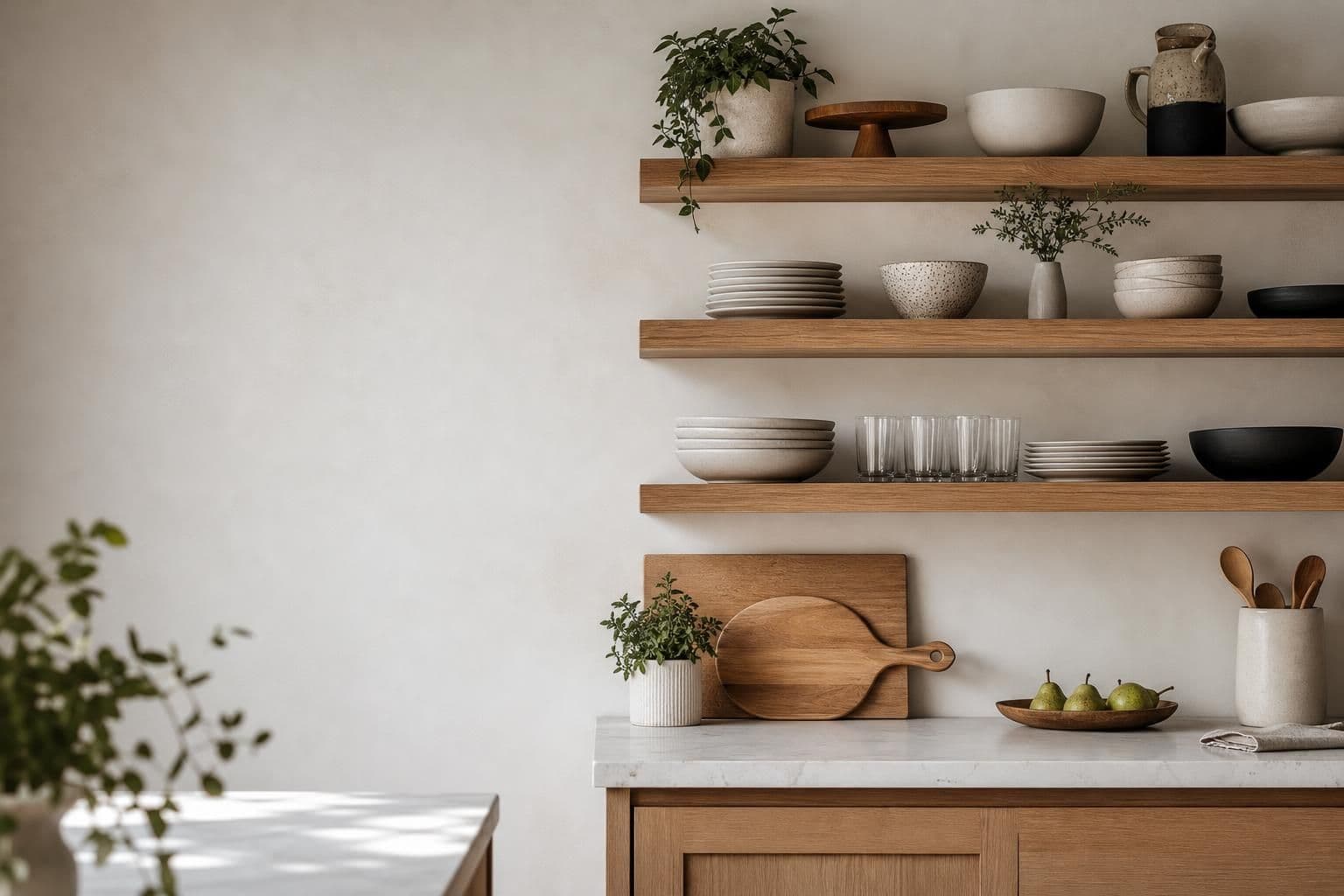
Style open kitchen shelving by grouping items in odd numbers, leaving at least a third of each shelf empty, and anchoring the display with a few larger pieces (stacked bowls, a cutting board, a plant) before filling in smaller objects like glasses and jars. Vary height and texture across the shelf run rather than lining everything up evenly, and keep daily-use dishware at the front so the shelf stays functional, not just decorative. In Hawaii's humid, salt-tinged air, material choice matters as much as arrangement.
Key takeaways
- Fill shelves to roughly two-thirds capacity and group objects in odd numbers for a balanced, lived-in look.
- Mix heights, textures, and a few negative-space gaps instead of lining dishware up evenly.
- In Oahu's coastal climate, pick shelf materials and finishes that resist moisture and salt corrosion, not just style.
Start With a Layout, Not Decor
Before placing a single mug, map out the shelf heights relative to how the kitchen gets used. Standard upper cabinet spacing runs around 18 inches above the counter, and open shelves generally follow similar ergonomics so the lowest shelf stays reachable without a step stool. If you're replacing upper cabinets with open shelving, it helps to understand standard cabinet height conventions first, since most kitchens are built around those dimensions and deviating too far changes how usable the shelf actually is.
Plan for three to four shelves maximum in a typical run. Stack them with roughly 10-12 inches of clearance for the lower shelves (where taller items like pitchers or cereal boxes live) and slightly less near the top, where lighter and smaller objects go.
Group in Odd Numbers and Vary Height
Designers lean on grouping in threes because asymmetry reads as intentional rather than random. A cluster might include:
- A stack of two or three bowls
- A single taller object (vase, oil bottle, cutting board standing upright)
- One small accent piece (a plant, a framed photo, a ceramic dish)
Repeat this pattern across the shelf run but avoid mirroring it exactly — a shelf that looks identical on both ends reads as staged rather than lived-in. Leave visible negative space between groupings; roughly a third of each shelf should be empty surface, not stacked with objects.
Mix Everyday Dishware With a Few Display Pieces
Open shelving works best when it's genuinely useful, not purely decorative. Keep the dishes, glasses, and bowls you reach for daily on the most accessible shelf, and reserve the top or bottom shelf for items used less often or chosen specifically for how they look — a cake stand, a set of mismatched vintage glasses, cookbooks turned spine-out.
A common mistake is treating open shelving like a china cabinet and overloading it with fragile items that never get used. That creates a layer of dust and clutter instead of the clean look most homeowners want. Rotate a few pieces seasonally instead — swap in a pitcher of fresh flowers or a bowl of citrus, and the shelf stays visually fresh without adding permanent clutter.
Choose Materials That Hold Up in Hawaii's Climate
Open shelving is more exposed to kitchen humidity and, on Oahu, coastal salt air than enclosed cabinetry. Unsealed wood shelves near a stove or sink can warp or discolor faster in consistently humid conditions, and metal brackets or hardware without a corrosion-resistant finish can pit or rust within a year or two in homes closer to the shoreline. The National Institute of Standards and Technology has documented how airborne salt accelerates metal corrosion in coastal environments, which is a factor worth weighing for any exposed hardware, not just shelving brackets.
Practical choices for Oahu kitchens include:
- Sealed or moisture-resistant wood, or a quartz or solid-surface shelf for areas near a sink or range
- Stainless steel, powder-coated, or marine-grade brackets instead of plain painted metal
- Keeping open shelving away from direct steam exposure (above a stove hood rather than directly over a cooktop)
If you're pairing open shelves with a countertop refresh, it's worth reviewing how quartz countertop suppliers on Oahu grade material for durability, since the same humidity considerations that affect countertops apply to anything left exposed on an open shelf.
Combine Open Shelving With Closed Cabinets
Full open-shelf kitchens look striking in photos but can be hard to keep tidy day to day, especially in smaller condo kitchens where storage is already tight. A more practical approach for most Oahu homes is a hybrid: open shelving for display and frequently used items, paired with closed upper or lower cabinets for small appliances, pantry goods, and anything you don't want visible all the time.
This hybrid layout also gives you more flexibility if you're refinishing existing cabinets rather than replacing them. A fresh coat of paint on the closed cabinets paired with new open shelving can update a kitchen's look without a full remodel — our guide on painting kitchen cabinets covers prep steps that matter in humid climates, including cure time before the cabinets go back into daily use.
For a built-in, finished look rather than retrofitted shelves, custom cabinetry with an integrated open section — designed around your kitchen's actual dimensions — tends to hold up better long-term than shelves added after the fact. You can preview layout options through custom cabinet design if you're considering that route alongside a flooring or countertop update.
Lighting and Color Make the Shelf Read as Intentional
A shelf lit only by overhead kitchen lighting tends to look flat. Under-cabinet or puck lighting mounted above each shelf creates shadow and depth, which makes even a simple arrangement of white dishes look curated. Keep the color palette on each shelf limited — two or three tones repeated across the run reads as cohesive, while a shelf with every color of dishware looks chaotic regardless of how well it's arranged.
Neutral backing — a painted wall, subway tile, or a simple paneled backsplash — also makes objects on the shelf stand out more than a busy pattern behind them. The American Institute of Architects has noted that kitchen storage trends increasingly favor this kind of visual simplicity paired with functional organization, rather than maximalist display.
Frequently Asked Questions
Q: How many items should go on one open shelf?
Aim for enough to fill about two-thirds of the shelf's visual space, grouped in clusters of two or three, with clear gaps between groupings. A shelf packed edge to edge reads as cluttered rather than styled.
Q: Is open shelving a good idea in a humid climate like Oahu's?
It can work well if you choose moisture-resistant materials and corrosion-resistant hardware, and avoid placing shelves in direct steam paths from a stove. Sealed wood, quartz, or solid-surface shelving with stainless or powder-coated brackets holds up better long-term in coastal, humid conditions.
Q: Should open shelving replace all my upper cabinets?
Most kitchens do better with a mix of open shelving and closed cabinets rather than converting every upper cabinet. Closed storage keeps small appliances, dry goods, and less attractive items out of view while open shelving handles display and daily-use dishware.
Q: What height should open kitchen shelves be?
Many kitchens follow the same spacing used for upper cabinets, with the lowest shelf roughly 18 inches above the counter and shelves spaced 10-12 inches apart. Adjust based on what you plan to store — taller items need more clearance.
Q: How do I keep open shelves from looking cluttered?
Limit the color palette to two or three tones, group items in odd numbers, and leave visible negative space on each shelf. Rotating a few decorative pieces seasonally also keeps the display from feeling static or overloaded.