Garage Cabinet Storage Ideas Built for Oahu's Climate
Key takeaway
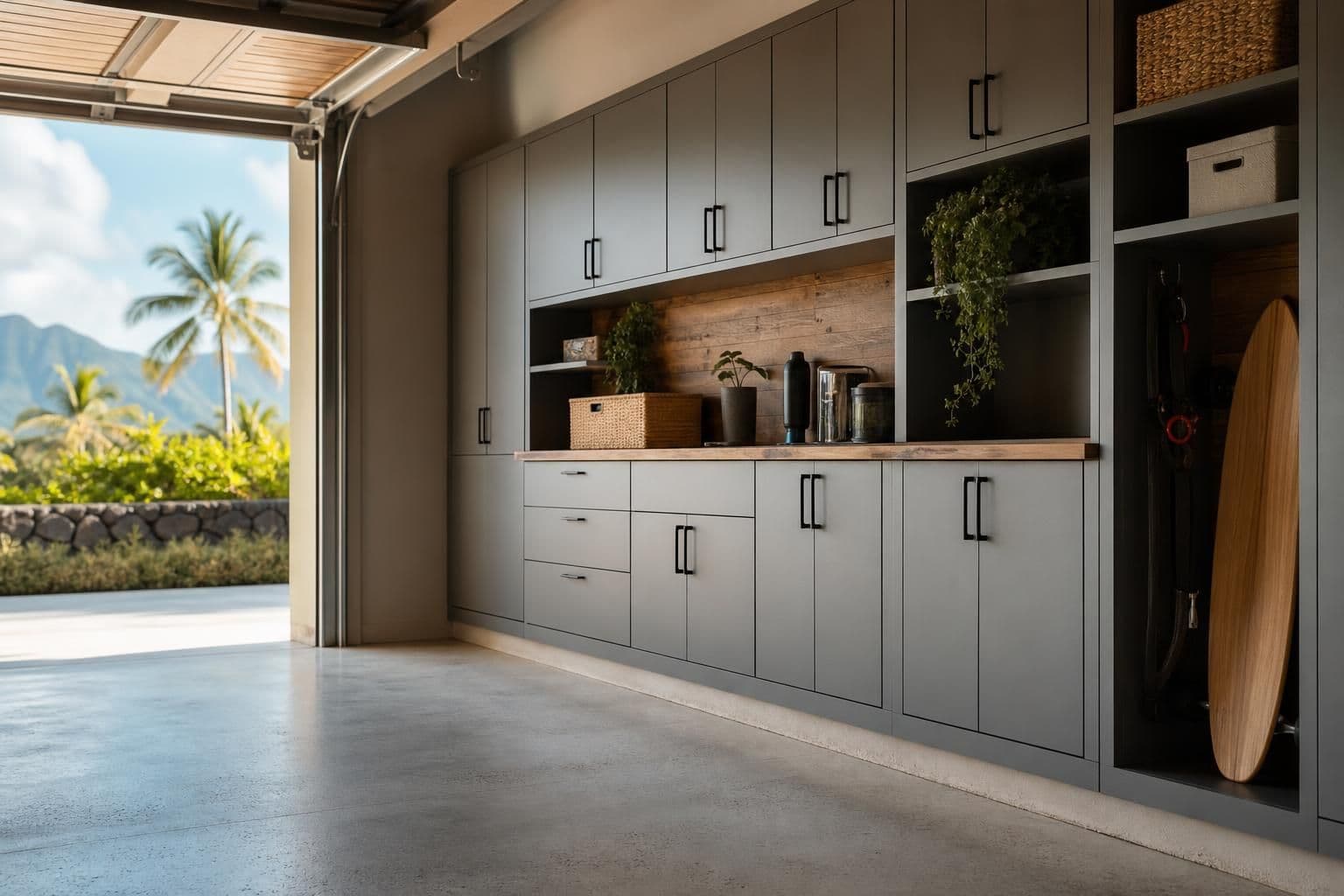
The best garage cabinet storage ideas for Oahu homes combine closed, moisture-sealed cabinets at floor level with open wall-mounted shelving or slat panels above, so gear stays dry, pests stay out, and floor space stays clear for parking. Material choice matters more here than in most mainland garages, because Oahu's humidity and salt air attack particleboard and bare wood faster than drywall and paint ever show. A layout built around those two facts — sealed storage low, ventilated storage high — outperforms whatever looks good in a mainland catalog photo.
Key takeaways
- Keep cardboard, particleboard, and untreated wood off the garage floor and away from exterior walls, where humidity and splashback do the most damage.
- Choose moisture-resistant cabinet materials (sealed plywood, thermofoil, or PVC-based boards) over standard melamine for anything staying in an Oahu garage long-term.
- Use wall-mounted cabinets and slat systems to get items off the floor entirely, which helps with both pest control and parking clearance.
Why Garages Fail Faster on Oahu Than Elsewhere
A garage is already the least climate-controlled room in the house, and on Oahu that means swings in heat and humidity on top of salt-laden air near the coast. The National Weather Service lists Honolulu's average relative humidity in the 65–75% range year-round, which is enough to warp particleboard, rust unsealed hardware, and feed mold on anything porous that sits against a garage wall. Add vehicle exhaust, lawn chemicals, and the occasional flooded floor drain, and you have an environment that chews through big-box storage units within a few years.
The fix isn't fancier organization — it's choosing materials and a layout that assume moisture is always present, not just during storms.
Build the Layout Around Moisture, Not Just Space
Start by separating storage into two zones:
- Low zone (floor to about waist height): closed, sealed cabinets only. This is where splashback, dust, and humidity concentrate.
- High zone (waist height to ceiling): open shelving, slat-wall panels, or overhead racks. Air moves more freely up here, which limits mold and lets you see what's stored.
This two-zone approach also solves a second Oahu-specific problem: garages double as storm-prep storage. Keeping emergency water, batteries, and tarps in sealed low cabinets protects them from humidity damage while keeping them accessible when you need them fast.
Material Choice Matters More Than Brand
Standard melamine-faced particleboard cabinets — the kind sold flat-packed for garages everywhere — swell and delaminate faster in Hawaii's climate than they do on the mainland. For anything meant to last, look for:
- Marine-grade or exterior-rated plywood with sealed edges, not just a laminate face.
- Thermofoil or PVC cabinet boxes, which resist moisture better than raw wood composites.
- Stainless or coated hardware — standard zinc hinges and slides corrode faster near the coast.
Termites are the other factor mainland storage guides never mention. Hawaii carries some of the highest termite pressure in the country, and the National Pest Management Association notes that subterranean and drywood termites both thrive in warm, humid climates like Hawaii's. Garage cabinets built from solid wood without treatment are a realistic target, which is one more reason sealed composite or termite-resistant materials outperform raw lumber builds in this specific climate. If you're weighing wood options elsewhere in the house, the same logic shows up in our guide to termite-resistant flooring choices.
Wall-Mounted Systems Free Up Floor Space
Floor space in an Oahu garage is often at a premium — many homes use the garage for parking, laundry, and storage all at once. Wall-mounted cabinet systems and slat-wall panels solve this by lifting storage entirely off the slab:
- Mount a slat-wall or French cleat system along one or two walls.
- Hang modular bins, hooks, and small shelves for tools and sports gear.
- Reserve a separate wall for sealed base cabinets holding chemicals, paint, and emergency supplies.
- Leave at least one full wall clear for a car door swing or bike storage.
This setup also keeps items away from the slab, which matters if your garage floor ever takes on water during heavy rain — a far more common event on Oahu than most storage articles account for.
Custom vs. Stock Cabinets for a Garage
Stock flat-pack garage cabinets are fine for dry climates and short-term use, but they're rarely built with the moisture-sealing a long-term Oahu garage needs. Custom cabinetry lets you specify sealed plywood boxes, coated hardware, and dimensions that fit an actual garage layout instead of a generic box size. If you're already comparing options for the rest of the house, the tradeoffs are similar to what we cover in custom cabinets vs. IKEA cabinets — the same moisture and hardware logic applies in a garage, just with higher stakes because the room is less protected.
For homeowners tackling cabinets room by room, it's also worth looking at how laundry room cabinet ideas handle similar humidity exposure, since laundry areas often share a wall with the garage in Oahu floor plans.
What Actually Drives Garage Cabinet Cost
Garage cabinet pricing depends on more variables than people expect, and none of them are fixed numbers you can borrow from a mainland estimate. The real drivers are material tier (sealed plywood vs. basic laminate), cabinet depth and configuration, hardware quality, and whether the boxes are stock-sized or built to an exact garage footprint. Island freight on special-order materials and finishes also plays a bigger role here than on the mainland, since most cabinet stock arrives by container. Our breakdown of what drives cabinet cost on Oahu walks through each of these factors in more detail — the only way to get an actual number is a quote against your garage's real measurements.
Frequently Asked Questions
Q: What's the best material for garage cabinets in a humid climate like Oahu's?
Sealed plywood, thermofoil, or PVC-based cabinet boxes hold up better than standard melamine particleboard, which tends to swell and delaminate under consistent humidity. Stainless or coated hardware also resists corrosion better than standard zinc fittings near the coast.
Q: Should garage storage be open shelving or closed cabinets?
A mix works best: closed, sealed cabinets near the floor protect contents from splashback and pests, while open shelving or slat-wall systems higher up allow better airflow and reduce mold risk.
Q: Are wood garage cabinets a termite risk on Oahu?
Untreated solid wood cabinets can be a target in Hawaii's high termite-pressure environment. Sealed composite materials or properly treated wood reduce that risk significantly compared to raw lumber builds.
Q: Can garage cabinets help during hurricane or storm prep?
Yes — sealed, closed cabinets near the floor are a practical place to store emergency water, batteries, and tarps, since they protect supplies from humidity while keeping them accessible when needed.
Q: Is it better to buy stock garage cabinets or have them custom built?
Stock cabinets work for short-term or dry-climate use, but custom cabinets let you specify moisture-sealed materials, coated hardware, and dimensions that fit your actual garage layout rather than a generic box size.