How to Clean Kitchen Cabinets the Right Way
Key takeaway
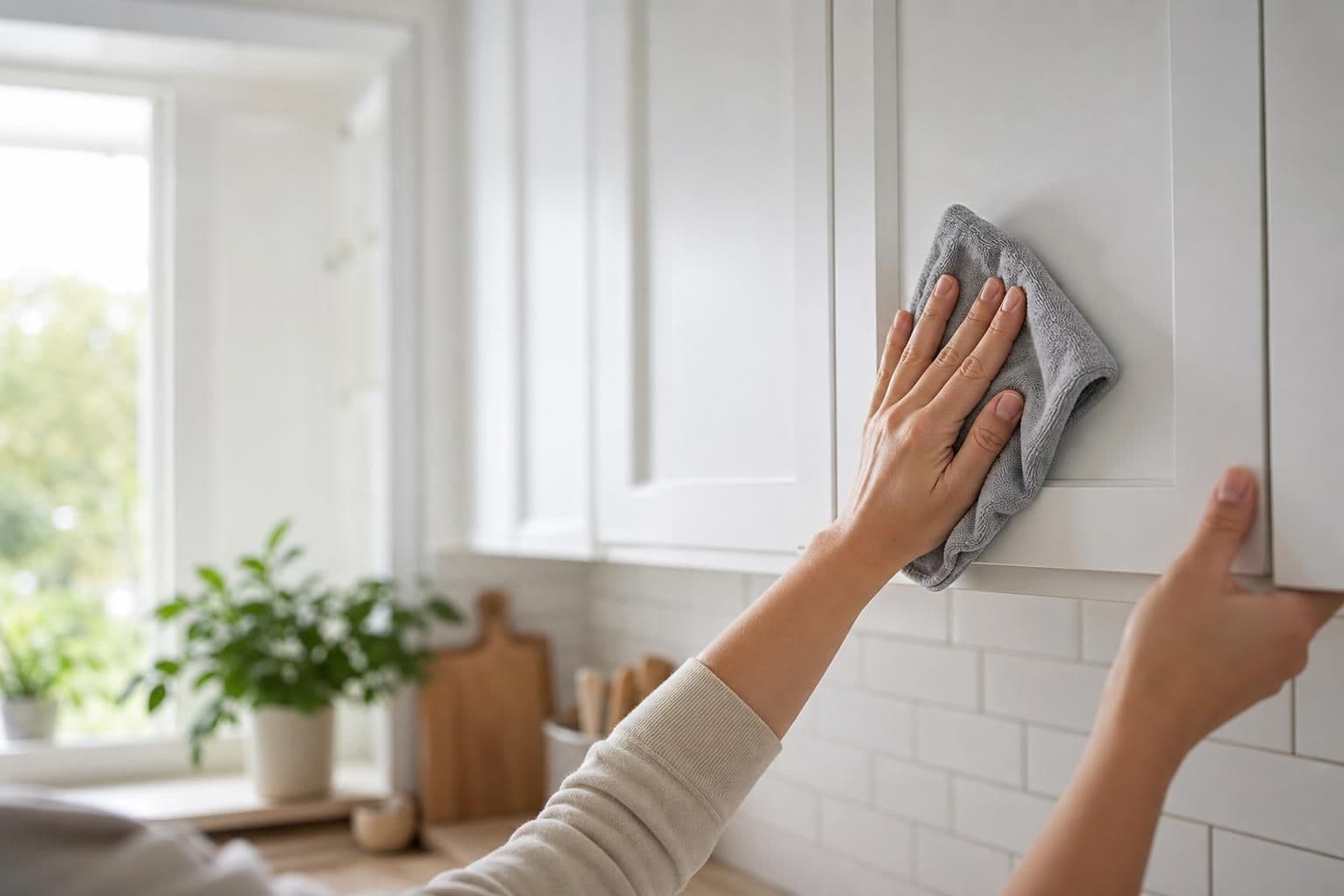
Clean kitchen cabinets with a microfiber cloth and a mild solution — a few drops of dish soap in warm water for most finishes, or a 50/50 vinegar-water mix for painted or sealed wood — wiping with the grain and drying immediately to prevent streaking or moisture damage. Avoid ammonia, bleach, and abrasive scrubbers on any finish, since they strip sealants and dull the surface over time. On Oahu, dry cabinets fully after cleaning; the combination of humidity and salt air speeds up swelling, peeling, and hardware corrosion faster than in drier mainland climates.
Key takeaways
- Match the cleaner to the finish: mild soap and water for painted or laminate cabinets, vinegar-water for sealed wood, and manufacturer-approved polish only for high-gloss or specialty finishes.
- Dry every surface after wiping — in Oahu's humidity, leftover moisture is what causes swelling and peeling, not the cleaning itself.
- Deep-clean grease near the stove monthly; everyday dust and fingerprints just need a quick wipe once or twice a week.
What You'll Need Before You Start
A basic cabinet cleaning kit covers most kitchens: two microfiber cloths (one for cleaning, one for drying), a soft-bristle brush for grooves and hardware, dish soap, white vinegar, and a spray bottle. Skip paper towels where possible — they can leave lint and micro-scratches on glossy or lacquered finishes.
Test any new cleaner on an inside corner or the bottom of a cabinet door first. Finishes vary enough between manufacturers that what's safe on one painted surface can cloud another, especially catalyzed lacquers common on newer custom cabinetry.
Cleaning by Cabinet Material
Different finishes react differently to moisture and chemicals, so the right method depends on what's actually on the surface, not just what the cabinet is made of underneath.
- Painted wood or MDF: Use a barely damp cloth with diluted dish soap. Excess water seeps into seams and causes paint to bubble or peel, which is one of the more common complaints in older Oahu kitchens near the coast.
- Stained or sealed wood: A vinegar-water solution (about one part vinegar to one part water) cuts grease without breaking down the sealant. Follow with a dry cloth immediately.
- Laminate: Laminate tolerates soap and water well and is one of the more forgiving surfaces for daily wiping, which is part of why it's popular in rental units.
- High-gloss or thermofoil: Stick to water and a few drops of mild soap only. Household degreasers and glass cleaners containing ammonia can cause thermofoil to peel at the edges.
- Quartz or stone backsplash and counters near cabinets: Avoid vinegar and citrus-based cleaners entirely, since the acid etches natural stone and can dull quartz resin over time. A pH-neutral stone cleaner or plain soap and water is safer.
If you're weighing a full cabinet refresh instead of ongoing cleanup — especially in a kitchen with decades of grease buildup or water damage — it's worth comparing that cost against what you'd spend maintaining old cabinets. A guide on finding a reliable custom cabinet maker on Oahu walks through what to look for if replacement starts to make more sense than restoration.
Tackling Grease Buildup Near the Stove
Grease near the range hardens into a sticky film that regular wiping won't touch. A short soak helps: spray a mix of warm water and a small amount of dish soap, let it sit two to three minutes to loosen the film, then wipe with the grain and follow with a dry cloth. For stubborn spots, a soft-bristle toothbrush gets into door panel grooves and hardware crevices without scratching the finish.
Monthly degreasing near the cooktop prevents the buildup from hardening further, which otherwise requires stronger solvents that risk the finish.
Why Oahu's Climate Changes the Routine
Humidity and salt air don't just affect flooring — they shorten the life of cabinet finishes too. According to the National Oceanic and Atmospheric Administration, coastal environments carry airborne salt particles that accelerate corrosion on metal hardware and can settle into porous or unsealed wood surfaces. That means hinges, pulls, and hidden hardware on Oahu kitchens need more frequent wiping than the same cabinets would in a drier inland climate.
Moisture control matters just as much. The Environmental Protection Agency notes that indoor relative humidity above roughly 50% creates conditions where mold and mildew can take hold on organic materials, including wood cabinetry. In a kitchen without strong ventilation, that's reason enough to run an exhaust fan during and after cooking, and to dry cabinet surfaces fully after every wet cleaning — not just wipe and walk away.
Daily and Weekly Habits That Actually Help
Heavy cleaning sessions matter less than the small habits that keep grime from building up in the first place:
- Wipe handles and pulls daily — they pick up the most oil and bacteria from hands.
- Spot-clean spills immediately rather than letting them sit, especially on painted or MDF cabinets near the sink.
- Run the range hood fan every time you cook, even for quick stovetop meals.
- Check under-sink cabinets monthly for condensation or leaks, since that's where moisture damage usually starts unnoticed.
- Dust open shelving or glass-front cabinets weekly to avoid buildup that turns greasy once it mixes with kitchen humidity.
When Cleaning Isn't Enough
Swollen doors, peeling laminate at the edges, or hardware that's rusted through aren't cleaning problems — they're signs the cabinet box or finish has already failed. Pushing harder with cleaner or sanding a swollen door usually makes it worse. At that point, it's a question of repair versus replacement, and that decision often ties into a broader kitchen remodel timeline. If you're already thinking about new cabinets, this breakdown of what a kitchen remodel actually adds to an Oahu home is a useful next read, and a guide to choosing a cabinet company on Oahu covers what separates a rushed quote from one based on your kitchen's actual layout.
Frequently Asked Questions
Q: Can I use vinegar on all kitchen cabinets?
No. Vinegar works well on sealed or stained wood but can dull or discolor painted, laminate, and high-gloss thermofoil surfaces over repeated use. Test it on an inconspicuous spot first, or stick with mild soap and water for those finishes.
Q: How often should kitchen cabinets be deep cleaned?
Grease buildup near the stove should be addressed monthly, while the rest of the kitchen's cabinets typically need a deeper clean every two to three months depending on cooking frequency and ventilation.
Q: Why do my cabinets feel sticky even after cleaning?
A sticky residue usually means grease wasn't fully dissolved before wiping, or a cleaning product left behind a film. Re-clean with a proper degreasing solution, let it sit briefly, then rinse the cloth and wipe again with clean water before drying.
Q: Is it safe to use bleach on kitchen cabinets?
Bleach is too harsh for most cabinet finishes and can strip paint, discolor wood stain, and damage laminate over time. It's better reserved for countertops or backsplash grout where the material can tolerate it.
Q: Does Oahu's humidity really affect how I should clean cabinets?
Yes. Higher ambient humidity means cabinets dry more slowly after cleaning, which gives moisture more time to seep into seams and joints. Always dry cabinet surfaces with a cloth immediately after wiping rather than letting them air-dry.