How to Remove Old Flooring Before Installation
Key takeaway
Removing old flooring before installation means clearing the surface down to a clean, structurally sound subfloor: pull up the old material (carpet, tile, vinyl, or wood), remove all fasteners and adhesive residue, check for damage or moisture underneath, and patch or level the subfloor so the new flooring has a flat, stable base. Skipping any of these steps is the most common reason a new floor telegraphs bumps, squeaks, or fails early. On Oahu, the extra wrinkle is checking what's actually under that old floor before you start swinging a scraper.
Key takeaways
- Test old vinyl tile or sheet flooring installed before the 1980s for asbestos before you cut, sand, or dry-sweep it.
- Removal method depends on flooring type: carpet lifts by hand, glued-down vinyl needs a floor scraper, tile often requires a demolition hammer.
- The subfloor underneath — not the removal itself — determines whether your new floor lasts; check for moisture, rot, and unevenness before installation day.
Check What You're Dealing With First
Before any tool touches the floor, identify the material and how it's attached. Nailed-down hardwood, glued vinyl, thin-set tile, and stapled carpet each demand a different removal approach, and guessing wrong wastes hours or damages the subfloor. In older Oahu plantation-era homes, it's common to find two or three layers stacked on top of each other — original hardwood under linoleum under a more recent vinyl plank — because a past owner installed over the old surface instead of removing it.
If your home or building was constructed before 1989, treat old vinyl tile, sheet flooring, and the black mastic adhesive underneath as a potential asbestos hazard until tested. The EPA's guidance on asbestos in the home recommends leaving suspect material undisturbed and having it tested by a qualified lab rather than sanding, scraping, or dry-sweeping it, since disturbing the fibers is what creates the health risk.
Tools You'll Need for Each Flooring Type
Different flooring types come up with different tools, and using the wrong one usually means gouging the subfloor.
- Carpet and pad: Utility knife, pliers for tack strip removal, a pry bar for staples.
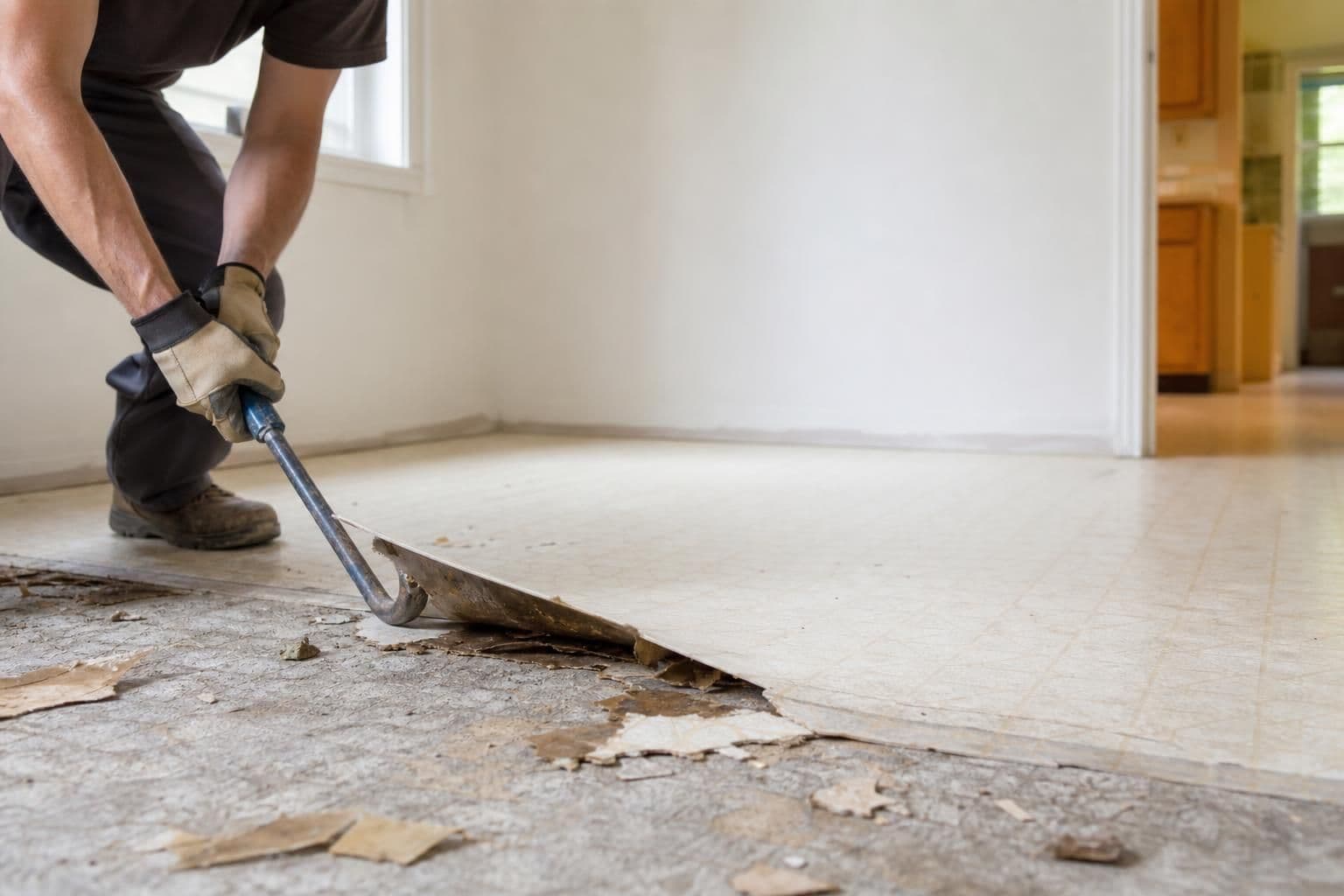
- Glued-down vinyl or linoleum: A floor scraper (manual or powered), heat gun to soften stubborn adhesive, and a wet/dry vacuum for debris.
- Ceramic or stone tile: A demolition hammer or electric chipping hammer; hand-chiseling tile is possible but slow for anything beyond a small bathroom.
- Nailed hardwood: A pry bar and hammer, working board by board in the direction of the tongue-and-groove.
- Floating floors (laminate, click-lock vinyl plank): No tools beyond your hands in most cases — these usually lift up plank by plank starting at a wall.
Wear a properly fitted dust mask or respirator rated for fine particulates, safety glasses, and knee pads. The CDC/NIOSH recommends respiratory protection any time demolition work generates dust, since standard cloth masks don't filter fine silica or adhesive particles.
Step-by-Step Removal Process
- Clear the room. Remove furniture, appliances, and baseboards (save baseboards if you plan to reuse them).
- Test for hazardous material if the flooring predates the late 1980s.
- Remove the flooring surface using the tool appropriate to the material, working from one corner or wall outward.
- Pull remaining fasteners — staples, nails, tack strips — completely; anything left proud of the subfloor will show through vinyl plank or telegraph through thin flooring.
- Scrape or grind adhesive residue down to bare subfloor. Leftover mastic ridges are a leading cause of visible bumps in new luxury vinyl plank.
- Inspect the subfloor for soft spots, water staining, or unevenness, and mark problem areas.
- Vacuum and dispose of debris, bagging any material that tested positive for asbestos according to your local disposal rules.
What's Under the Old Floor Matters More Than the Old Floor Itself
The removal is the easy part. What you find underneath decides whether your new flooring installs cleanly or fights you the whole way. In older single-wall Oahu homes with plywood subfloors, decades of humidity and past leaks can leave soft or delaminated spots that aren't visible until the old flooring comes off. On slab-on-grade homes, moisture rising through concrete is invisible until you're standing on bare slab — which is exactly why professional installers test moisture levels before laying new material rather than after. If you're still deciding between flooring types for a humid climate, it's worth reading up on how vinyl plank compares to laminate before committing, since moisture tolerance varies a lot between the two.
Uneven subfloors also need leveling compound before installation — a step that's easy to skip when you're eager to get new flooring down, but one that determines whether vinyl plank locks together properly or separates at the seams within a year.
Condo and High-Rise Considerations
If you live in a Honolulu high-rise or mid-rise condo, tear-out isn't just a DIY project — it's usually an AOAO-regulated event. Many associations require advance notice of demolition work, restrict the hours you can run a demolition hammer, and mandate protective floor coverings in elevators and hallways during debris removal. Some buildings also require documentation of the subfloor sound-rating assumptions before approving the new flooring, which is separate from the removal work itself but often gets requested at the same stage. It's worth reviewing your building's paperwork requirements before removal day, not after.
Disposal on Oahu
Old flooring debris — carpet, tile, glued-down vinyl — is heavy and bulky, and most curbside pickup services on Oahu won't take large volumes of construction debris. Confirm accepted materials and drop-off requirements with the City and County of Honolulu's Department of Environmental Services before you haul a truckload to the transfer station, since acceptance rules and any required permits can differ by material type and by facility.
DIY vs. Hiring It Out
Removing carpet or a single layer of click-lock flooring is reasonable for most homeowners with a free weekend. Tile removal, multi-layer tear-out, anything suspected of containing asbestos, or work inside a condo with AOAO paperwork requirements is where it makes sense to bring in a licensed installer — both for safety and to keep your project on the association's timeline. If you're weighing that decision, this guide to hiring a flooring installer on Oahu walks through what to ask before you sign anyone up.
Once the old flooring is out and the subfloor is inspected, the next real number you need is based on your actual square footage and subfloor condition — not a generic estimate. A free quote priced to your space, with an answer within 24 hours, is the fastest way to find out what your project actually needs before material and labor get scheduled.
Frequently Asked Questions
Q: Do I need to remove old flooring before installing vinyl plank?
In most cases, yes — vinyl plank needs a flat, clean, dry subfloor, and leaving old flooring in place can trap moisture or leave an uneven surface that shows through the new planks. There are exceptions for certain floating installations over sound, flat existing floors, but that's a case-by-case call, not a default.
Q: How do I know if my old flooring contains asbestos?
Vinyl tile, sheet flooring, or adhesive installed before the late 1980s should be treated as a possible asbestos risk until a certified lab tests a sample. The material only becomes hazardous when disturbed, so avoid sanding, scraping, or dry-sweeping it before testing.
Q: Can I install new flooring directly over old flooring instead of removing it?
Sometimes, but it depends on the flooring type, its condition, and how much height the new install can add without causing problems at doorways, transitions, or stairs. A damaged, uneven, or moisture-compromised existing floor should always be fully removed rather than covered.
Q: What's the hardest type of old flooring to remove?
Thin-set ceramic or stone tile is generally the most labor-intensive, since it's mechanically bonded to the subfloor and often requires a demolition hammer or electric chipping hammer to break free without damaging what's underneath.
Q: Does my condo association need to approve flooring removal?
Many Honolulu AOAOs regulate the timing, noise, and protective measures required for demolition work, separate from approval of the new flooring material itself. Check your building's house rules or ask your board before scheduling tear-out.