How Long Does a Full Home Renovation Take on Oahu?
Key takeaway
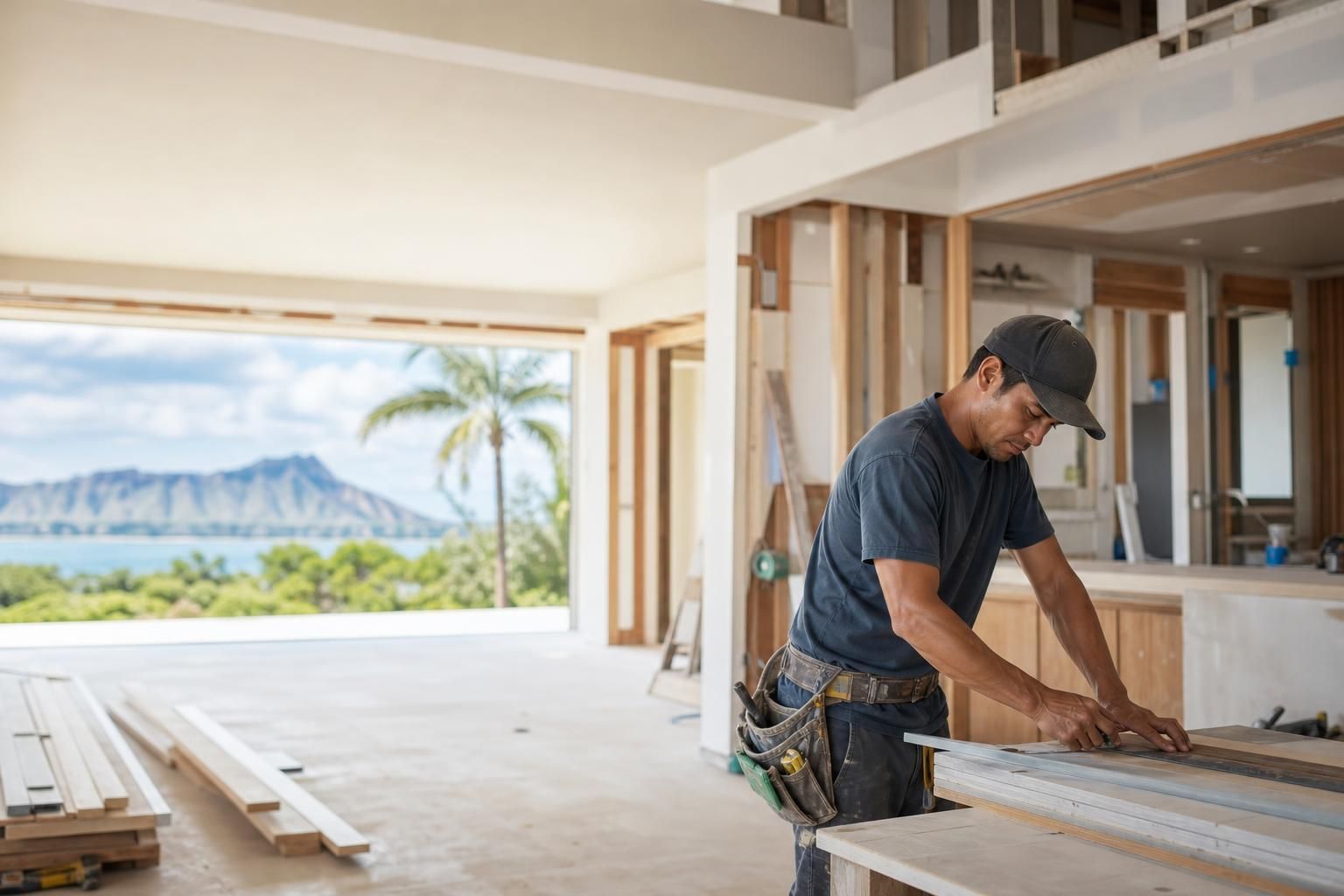
A full home renovation on Oahu typically runs three to nine months from signed contract to final walkthrough, depending on scope, permitting, and whether materials have to be special-ordered and shipped to the island. Cosmetic-only updates (flooring, cabinets, countertops, paint) on a single-family home can wrap in four to eight weeks once materials arrive. Projects that touch plumbing, electrical, or structural walls, or that require AOAO board approval in a condo, routinely take longer because of inspection and approval cycles layered on top of the physical work.
Key takeaways
- Permits, inspections, and (for condos) AOAO approval usually add more time to an Oahu renovation than the actual installation work does.
- Special-order flooring, quartz slabs, and cabinets ship from off-island, so ordering early is the single biggest lever homeowners have over the schedule.
- Older Oahu homes often need subfloor leveling or repair before new flooring goes down, which isn't visible until tear-out starts.
What Actually Determines the Timeline
Three variables control how long a renovation takes more than anything else: how many trades are involved, whether the work requires a permit, and how far in advance materials were ordered. A kitchen that needs new cabinets, countertops, flooring, and an electrical panel upgrade has to sequence four separate scopes of work, while a flooring-only refresh in a few rooms might be one trade, one visit. Projects also move faster when one person is coordinating the whole job instead of the homeowner calling separate crews for demo, electrical, flooring, and countertops and hoping the schedules line up.
Permitting and Inspections Add Real Time
Any work that touches structural elements, electrical circuits, or plumbing on Oahu generally requires a building permit through the City and County of Honolulu's Department of Planning and Permitting, and permitted work has to pass inspection before it's considered complete. Permit review and inspection scheduling can add weeks to a project timeline independent of how fast the crew works. Cosmetic work — new vinyl plank flooring over an existing subfloor, cabinet swaps, countertop replacement — usually doesn't trigger the same permit requirements, which is part of why those projects move faster than a full gut renovation.
Material Lead Times and Island Freight
Oahu sits at the end of a shipping line, and anything special-ordered — a specific quartz slab, a custom cabinet configuration, a flooring style not already in local stock — has to travel by ocean freight before it ever reaches a showroom. That transit time, not the installation itself, is often the longest single stretch in a renovation schedule. Homeowners who order materials the same week they sign a contractor contract frequently end up waiting on product while the installation crew sits idle. Choosing from in-stock inventory at a local showroom — where you can see and touch samples before committing — removes that variable almost entirely.
Condo Renovations Run on a Different Clock
If you own a condo, your renovation timeline includes a step single-family homeowners never deal with: AOAO board approval. Most Oahu associations require flooring specifications — underlayment type, sound (IIC) rating, installer insurance — submitted to the board before work can start, and board review schedules vary by building, sometimes meeting monthly rather than weekly. Submitting incomplete paperwork is the most common reason approval gets delayed past a single meeting cycle. Getting flooring specs written up in the format your AOAO board expects from the start — rather than resubmitting after a rejection — is one of the few parts of this process you can actually control.
Room-by-Room Sequencing
A full home renovation isn't one project, it's several run in sequence, and each has its own rhythm:
- Demo and tear-out — removing old flooring, cabinets, or fixtures, and hauling away debris.
- Rough work — electrical, plumbing, or framing changes that require inspection before they're closed up.
- Subfloor prep — leveling, moisture testing, or repair, especially in homes built before modern slab standards.
- Installation — flooring, cabinets, and countertops go in, generally in that order since flooring often needs to be down before cabinets are set.
- Finish work — trim, hardware, appliance hookup, final cleaning.
Kitchens tend to take longer than bathrooms because they combine cabinets, countertops, flooring, and appliance connections in a smaller footprint where trades have to work around each other. If you're mapping out a kitchen project, the right order of steps matters more than how fast any single trade works. The same logic applies to bathrooms — see this step-by-step bathroom remodel guide for how that sequencing plays out in a smaller room.
How Older Oahu Homes Add Time
Homes built several decades ago often have uneven or damaged subfloors that aren't visible until old flooring comes up. Leveling compound needs cure time before new flooring can go down, and in homes with a history of moisture intrusion or termite damage, the subfloor itself may need sections replaced. The U.S. Environmental Protection Agency's Renovation, Repair and Painting rule also requires lead-safe work practices on pre-1978 homes, which can add steps to demo in older properties. None of this is predictable from a walkthrough alone — it's one of the reasons a renovation timeline quoted before tear-out is always an estimate, not a guarantee.
A Realistic Way to Plan the Schedule
Rather than asking "how long will this take" as one number, break it into the pieces that actually move: how many trades are involved, whether a permit is required, whether materials are in stock or special-order, and whether a condo board has to sign off. A single-trade, in-stock, non-permitted project can move in weeks. A multi-trade, permitted, special-order, AOAO-reviewed project is a multi-month undertaking. The National Association of Home Builders notes that renovation timelines vary widely by project scope and regional permitting environment, which holds true on Oahu as much as anywhere. The only way to get a schedule specific to your unit or house — rather than a general range — is to have someone measure the actual space and check what's involved before work starts.
Frequently Asked Questions
Q: How long does a full kitchen renovation take on Oahu?
A kitchen involving new flooring, cabinets, and countertops typically takes several weeks to a few months once materials are on hand, longer if electrical or plumbing work requires permits and inspection.
Q: Does ordering flooring or countertops early actually shorten the timeline?
Yes. Because quartz slabs and many flooring and cabinet lines ship to Oahu from off-island, ordering before the installation crew is scheduled is the most effective way to avoid idle time waiting on product.
Q: Why do condo renovations take longer than single-family home renovations?
Condo projects require AOAO board approval of flooring specifications, including sound ratings and installer insurance, and board meeting schedules can add weeks beyond the physical work itself.
Q: Can I speed up a renovation by hiring separate trades myself instead of one contractor?
It's possible, but coordinating separate crews for demo, electrical, flooring, and countertops often creates scheduling gaps; having a single point of contact manage sequencing tends to keep a project moving faster.
Q: What part of a renovation timeline is hardest to predict in advance?
Subfloor condition. Issues like unevenness, moisture damage, or termite damage in older Oahu homes often aren't visible until old flooring or cabinets are removed, which is why timelines are estimates until tear-out begins.