Flooring for Rental Property That Lasts Longest on Oahu
Key takeaway
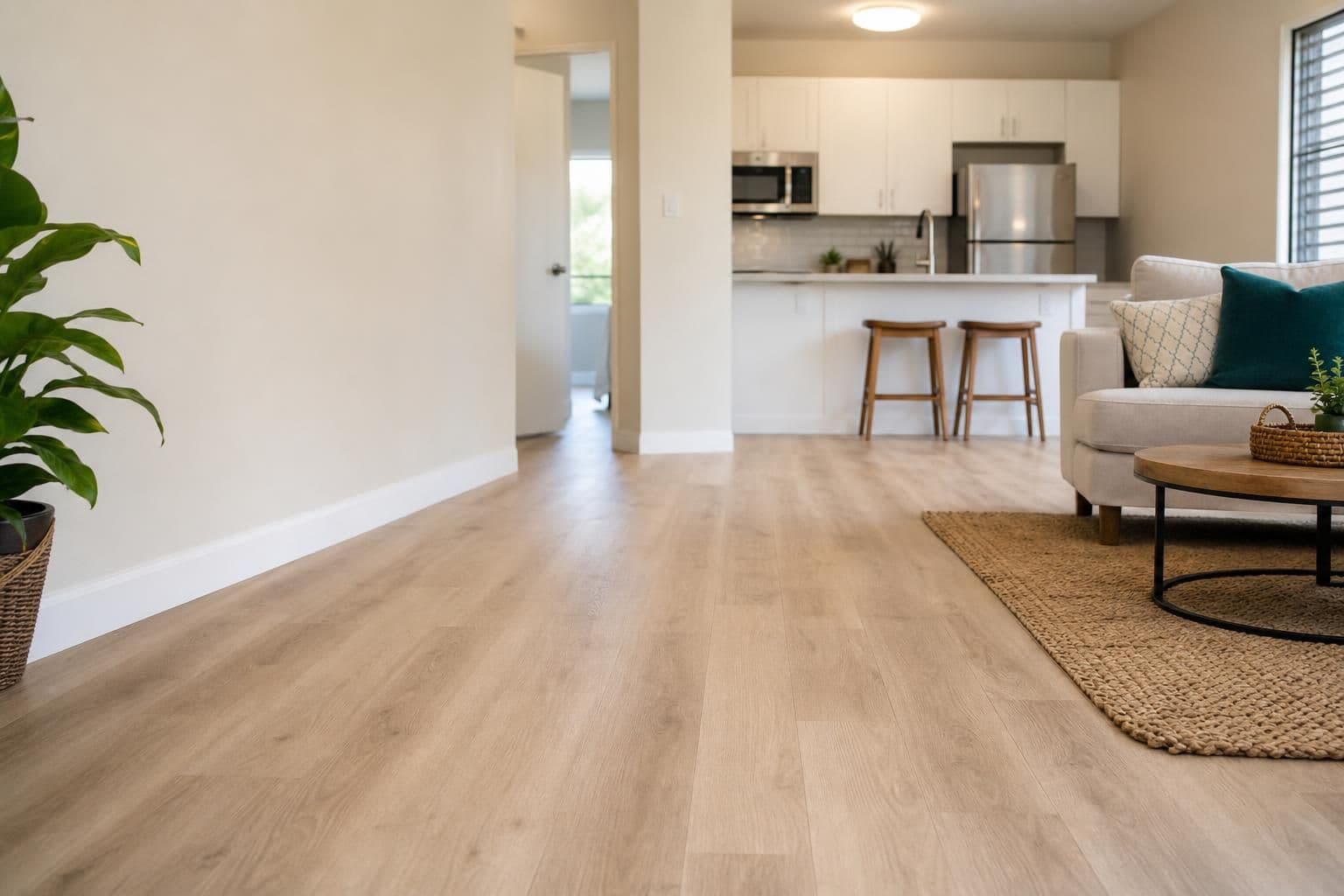
Rigid-core waterproof vinyl plank (also called SPC or WPC) is the flooring that holds up longest in Oahu rental units because it resists moisture, dents, and daily wear better than laminate, engineered wood, or carpet, and it doesn't require refinishing between tenants. For most rental properties, a 20-mil or higher wear layer paired with a stone-composite core gives landlords the best combination of durability and low turnover hassle.
Key takeaways
- Rigid-core waterproof vinyl plank with a 20mil+ wear layer outlasts laminate and engineered wood in rental units and tolerates Oahu's humidity and trade-wind salt air.
- What you pay for rental-grade vinyl plank depends mainly on subfloor condition, whether old flooring needs tear-out and disposal, and the wear-layer/material tier you choose — not a flat number.
- Skip carpet and solid hardwood in rentals — carpet traps moisture and odor, and hardwood expands/contracts too much between tenant turnovers in a humid climate.
Why Standard Flooring Choices Fail Faster in Rentals
Rental units get harder use than owner-occupied homes: more foot traffic, more furniture moves, less careful handling of spills, and often less climate control between tenants. On Oahu, that wear gets compounded by humidity and, in coastal or windward units, salt-laden air that can corrode fasteners and swell wood fibers over time. Laminate flooring's fiberboard core absorbs moisture at seams and edges, which is exactly where rental turnover traffic (moving dollies, furniture drags) tends to chip the surface first. Solid hardwood needs acclimation and periodic refinishing that most rental budgets and timelines don't allow.
The U.S. Environmental Protection Agency notes that trapped moisture in flooring materials is a leading contributor to mold growth indoors — a real concern in Hawaii's climate, where indoor relative humidity often runs higher than mainland averages.
The Flooring Types That Actually Last in a Rental
Rigid-core waterproof vinyl plank (SPC/WPC). This is the category most landlords land on. The core is stone-composite or wood-composite plastic, so it doesn't swell when it gets wet, and the wear layer sits on top like armor against scratches and impact.
Porcelain tile. Extremely durable and moisture-proof, but grout lines need maintenance, the hard surface transmits sound between units — a common complaint in condo rentals with downstairs neighbors — and installation takes longer since it typically requires a leveled substrate.
Sheet vinyl (commercial grade). Seamless and water-resistant, favored in some multi-family units for bathrooms and kitchens, but it dents more easily under furniture legs than rigid-core plank.
What to avoid for rentals:
- Carpet — absorbs odors, stains, and moisture; typically needs replacement between tenants rather than just cleaning
- Solid hardwood — expands and contracts with humidity swings and needs refinishing every several years
- Laminate — the fiberboard core swells if water sits at a seam, which is common near kitchen sinks and lanai doors
For a deeper breakdown of how these categories compare on durability and install complexity, see this comparison of LVP, laminate, and engineered wood.
What "Lasts Longest" Actually Means for a Landlord
Durability for a rental isn't just about resisting one bad day — it's about tolerating years of unsupervised use. Three properties matter most:
- Wear layer thickness. Measured in mils, this clear top layer resists scratches and scuffs. Rental-grade vinyl plank typically starts at 12 mil for light residential use, but 20 mil or higher holds up better to pet claws, dragged furniture, and move-in/move-out traffic.
- Water tolerance at the core. A waterproof rigid core means a slow leak under a refrigerator or a bathroom overflow doesn't require tearing out subfloor — a scenario laminate and engineered wood can't survive.
- Ease of spot repair. Individual planks in a click-lock floating floor can sometimes be replaced without redoing the whole room, which matters when one unit in a multi-unit property takes damage.
What Drives Installed Cost for Rental-Grade Flooring on Oahu
Instead of a flat price, it's more useful for a landlord to know what actually moves the number up or down on an Oahu job. The table below compares the factors that drive cost between common rental flooring types — durability, moisture tolerance, install complexity, and typical lead time — rather than a price that can't account for your unit's condition.
| Flooring type | Durability | Moisture tolerance | Install complexity | Typical lead time |
|---|---|---|---|---|
| Rigid-core waterproof vinyl plank (SPC/WPC) | High — resists dents, scratches, and impact | Excellent — waterproof core, safe over slab or older subfloor | Low — floating click-lock, faster turnover between tenants | Usually in stock; special colors may involve island freight |
| Sheet vinyl (commercial grade) | Moderate — dents under furniture legs | Excellent — fully seamless in wet areas | Moderate — seams and adhesive require skilled install | Often stocked locally |
| Porcelain tile | Very high — resists nearly all wear | Excellent — fully waterproof | High — needs a leveled substrate, longer cure time, heavier material to move upstairs or via elevator | Longer for imported patterns, subject to island freight |
| Laminate | Moderate — fiberboard core swells at damaged seams | Poor — not safe near sinks or lanai doors | Low to moderate — floating install, but subfloor must be flat | Usually in stock |
| Engineered wood | Moderate — surface can be refinished a limited number of times | Poor to moderate — depends on core, still humidity-sensitive | Moderate to high — often nailed or glued down | Can involve longer lead times for specific wood species |
The biggest real-world cost drivers on Oahu jobs are subfloor leveling in older homes, tear-out and disposal of existing flooring, moving furniture out of the unit, elevator or loading-dock restrictions in Honolulu high-rises, AOAO sound-rating requirements for condos, and freight time on special-order material. A free quote measured against your unit's actual square footage and condition is the only way to get an exact number — nothing published here should be treated as one.
Climate and Building Factors Specific to Oahu Rentals
Trade winds carry salt air across much of the island, and that air can accelerate corrosion of metal transition strips and fasteners over years, which is one reason rigid-core vinyl with plastic or composite edging tends to outlast wood-look products with metal trim in oceanfront or windward units. Termites are also a factor: subterranean and drywood termites are established across Hawaii, and the University of Hawaii's College of Tropical Agriculture and Human Resources has published guidance on termite pressure in the islands. Flooring with a plastic composite core gives termites nothing to eat, unlike solid wood or some laminate cores. Our guide on termite-resistant flooring options covers how core material choice affects that risk.
Condo rentals add another layer: many AOAOs restrict flooring types and require sound-transmission specs (often a minimum IIC rating) for anything installed above another unit. Landlords converting a condo to a rental should confirm approval requirements before ordering material, since ripping out non-compliant flooring later adds far more labor and disposal cost than getting it right the first time.
Practical Steps for Choosing Rental Flooring
- Match wear layer to tenant turnover rate — properties with tenants under two years benefit from thicker (20mil+) wear layers
- Choose a floating, click-lock install for easier spot repairs between tenants
- Confirm any condo association flooring rules before purchasing, especially sound-rating requirements
- Ask for a sample to test underfoot and check color consistency under your unit's actual lighting before committing to a full order
Frequently Asked Questions
Q: What is the most durable flooring for a rental property?
Rigid-core waterproof vinyl plank (SPC or WPC) with a wear layer of 20 mil or higher is generally the most durable option for rental units, because it resists moisture damage, scratches, and impact better than laminate, engineered wood, or carpet.
Q: Is vinyl plank flooring worth it for rental properties on Oahu?
Yes for most units — it tolerates humidity and salt air without swelling and holds up to tenant turnover better than materials that need refinishing or full replacement after water damage. What it actually costs to install depends on subfloor condition, tear-out of old flooring, and the wear-layer tier chosen, so it's worth comparing those factors against your unit before ordering.
Q: Should landlords avoid carpet in rental units?
Carpet is generally a poor choice for rentals because it absorbs moisture, odors, and stains, and it usually needs full replacement between tenants rather than simple cleaning, unlike hard-surface flooring that can be spot-repaired.
Q: Does condo flooring need special approval for a rental unit in Hawaii?
Many Oahu condo associations (AOAOs) require specific sound-transmission ratings and prior board approval before new flooring is installed, especially for units above another owner. Confirming these rules before ordering material avoids costly rework later.
Q: What determines the cost of rental-grade flooring on Oahu?
Cost is driven mainly by subfloor condition (older Oahu homes often need leveling), whether existing flooring needs tear-out and disposal, material and wear-layer tier, stairs or furniture that need to be moved, and — for condo high-rises — elevator or loading-dock access and AOAO sound-rating requirements. Because these vary by unit, a project-specific quote against actual measurements is the only way to get an exact figure.