Cabinet Refacing vs. Replacing Cost on Oahu
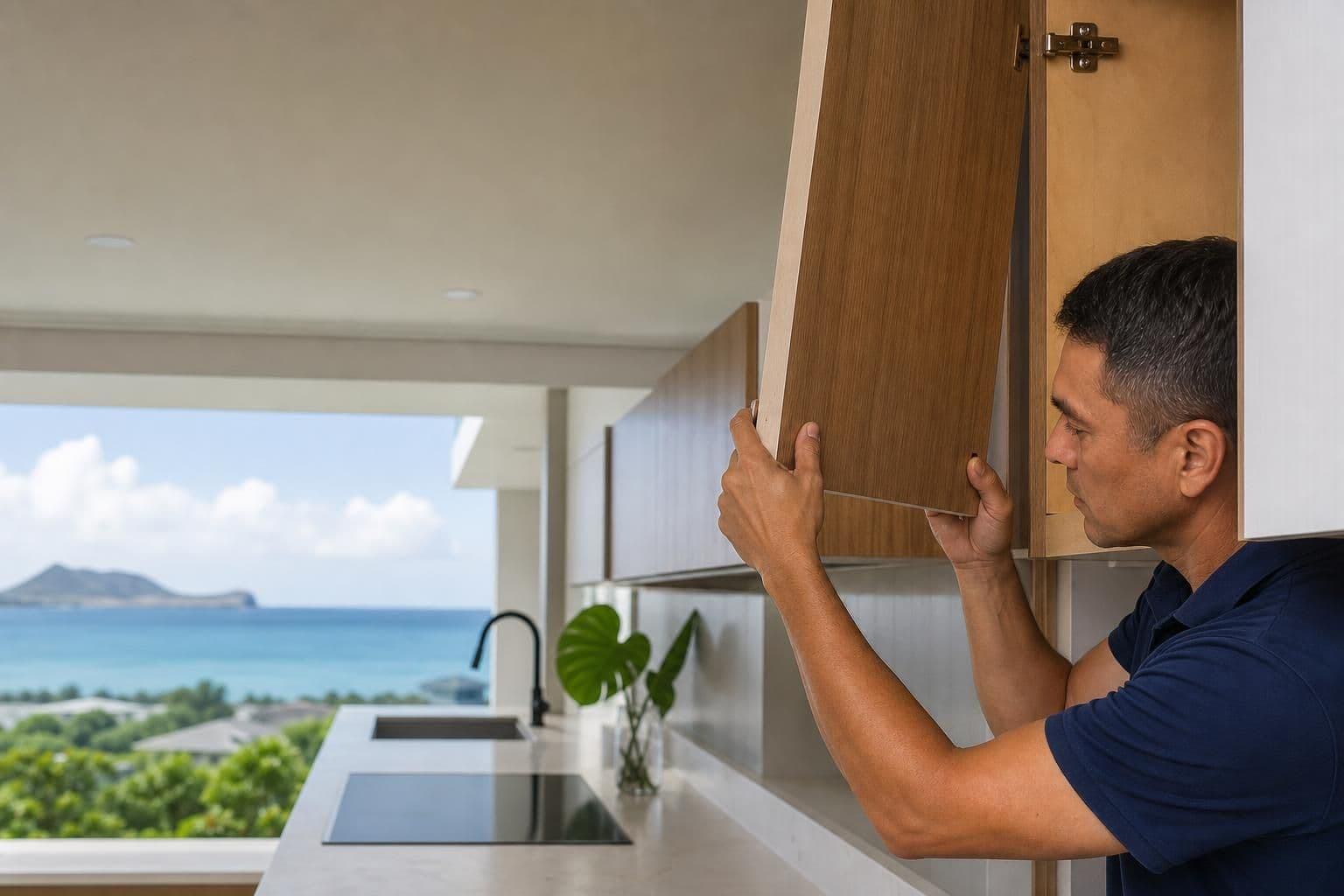
Key takeaway
Cabinet refacing typically runs $100–$250 per linear foot on Oahu, while full cabinet replacement runs $300–$700+ per linear foot once installation is included. Refacing keeps the existing cabinet boxes and only changes doors, drawer fronts, and surfaces, so it costs roughly 30-50% less than replacement but won't fix layout problems, water damage, or worn-out box interiors. The right choice depends on whether your cabinet boxes are structurally sound and whether you actually want a different kitchen layout.
Key takeaways
- Refacing costs less and takes less time, but only works if the existing boxes are solid, square, and in the layout you want.
- Replacing costs more but lets you change cabinet depth, add storage features, and fix any water or termite damage behind the boxes.
- Get a quote based on your actual linear footage — ballpark ranges can be off by thousands of dollars either way once your kitchen's specifics are factored in.
What "refacing" actually changes
Refacing means the cabinet boxes stay bolted to the wall exactly where they are. A contractor replaces the doors and drawer fronts, adds new hinges and pulls, and applies a matching veneer or laminate to any exposed box sides and face frames. The interior shelves, the box construction, and the footprint of your kitchen don't move. This is why refacing is fast — often a few days instead of a few weeks — and why it's a poor fit for anyone who wants to reconfigure their kitchen's layout, add a lazy Susan corner unit, or extend cabinets to the ceiling.
What "replacing" actually changes
Replacement means every box comes out, including anything hidden behind or under the old cabinets — old plumbing runs, outdated electrical, or moisture damage in the wall are all exposed and addressed at the same time. New boxes go in per a cabinet plan, which is also the point where most homeowners add features like deep drawers instead of shelves, pull-out trash bins, or under-cabinet lighting. It's more disruptive to your kitchen for longer, and it's the only real option if your existing boxes are out of square, water-damaged, or simply too small for what you want to store.
Typical Oahu cost ranges
Prices below are typical ranges seen on Oahu kitchen projects. Material choice, box condition, and how much electrical or plumbing work is involved all move the number, so treat these as planning ranges rather than a quote.
| Project type | Typical cost per linear foot | What drives the price |
|---|---|---|
| Cabinet refacing (doors, fronts, veneer) | $100–$250 | Door material, box condition, hardware upgrades |
| Semi-custom replacement | $300–$500 | Box material, finish, number of drawers vs. shelves |
| Full custom replacement | $500–$700+ | Layout changes, storage features, soft-close everything |
| Countertop swap alone (no cabinet work) | $45–$120/sq ft installed | Quartz vs. laminate, edge profile, seams |
| Cabinet + countertop combined project | Varies — quoted together | Sequencing, whether old countertop must come off first |
A quote based on your actual linear footage and chosen materials is the only way to get an exact number — a kitchen with a lot of corner units, an island, or tall pantry cabinets will price differently than a straight run of standard boxes even at the same overall length.
When refacing makes sense
Refacing is the better financial move when three things are true at once: the boxes are structurally sound, you like the current layout, and you mainly want a new look rather than new storage. It's common in rental units and condos where the goal is a fast cosmetic update between tenants, or in kitchens where the layout already works well and the owner just wants updated doors and hardware to modernize the space. If moisture has warped the box bottoms near the sink or dishwasher, refacing will hide that problem temporarily but not solve it — a mistake worth avoiding, since it usually resurfaces within a few years.
When replacement makes sense
Replacement is worth the extra cost when the boxes themselves are the problem — out of square, particleboard that's swelling, or a layout that wastes corner space. It's also the right call anytime a kitchen remodel involves moving plumbing or electrical, since it's far cheaper to run new lines while the boxes are already out than to cut into finished cabinetry later. Full replacement is also the point where most homeowners upgrade to soft-close drawers, pull-out shelving, or a different cabinet depth to fit a new refrigerator or range.
How countertops and flooring factor into the decision
Cabinet work rarely happens in isolation. If you're replacing boxes, it's worth timing a flooring cost comparison alongside it, since new cabinets often sit a fraction of an inch differently than the old ones and can affect how flooring is trimmed around the toe-kick. Quartz countertops typically need to come off before boxes are pulled and go back on after new boxes are set, so sequencing countertop work with cabinet replacement — rather than refacing — usually saves a second round of labor. Anyone weighing new counters at the same time can compare typical quartz countertop pricing before deciding which project to tackle first.
Condo considerations for Oahu owners
Condo owners on Oahu should check their AOAO rules before either project starts, since some associations require paperwork on cabinet materials, plumbing shutoffs, or work hours even for interior-only changes that don't touch shared walls. Refacing is usually simpler to get approved because it doesn't involve moving plumbing or altering the unit's footprint. Full replacement that touches plumbing or electrical behind the cabinets is more likely to require board sign-off, so building in a week or two for approval timelines is worth planning ahead of a contractor's schedule.
How Oahu's climate factors in
Humidity and salt air are harder on cabinet boxes near kitchens and bathrooms than in drier mainland climates, which is one reason older particleboard boxes on Oahu sometimes swell or delaminate faster than their rated lifespan suggests. The U.S. Department of Energy notes that moisture control in kitchens and baths is one of the more overlooked factors in cabinetry and finish longevity, which is worth keeping in mind when deciding whether 15-year-old boxes are worth refacing or better off replaced. Materials rated for high-humidity use, and proper ventilation near sinks and dishwashers, matter more here than in most mainland markets.
Frequently Asked Questions
Q: Is cabinet refacing worth it or should I just replace?
Refacing is worth it when the boxes are structurally sound and you like your current layout — it costs roughly 30-50% less than replacement. If the boxes are water-damaged, out of square, or you want a different layout, replacement is the better long-term investment.
Q: How long does cabinet refacing take compared to replacement?
Refacing typically takes a few days to about a week since the boxes stay in place. Full replacement usually takes one to three weeks depending on whether plumbing or electrical work is involved.
Q: Can I reface cabinets myself to save money?
Door and hardware swaps are doable for a confident DIYer, but veneering box sides and face frames to match new doors seamlessly is where most DIY refacing jobs fall short. A licensed installer typically gets a cleaner, longer-lasting result on the veneer work specifically.
Q: Does refacing work on cabinets with water damage?
No — refacing only changes the visible surfaces and doesn't address swelling, delamination, or rot inside or under the boxes. Water-damaged boxes need to be replaced, not refaced, or the damage will resurface.
Q: What's the price difference between refacing and replacing a standard 10-foot kitchen run?
At typical Oahu rates, refacing a 10-foot run runs roughly $1,000–$2,500, while semi-custom replacement runs roughly $3,000–$5,000 before countertops. A quote priced to your actual layout and material choice is the only way to get an exact number.