Shaker Cabinets vs. Flat Panel: What Drives the Cost Difference
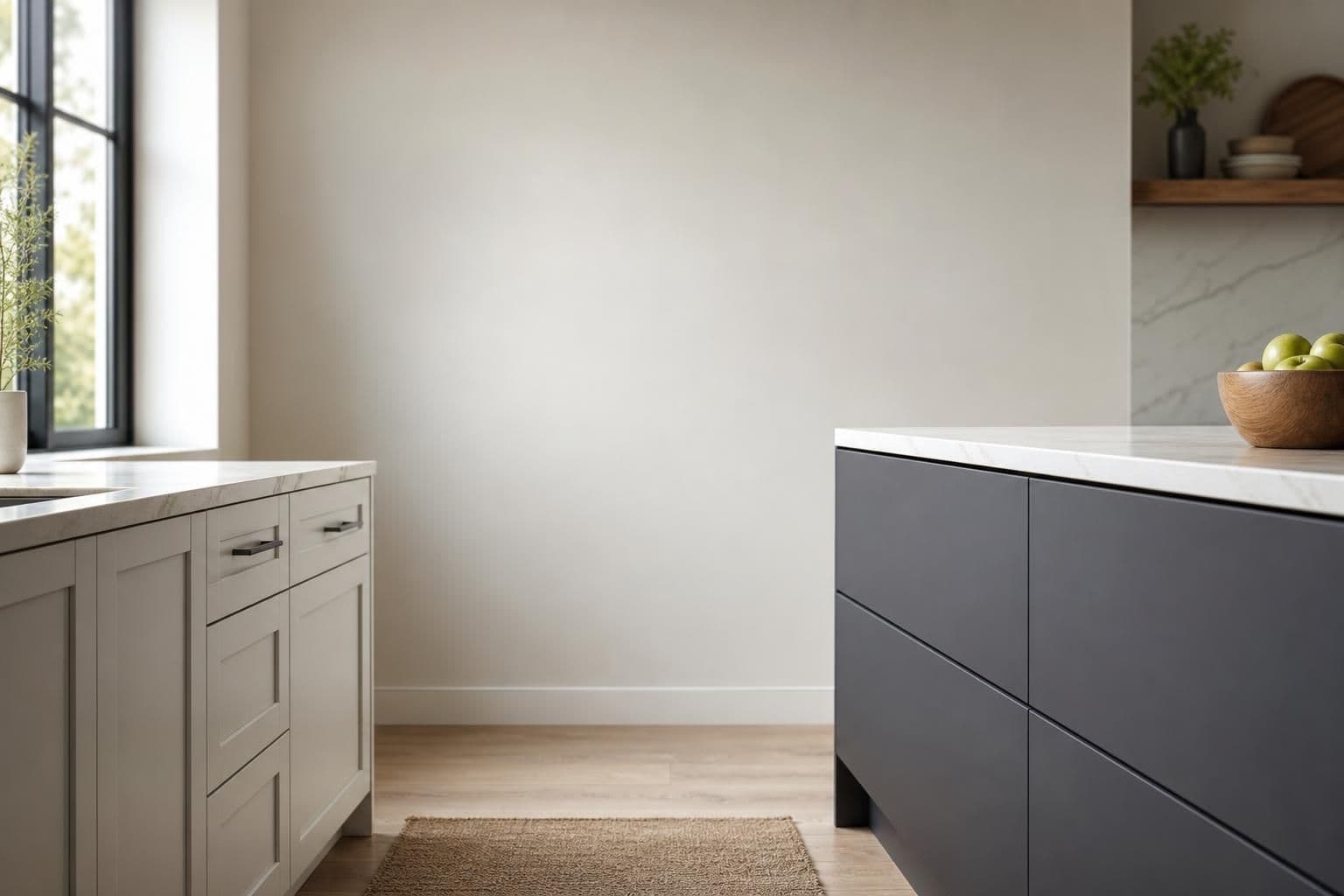
Key takeaway
Shaker and flat panel (slab) cabinets overlap heavily in cost once installed on Oahu, so the door style itself usually matters less than the box material, finish, and whether the cabinets are stock, semi-custom, or fully custom. Flat panel can be the cheaper choice in basic melamine builds but climbs fast once you move into high-gloss lacquer or matched wood veneer, while shaker tends to sit in a more predictable mid-range because of its simple five-piece door construction. A quote built from your own cabinet layout will show where your kitchen actually lands, since drawer count, box material, and finish tier move the total far more than the door profile alone.
Key takeaways
- Shaker and flat panel overlap heavily in cost — the finish, box material, and hardware move the number more than the door style.
- Flat panel doors show fingerprints, scratches, and seam lines more visibly, which matters more in a humid Oahu kitchen than most buyers expect.
- Get a linear-foot quote against your actual cabinet layout rather than comparing national averages, since door style, drawer count, and finish all shift the total.
What Actually Drives the Price Difference
Door style is one input among several, and often not the biggest one. Box construction (plywood vs. particleboard), finish type (painted, stained, laminate, high-gloss), drawer boxes (dovetail vs. stapled), and soft-close hardware all move the price more than whether the door has a raised panel, a flat center, or a recessed shaker frame.
Flat panel doors are simpler to manufacture — a single slab or a slab with an applied edge — which keeps entry-level flat panel cheap. But high-end flat panel, especially in matte lacquer or wood veneer with matched grain, often costs more than a comparable shaker because the flat surface shows every imperfection and requires a more exacting finish process. Shaker's five-piece door (four frame pieces plus a center panel) has more joints to assemble but a more forgiving finish, which is why mid-range shaker pricing stays fairly consistent.
How Cabinet Style and Finish Tier Affect Cost
| Cabinet Style | Entry-Level Build | Mid-Range Build | High-End Build |
|---|---|---|---|
| Flat panel (stock/laminate) | Melamine or laminate slab, stock sizes, fast lead time | Painted MDF or thermofoil, semi-custom sizing | High-gloss lacquer or wood veneer, custom sizing, longer lead time for finish control |
| Shaker (painted or stained) | Stock painted MDF, five-piece door, standard sizes | Semi-custom painted or stained wood, soft-close hardware | Custom hardwood, hand-finished stain or paint, matched grain panels |
| Raised panel / ornate | Stock ornate profile, basic finish, standard hardware | Semi-custom with routed detail, upgraded hardware | Custom hardwood with hand-applied finish and glazing |
Where a specific kitchen lands within this spread depends on linear footage, drawer-to-door ratio, hardware selection, and finish tier — none of which show up in a generic per-linear-foot list. A request for a quote built against your own layout captures those specifics directly, with an answer within 24 hours.
Where Flat Panel Is Simpler to Build — and Where It Isn't
Flat panel wins on simplicity in basic builds because there's no routing, no panel insert, and less labor per door. A builder-grade flat panel kitchen in white melamine is typically the fastest and least labor-intensive option on a supplier's line.
That advantage disappears once you move up the finish ladder. High-gloss acrylic or lacquer flat panel doors require a controlled spray environment and multiple coats to avoid visible imperfections, which pushes labor and lead time above a comparable painted shaker. Wood veneer flat panel with continuous grain matching across doors sits at the top of any line, custom or stock, both in finish labor and in material sourcing.
Why Door Style Matters More in Hawaii Than on the Mainland
Humidity and salt air affect cabinet materials differently depending on construction, not just door style. Flat, unbroken surfaces on flat panel doors show water spotting, humidity swelling at seams, and UV fading more visibly than shaker's broken-up frame, simply because there's more uninterrupted surface to draw the eye. Moisture-resistant box construction (marine-grade plywood over particleboard) matters more for long-term performance in island conditions than the door profile itself, a point worth raising with any installer regardless of which style you pick. The National Kitchen & Bath Association recommends moisture-resistant substrates for any kitchen in a high-humidity climate, which describes most of Oahu outside of air-conditioned interiors.
Maintenance and Longevity Differences
- Shaker: the recessed panel and visible frame lines collect dust and grease in the grooves, requiring more detailed cleaning but hiding minor scuffs better.
- Flat panel: the smooth surface wipes clean fast but shows fingerprints, water spots, and fine scratches more readily, especially in dark or high-gloss finishes.
- Painted finishes (either style): touch-up is possible with matched paint but can leave a visible patch if not blended correctly.
- Wood veneer flat panel: more vulnerable to UV fading near windows or lanais with strong afternoon sun, a common condition in many Oahu units.
Condo Owners: What to Check Before You Choose
Door style rarely triggers AOAO scrutiny the way flooring underlayment does, but any full kitchen remodel that touches plumbing, electrical, or structural walls still needs board-approved specs in most Honolulu buildings. If your project also includes new flooring, it's worth reviewing Oahu condo AOAO flooring approval rules before submitting a remodel package, since combined kitchen-and-flooring projects are often reviewed together by the board.
How to Get an Accurate Number for Your Kitchen
National average price lists rarely match what a specific kitchen actually costs, because linear footage, drawer-to-door ratio, and finish selection change the total more than the style label does. The only real number comes from a quote priced against your own cabinet run and measurements — not a generic per-kitchen estimate or a national average table.
Local suppliers with a showroom let you handle both door styles side by side before deciding — comparing weight, edge finish, and how a painted shaker frame feels against a lacquered flat panel slab tells you more than a photo ever will. If your project also includes new counters, quartz countertop options are worth pricing at the same time, since countertop edge profile and cabinet door style are usually chosen together for a consistent look. For the cabinets themselves, a custom cabinet quote built from your actual layout is the only way to get a number you can budget against.
Frequently Asked Questions
Q: Are shaker cabinets more expensive than flat panel cabinets?
Not consistently. Entry-level flat panel is often cheaper than shaker, but high-end flat panel finishes like high-gloss lacquer or matched wood veneer frequently cost more than a comparable painted shaker door.
Q: Which cabinet style holds up better in Hawaii's humidity?
Box construction (plywood vs. particleboard) and finish sealing matter more than door style, but flat panel's unbroken surface shows humidity-related seam swelling and water spotting more visibly than shaker's recessed frame.
Q: Is shaker or flat panel better for a small kitchen?
Flat panel's smooth, unbroken surface can make small kitchens feel less busy visually, while shaker's frame lines add texture but can visually break up a tight space. Neither affects functional storage capacity.
Q: Does door style affect installation cost?
Rarely by much — installation labor is driven mostly by cabinet count, layout complexity, and whether existing cabinets need removal, not by door profile.
Q: How do I compare exact pricing for my kitchen?
Cabinet pricing depends on linear footage, drawer count, box material, and finish, all specific to your layout, so a quote based on your actual measurements is the only way to get a number you can rely on instead of a national average.