Best Flooring for an Airbnb in Hawaii: What Actually Works
Key takeaway
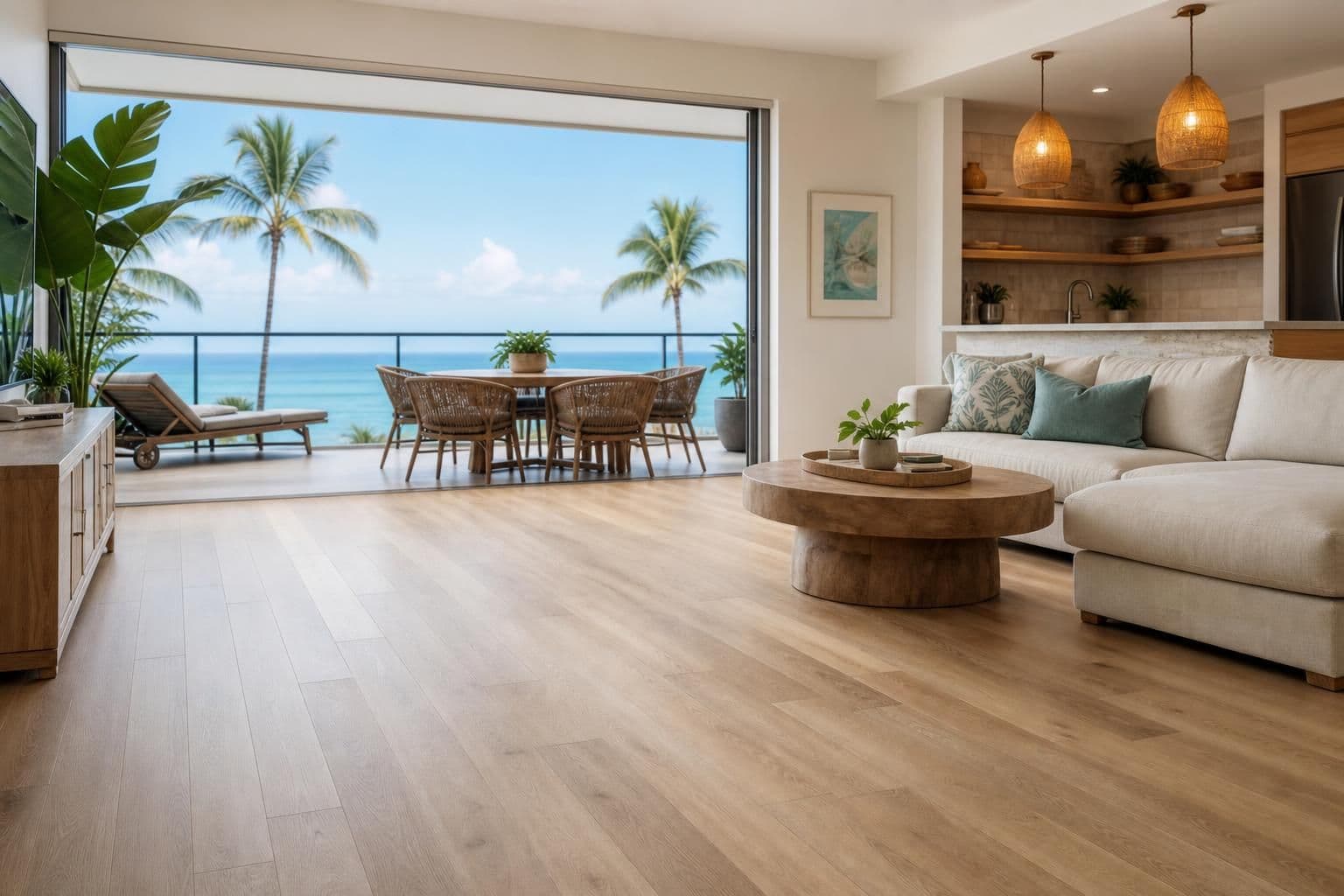
For a Hawaii short-term rental, waterproof rigid-core vinyl plank (LVP) is the best all-around flooring choice because it resists humidity, salt air, sand, and heavy guest turnover better than laminate, carpet, or solid hardwood, while installing and repairing more simply than tile. It also holds up to the mopping and quick turnovers that Airbnb cleaning crews need between guests. What an owner actually pays on Oahu depends on the condition of the existing subfloor, whether old flooring has to be torn out and hauled away, unit layout and stairs, and the material tier chosen — not a flat number that applies to every unit.
Key takeaways
- Waterproof rigid-core vinyl plank is the top pick for Hawaii short-term rentals: it shrugs off humidity, sandy feet, and frequent mopping.
- Avoid solid hardwood and carpet in a rental unit near the coast — moisture and turnover cycles wear them out fast and complicate AOAO approval in condos.
- What drives the final number on Oahu is subfloor condition, tear-out and disposal, stairs, and material grade — a free quote against your actual square footage is the only way to get an exact figure.
Why Flooring Choice Matters More for a Rental Than a Home You Live In
An Airbnb floor gets a different kind of abuse than a personal residence. Suitcases roll across it daily, sandy feet track in from Waikiki or the North Shore, cleaning crews mop it between every checkout, and nobody is treating it gently because it's not theirs. Add Oahu's humidity and salt air, and materials that are fine in a mainland rental can fail here in a couple of years.
The math that matters for an owner is durability per guest-turnover, not just what a material costs on day one. A floor that needs refinishing or partial replacement every 2–3 years eats into rental income even if it looked like the cheaper option going in.
What Makes a Flooring Material "Airbnb-Ready" in Hawaii
Four properties decide whether a floor holds up in a short-term rental here:
- Water tolerance — mop water, spilled drinks, wet swimsuits, and humidity swings need a surface that won't swell or delaminate.
- Scratch and dent resistance — rolling luggage and furniture moved between bookings wear down soft finishes fast.
- Cleaning speed — crews turning a unit same-day need a floor that mops clean in minutes, not one requiring special products.
- Sand and grit tolerance — a real factor for any Oahu rental within walking distance of a beach.
Vinyl plank checks all four boxes better than the alternatives, which is why it's become the default in Hawaii's rental and condo market. For a deeper look at what affects installed pricing by room size and product grade, see this vinyl plank flooring guide for Oahu.
Flooring Options Compared for Short-Term Rentals
| Flooring Type | Water Resistance | Durability for Rental Turnover | Install Complexity | Material Lead Time |
|---|---|---|---|---|
| Waterproof rigid-core LVP | Excellent — waterproof core | High — shrugs off luggage, sand, foot traffic | Low — click-lock or glue-down over most subfloors, including condo slabs | Typically in stock |
| Laminate | Poor to fair — swells if wet | Moderate, but fails fast near coast | Low | Typically in stock |
| Engineered wood | Fair — better than solid wood, still moisture-sensitive | Moderate — softer finishes show wear | Moderate — often needs acclimation time before install | Can run longer on specialty finishes |
| Solid hardwood | Poor — cups and warps in humidity | Low in humid, coastal units | High — sanding, finishing, and subfloor prep add time | Longer, especially on special species |
| Ceramic/porcelain tile | Excellent | High | High — tear-out, mortar cure time, grout cure time | Custom or imported tile may require island freight |
| Carpet | Poor — absorbs moisture, odor, stains | Low — hard to sanitize between guests | Low | Typically in stock |
Layout complexity, subfloor prep, and stairs are the biggest swing factors between a straightforward install and a labor-heavy one. The only way to get an exact number for a specific unit is a free quote priced against actual square footage — you can request one here and get an answer within 24 hours.
Where Vinyl Plank Wins for Rental Owners
Waterproof LVP is built in layers: a rigid core (often stone-plastic or wood-plastic composite), a printed wear layer, and a protective top coat. That core is what keeps it stable when Oahu's humidity swings between a dry Kona wind day and a muggy trade-wind week — unlike solid wood, it doesn't expand and contract enough to cup or gap.
For an owner managing turnovers, the practical wins are:
- Mops clean with plain water or a neutral cleaner between every guest.
- No refinishing cycle — when a plank does get damaged, it can often be replaced individually rather than resurfacing the whole floor.
- Available in click-lock or glue-down formats, so it can go over most existing subfloors including condo concrete slabs, which keeps subfloor-leveling work to a minimum in most units.
You can view and touch actual plank samples at a showroom before committing — a useful step for owners choosing a color that hides sand and everyday wear. Details on grades and finishes are on the vinyl plank flooring page.
Condo and AOAO Considerations for Rental Units
If the Airbnb is in a condo, flooring isn't just a design decision — it's a paperwork one. Most AOAOs require documentation of the underlayment's sound rating (often an IIC rating) before approving a flooring swap, especially above an occupied unit. This is one of the more common ways rental renovations stall, because the board wants specs before work starts, not after. Buildings with strict elevator scheduling or loading-dock access windows can also add time to material delivery and old-floor disposal, which is worth planning around before booking guests around a renovation date.
Getting the paperwork right the first time avoids a rejected application and a delayed rental listing.
Kitchen and Bathroom Surfaces in a Rental
Flooring gets the most guest contact, but countertops take a beating too — ice buckets, wine bottles, hot pans left by guests who don't own the place. Quartz is a common choice for rental kitchens because it doesn't need sealing and resists staining better than laminate countertops, standing up to guest use without upkeep between bookings. What drives quartz pricing and how it compares to other surfaces is covered in more detail through the quartz countertops page.
A Note on Humidity and Moisture in Hawaii Homes
Hawaii's year-round humidity and the risk of trapped moisture behind or under flooring are real considerations for material choice, not just marketing language. The EPA's indoor air quality guidance notes that persistent moisture is a leading contributor to mold growth indoors, which is part of why a moisture-tolerant flooring core matters more in a humid coastal climate than in a dry inland one. Research from the University of Hawaii Sea Grant program has also documented how coastal humidity and salt exposure accelerate material wear in island buildings, reinforcing why standard mainland flooring recommendations don't always transfer directly to Oahu.
Frequently Asked Questions
Q: Is vinyl plank flooring good for a Hawaii Airbnb?
Yes. Waterproof rigid-core vinyl plank resists humidity, sand, and heavy foot traffic better than laminate, carpet, or solid hardwood, and it mops clean quickly between guest turnovers, which is why it's the most common choice for Hawaii short-term rentals.
Q: What flooring should I avoid in a beach rental?
Avoid carpet and solid hardwood near the coast. Carpet absorbs moisture and odor and is hard to sanitize between guests, while solid hardwood can cup or warp as humidity swings throughout the year.
Q: What determines the cost to replace flooring in a rental condo on Oahu?
The main factors are the condition of the existing subfloor, whether old flooring needs to be torn out and hauled away, unit layout and any stairs, elevator or loading-dock access in high-rise buildings, and the material tier chosen. A quote based on the actual square footage and unit conditions gives the precise figure.
Q: Does a condo AOAO need to approve rental flooring changes?
In most Oahu condo buildings, yes — the AOAO typically requires underlayment and sound-rating specs before approving new flooring, particularly for units above another owner's living space.
Q: Is tile or vinyl plank better for a rental lanai?
Tile is generally better for an open or semi-exposed lanai because of its excellent water resistance and durability against direct weather exposure, while vinyl plank is better suited to interior living spaces.