What Should a Flooring Quote Include? A Buyer's Checklist
Key takeaway
A complete flooring quote should list material selection and tier, labor and installation cost, subfloor prep or removal of old flooring, moisture barrier or underlayment if needed, trim and transition pieces, delivery, and a total based on your actual measured square footage — not a rough estimate. If any of those items are missing or lumped into one vague number, ask the contractor to break it out before you sign anything.
Key takeaways
- A quote should separate material, labor, prep work, and trim into distinct line items you can compare against other bids.
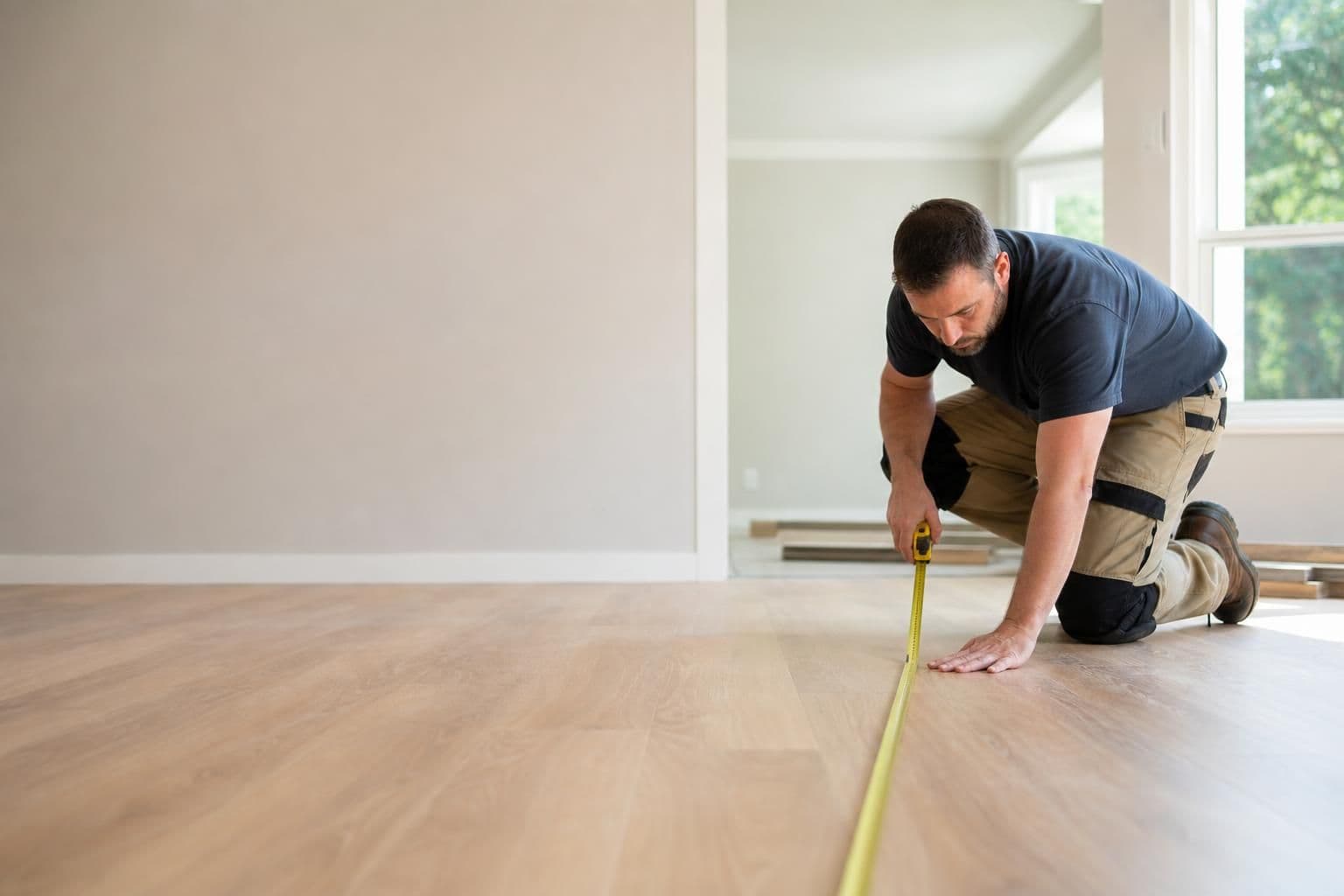
- Get measurements from an actual site visit or photos, not a phone-guessed square footage — floors with closets, alcoves, and stairs run 5–15% higher than the room's basic footprint.
- Ask what happens if the installer finds uneven subfloor or moisture issues once demo starts, since that's the most common source of mid-project price changes.
The Core Line Items Every Quote Needs
A flooring quote is really five smaller estimates stitched together: material, labor, prep, extras, and delivery. When a contractor hands you a single lump number, you have no way to know whether you're overpaying for labor or getting cheap material. At minimum, ask for:
- Material selection, with the product name/SKU so you can verify specs elsewhere
- Labor for installation
- Subfloor prep (leveling, moisture testing, removing old flooring/adhesive)
- Underlayment or moisture barrier, especially relevant in Hawaii's humidity
- Trim, transition strips, and baseboards
- Delivery and disposal fees
If the quote is for a condo, it should also note whether the paperwork meets your building's AOAO approval requirements — many Oahu associations want spec sheets showing sound rating (IIC/STC) and moisture barrier details before they'll sign off on flooring work.
Material Costs: What Drives the Real Total
Material pricing on Oahu varies by product tier, finish, and wear-layer thickness. Vinyl plank flooring spans a wide range, from basic residential-grade planks to heavier commercial-grade options built for high-traffic wear — and the installed total shifts further depending on subfloor condition, whether old flooring needs tear-out and disposal, and how many transitions and cuts the layout requires. Special-order finishes that have to be freighted in also add lead time and cost that a standard in-stock product won't. A firm number only comes from a quote based on your actual room dimensions, since waste factor, cuts around cabinetry, and stairs all change the real total.
Quartz countertops and custom cabinets follow the same logic but with different math: countertops are priced by slab square footage plus edge treatment, and cabinets are usually priced per linear foot rather than square foot. A quote for a full kitchen remodel should list flooring, quartz countertops, and custom cabinets as separate sections so you can see where the budget is actually going.
Labor and Installation Charges
Labor is usually the line item with the widest variation between quotes, because it reflects experience, crew size, and how much prep the space needs. A quote should specify whether labor includes moving furniture, removing baseboards, and hauling away old flooring — or whether those are billed separately. It should also state whether the installer is licensed, since Hawaii requires a contractor license for most flooring installation work above a small scope threshold. You can verify any contractor's license status directly through the Hawaii Department of Commerce and Consumer Affairs before work begins.
Site-Specific Costs Homeowners Often Miss
Oahu's climate and building stock create a few line items that don't show up in mainland flooring guides:
- Moisture testing and vapor barriers — concrete slabs in older homes can trap humidity that warps flooring if it's not addressed first
- AOAO-compliant paperwork — condo boards often require sound-rating specs and moisture barrier documentation before approving a flooring swap
- Termite or prior water damage repair — if the installer finds soft or damaged subfloor during demo, that's an added cost that should be quoted as a contingency, not discovered mid-job
- Access fees — some condo buildings charge for elevator reservations or loading dock use during material delivery, and high-rise units with limited loading-dock windows can add scheduling constraints that stretch the installation timeline
A quote that never mentions these possibilities either hasn't accounted for Oahu conditions or is assuming a best-case scenario that may not hold once work starts.
Red Flags in a Flooring Quote
A few warning signs are worth watching for:
- No square footage shown — if the quote doesn't state the measured area it's based on, you can't verify the math
- One lump-sum number with no breakdown between material and labor
- No mention of subfloor condition or what happens if it's uneven
- Verbal-only estimates with nothing in writing
- Pressure to sign same-day without time to compare
The Federal Trade Commission's guidance on home improvement contracts recommends getting estimates in writing and comparing at least two before committing, precisely because verbal quotes are easy to change after the fact.
How to Compare Multiple Quotes Fairly
Comparing quotes only works if they're built the same way. Ask each contractor to quote based on the same measured square footage, the same product tier (or equivalent), and the same scope of prep work. A quote that looks meaningfully cheaper but excludes moisture barrier or old-flooring removal isn't actually cheaper — it's just missing steps you'll pay for later. If you're weighing flooring types against each other, durability, moisture tolerance, and install complexity matter more than the headline number: LVP handles moisture well and installs quickly over most subfloors, laminate installs fast but tolerates moisture poorly, and engineered wood offers the most refined look but is the most sensitive to subfloor prep and humidity. A comparison of LVP, laminate, and engineered wood can help you decide what tier of material to request quotes on in the first place.
It also helps to request quotes from a single point of contact rather than juggling separate calls for measuring, material selection, and scheduling — fewer handoffs generally means fewer surprises between the estimate and the final bill.
Frequently Asked Questions
Q: What information do I need to provide to get an accurate flooring quote?
Room dimensions (or a willingness to have someone measure on-site), the type of flooring you're replacing, whether it's over concrete or a raised wood subfloor, and any condo association requirements. Photos of the space help too if a site visit isn't possible right away.
Q: Should a flooring quote include the cost of removing old flooring?
It should at least mention whether removal is included or billed separately — this is one of the most common items left off vague estimates and can add noticeable time and labor once demo starts, especially if there's old tile or glued-down flooring underneath.
Q: Why do flooring quotes vary so much between contractors?
Differences usually come from material tier, labor rates, and how much prep work is assumed. A quote based on actual square footage and a site visit will typically be more consistent than one estimated over the phone.
Q: Is a free flooring quote actually free, or does it commit me to anything?
A legitimate free quote is just an estimate based on your project's measurements — it doesn't obligate you to book installation. Oahu Flooring Quote's request form works this way: you get a figure scoped to your actual square footage within 24 hours, with no obligation attached.
Q: How long should it take to get a flooring quote back?
Turnaround varies by company, but a same-day or next-day response is reasonable for most residential projects once measurements are provided. Quotes that take a week or more without explanation are worth following up on.