How to Protect Vinyl Plank Flooring From Furniture
Key takeaway
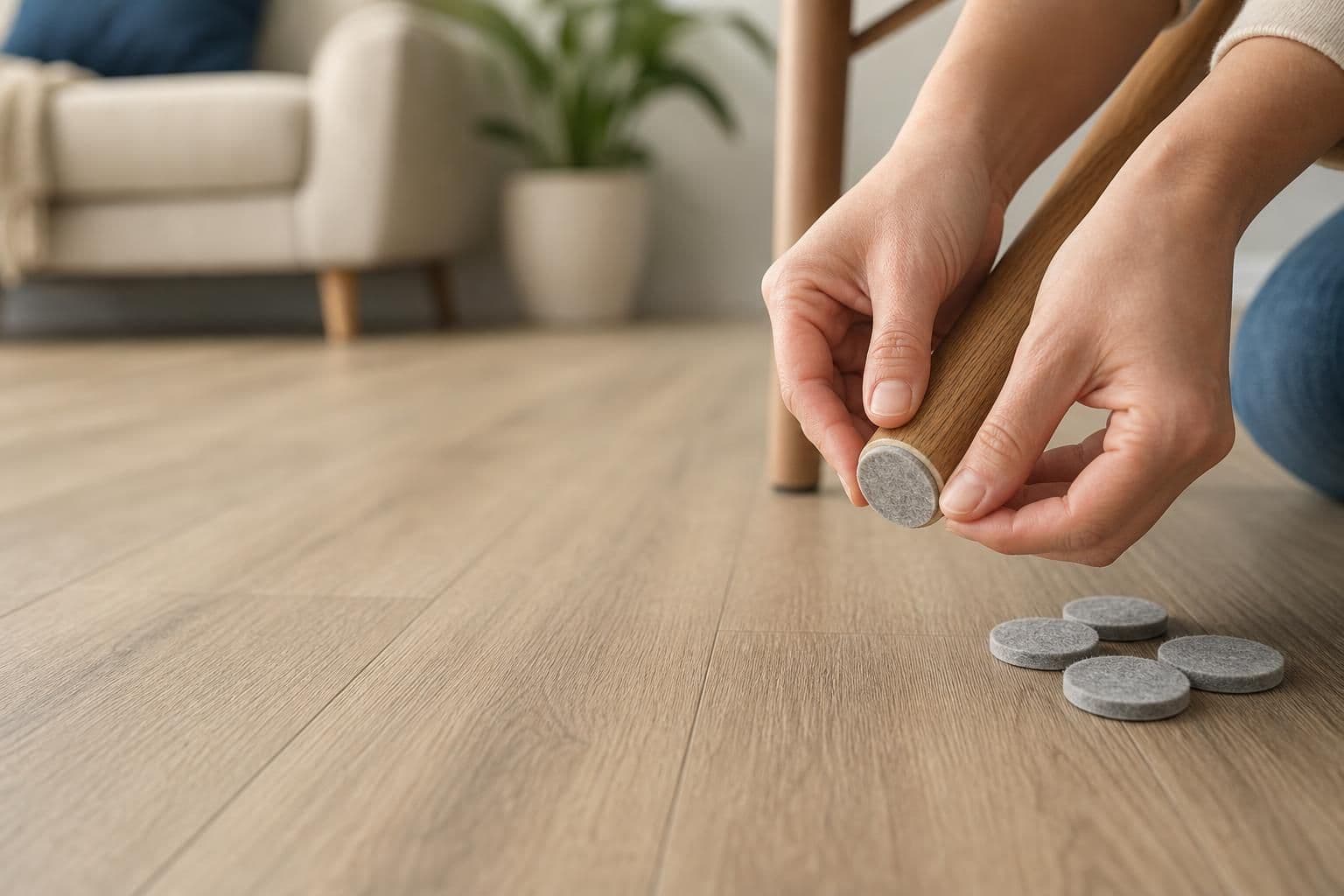
The best way to protect vinyl plank flooring from furniture is to put a felt or rubber furniture pad under every leg that touches the floor, use plywood or furniture sliders when moving heavy pieces instead of dragging them, and rotate area rugs under rolling chairs or recliners so weight doesn't sit in one spot for years. Vinyl plank is more forgiving than hardwood but it's still a soft-surface product that dents under sustained point pressure, so the goal is spreading weight out and never letting a hard edge slide across the surface.
Key takeaways
- Felt pads work for static furniture; furniture cups or plywood squares work better under heavy items like pianos, bookcases, and refrigerators because they spread weight over a wider area.
- Never drag furniture across vinyl plank — lift it, or use furniture sliders, even for a "quick" move across the room.
- Office chairs and recliners need a hard-surface chair mat or a rug pad underneath, because casters and rocking mechanisms concentrate pressure on a small, repeated footprint.
Why Vinyl Plank Dents Instead of Scratches
Vinyl plank flooring is made of layered PVC with a printed design layer and a clear wear layer on top, which makes it more flexible than solid hardwood or tile. That flexibility is why it handles Oahu's humidity swings well — a topic covered in our guide on choosing between vinyl plank and carpet for Oahu homes — but it also means concentrated weight can leave a permanent indentation rather than a surface scratch. A heavy dresser leg with no pad can press a visible dent into the wear layer within weeks, and unlike a scratch, a dent usually can't be buffed out. The fix isn't a harder floor — it's spreading the load so no single point ever bears the full weight of the furniture.
The Right Protection for Different Furniture Types
Not every piece of furniture needs the same solution. Matching the pad to the load keeps you from re-doing the job every few months.
- Light chairs and side tables: Self-adhesive felt pads, replaced when they wear thin or pick up grit (grit under a felt pad acts like sandpaper).
- Sofas, beds, and dressers: Felt pads rated for heavier loads, or flat furniture cups that cradle the leg and distribute weight across a wider base.
- Pianos, china cabinets, and safes: Plywood or hard rubber squares under each leg, sized larger than the leg itself, so weight spreads across square inches instead of a single point.
- Office chairs and anything with casters: A rigid chair mat, because wheels roll back and forth over the same few inches hundreds of times a week.
- Recliners and rocking furniture: A rug or rug pad underneath the whole footprint, since the rocking motion concentrates stress differently than a static leg.
Oahu-Specific Furniture Risks
Sand and coral grit tracked in from beach trips is more abrasive than typical mainland dust, and it works its way under furniture pads faster here than in a drier climate. Shaking out or vacuuming under furniture pads every few weeks — not just mopping around the furniture — keeps that grit from grinding into the wear layer. In condo units, furniture protection also matters for a different reason: many AOAO flooring approvals are tied to sound-rating specs for the whole assembly, and heavy furniture dents can be flagged during a move-out inspection even when the flooring itself is fine. Writing the underlayment and pad requirements into the condo paperwork up front avoids disputes later.
Rental and investment properties face a related issue: tenants rarely replace worn felt pads on their own schedule, so landlords who want flooring to look original at turnover should supply pads with the lease or do a quarterly walk-through to swap worn ones before they fail.
Moving Furniture Without Damage
Dragging is the single most common cause of vinyl plank damage, and it happens most often during normal household moves — not big furniture deliveries. A few habits prevent most of it:
- Always lift furniture rather than sliding it, even for a few inches.
- For large pieces, use furniture sliders (hard plastic or felt-bottomed discs) under each corner, then push steadily rather than jerking the piece forward.
- Clear the path first — a single dropped tool or forgotten rug fold under a slider can gouge the floor as the furniture passes over it.
- For deliveries involving stairs or elevators, lay down temporary floor protection (rosin paper or moving blankets) along the travel path, not just at the destination room.
If you're coordinating a full room reset — new flooring plus furniture moved back in — it's worth asking your installer about temporary protection for the first few days while adhesives (if used) fully cure, since furniture set down too early can leave marks before the floor has hardened.
What to Do if Damage Already Happened
Minor dents from furniture sometimes relax partially over time once the weight is removed, especially in warmer rooms, because the vinyl's flexibility that caused the dent can also let it slowly recover. Deeper dents or gouges usually don't self-correct and are better addressed with a plank replacement than a repair attempt, since vinyl doesn't sand or refinish the way hardwood does. This is one of the few flooring repairs where matching the existing plank matters more than the repair technique itself — color lots can vary between manufacturing runs, which is why keeping a box of leftover planks from the original install is worth the storage space.
If you're planning a larger renovation anyway and the furniture damage is widespread, it may make more sense to re-floor the room with furniture protection built into the install plan from day one — our guide to getting an accurate flooring estimate on Oahu covers what installers need to know about your furniture layout to quote that correctly.
For general product care standards, the Resilient Floor Covering Institute publishes maintenance guidance for vinyl and resilient flooring, and the U.S. Consumer Product Safety Commission has furniture safety resources worth reviewing if you're also anchoring tall furniture in a home with kids or pets, since tip-over prevention straps are a separate (and important) consideration from scratch protection.
Frequently Asked Questions
Q: Do felt pads actually work on vinyl plank flooring?
Yes, felt pads work well for light and medium furniture as long as they're replaced when worn or dirty — a pad clogged with grit can scratch the floor instead of protecting it.
Q: Is it safe to use furniture coasters or cups on vinyl plank?
Furniture cups are generally safer than pads alone for heavy pieces because they distribute weight across a wider, rigid base rather than relying on soft felt that compresses over time.
Q: Can dents in vinyl plank flooring be fixed?
Minor dents sometimes soften over time, but deep dents or gouges usually require replacing the affected plank, since vinyl doesn't sand down or refinish like hardwood.
Q: Should I use a rug under an office chair with wheels?
A rigid chair mat is better than a rug for rolling chairs, since wheels can wear through a soft rug pad quickly and still transfer pressure to the floor underneath.
Q: Does Hawaii's climate make vinyl plank more prone to furniture damage?
Not directly, but sand and grit tracked indoors are more abrasive here than in drier climates, so pads and the floor underneath them need more frequent cleaning to stay effective.