How to Match Flooring to Existing Trim
Key takeaway
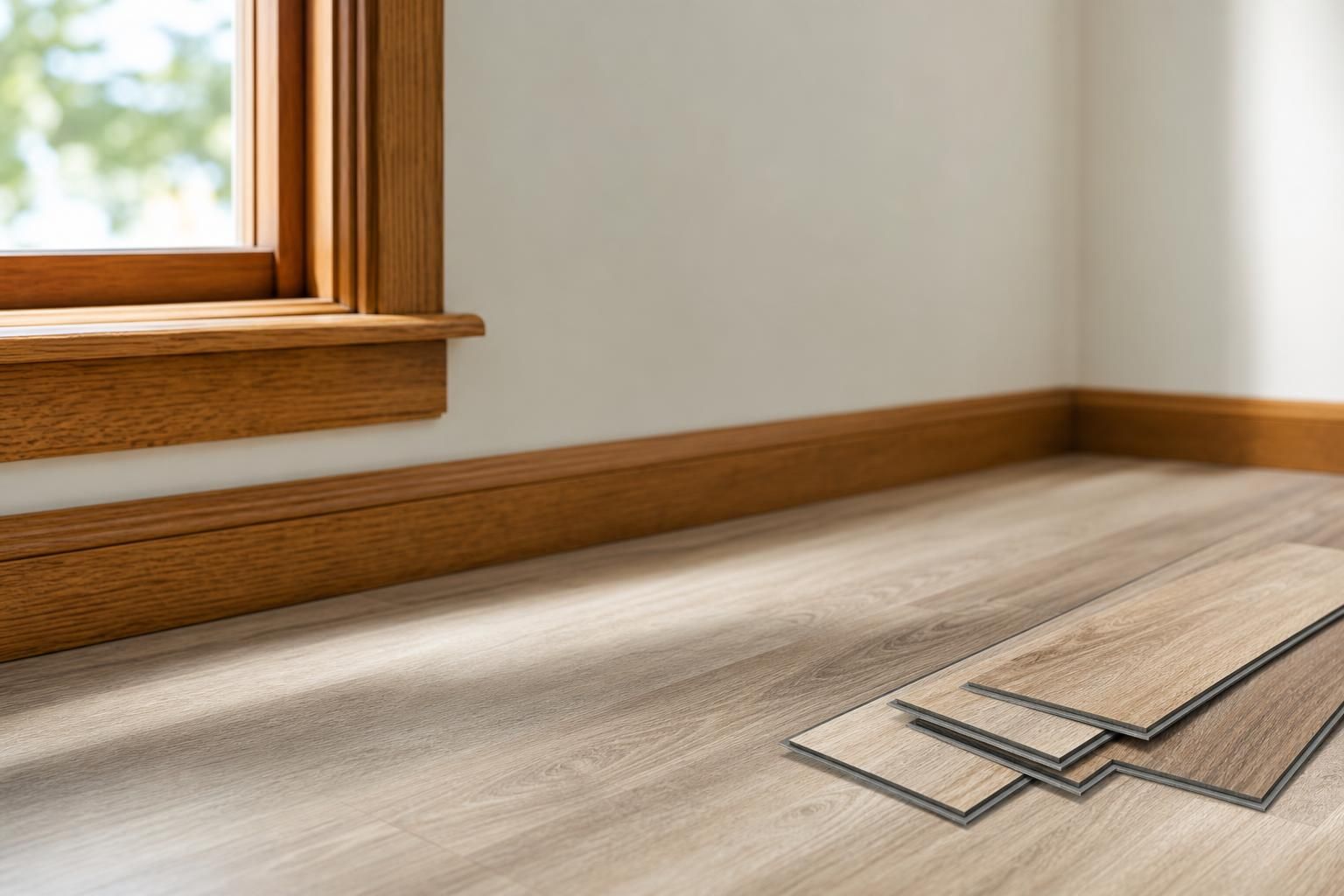
Match flooring to existing trim by identifying the trim's undertone (warm, cool, or neutral) and finish, then choosing a floor that either shares that undertone for a cohesive look or sits at least two to three shades apart in value for intentional contrast. Painted white trim gives the most flexibility because it reads as neutral against almost any floor tone, while stained wood trim needs a floor that doesn't fight its specific color cast. The safest test is holding a physical flooring sample against the trim in the room's actual daylight and artificial light before ordering anything.
Key takeaways
- Identify whether your trim is painted (flexible) or stained wood (needs undertone matching) before picking a floor color.
- Use contrast, not matching, as the default goal — floors within one shade of trim tend to blend and look flat.
- Always check samples in the room itself, since Oahu's bright daylight and warm interior lighting shift how undertones read.
Start With the Trim's Undertone, Not Its Color Name
Every trim color — even "white" — leans warm, cool, or neutral once it's next to a floor. Warm trims (cream, ivory, honey-stained wood) have yellow or red undertones. Cool trims (bright white, gray-washed wood) lean blue or gray. Putting a cool-gray vinyl plank next to warm honey-stained trim is the single most common mismatch homeowners run into, because the two undertones visually cancel each other out and the room looks muddy in photos even though it looked fine in the showroom.
A quick way to check: look at the trim in direct sunlight near a window and again under your kitchen or living room light fixture at night. Undertones that looked neutral under LED light often reveal themselves as yellow or blue under natural daylight. This matters more in Hawaii than in most mainland homes, since Oahu interiors get stronger, more direct daylight for more hours of the year, which exaggerates warm and cool casts.
Painted Trim vs. Stained Wood Trim
Painted trim
If your baseboards, door casings, and window trim are painted — especially in a standard white, off-white, or light gray — you have the most freedom. Painted trim acts as a neutral frame, so it can sit next to nearly any flooring undertone without clashing. This is one reason painted trim is common in rentals and newer Oahu construction: it doesn't lock the next owner into one flooring direction.
Stained wood trim
Stained wood trim is less forgiving because the wood grain itself carries a fixed undertone that paint can't hide. A reddish mahogany-stained trim will fight a cool gray vinyl plank, while a honey oak trim pairs more naturally with warm or mid-tone wood-look flooring. The National Wood Flooring Association notes that wood tones are judged by both hue and value together, which is why two "brown" trims can still clash with the same floor — one may be warm brown with red undertones, the other warm brown with yellow undertones.
If you're also choosing cabinet colors in the same space, the same undertone logic applies there, and it's worth working through trim, floor, and cabinets together rather than one at a time — see how to match cabinet color to flooring for that process.
Contrast Beats Matching, Almost Every Time
Designers rarely aim for an exact match between floor and trim — a floor and trim that are nearly identical in value tend to blend together at floor level, making the room look flatter and making the trim disappear instead of framing the space. A small but visible gap in lightness or darkness is what makes trim read as trim instead of an extension of the floor.
A practical way to judge this without technical tools:
- Hold the flooring sample flat against the baseboard in the room.
- Step back about six feet — the distance most people actually view a room from.
- If you have to look closely to tell them apart, they're too close in value.
- If the trim clearly "pops" against the floor without looking jarring, that's workable contrast.
Paint manufacturers describe this concept through light reflectance value (LRV), a measurement of how much light a color bounces back. Sherwin-Williams publishes LRV ratings on its paint color pages, and comparing the LRV of your trim paint to the LRV listed for a flooring sample (many manufacturers list this too) is a more objective way to confirm contrast than eyeballing alone.
Matching Strategy by Trim Style
| Trim Type | Best Flooring Approach |
|---|---|
| Bright white painted | Nearly any floor tone works; focus on contrast level, not undertone |
| Cream or off-white painted | Lean toward warm or neutral floors; avoid strongly cool-gray tones |
| Honey or golden oak stain | Warm or mid-tone wood-look vinyl plank; avoid cool gray |
| Dark walnut or espresso stain | Lighter or mid-tone floors for contrast; matching dark-on-dark often looks heavy in smaller rooms |
| Gray-washed wood | Cool or neutral floor tones; avoid strong red or orange undertones |
This isn't a rule that overrides personal taste — some homeowners want a monochromatic, matched look on purpose, especially in open-concept layouts where floor and trim blending into one tone makes the space feel larger. The guidance above is a starting point for avoiding an accidental clash, not a ceiling on what's allowed.
When Replacing the Trim Is the Easier Fix
Sometimes the honest answer is that the existing trim is the problem, not the floor choice. Heavily yellowed or orange-toned stained trim from past decades can be difficult to pair with the cooler, grayer wood-look vinyl planks that are common now. Repainting trim is a relatively contained project compared to reflooring, and it widens the pool of floor colors that will work without a visible clash. If you're weighing that trade-off alongside a full flooring purchase, it's worth deciding on trim first since paint dries fast and flooring orders don't.
Testing Before You Commit
Paint chips and flooring swatches viewed under store lighting rarely match what a room looks like at home. Oahu's humidity and salt air also affect how some finishes age over time, which is a separate durability question from color — covered in more detail for specific neighborhoods in guides like vinyl plank flooring in Mililani. For the color-matching step specifically:
- Bring a trim-matched paint chip or a small cut of the actual trim to compare.
- Lay the flooring sample flat on the floor near the baseboard, not propped against a wall.
- Check it in morning light, afternoon light, and under your evening lighting.
- Walk out of the room and back in — first impressions catch mismatches that close inspection misses.
A physical, touchable sample is far more reliable than a photo or a digital rendering for this kind of comparison, since screens shift color casts in ways paper and vinyl samples don't.
Frequently Asked Questions
Q: Does flooring need to match trim color exactly?
No. Most designers recommend a visible but moderate contrast between floor and trim rather than an exact match, since floors and trim that are too similar in value tend to visually blend and flatten the room.
Q: What's the biggest mistake homeowners make matching floors to trim?
Matching the general color family (both "brown" or both "gray") while ignoring undertone, such as pairing a warm honey-stained trim with a cool gray floor. The clash comes from the undertone mismatch, not the color family.
Q: Should I choose floor color based on trim or cabinets first?
Treat trim, cabinets, and flooring as one system rather than picking one in isolation, since all three are visible in the same sightlines in most Oahu kitchens and living areas. Working through undertone and contrast for all three together avoids a floor that matches the trim but clashes with the cabinets.
Q: Does Hawaii's light affect how flooring and trim colors look together?
Yes. Stronger, more direct daylight common in Oahu interiors tends to exaggerate warm and cool undertones compared to dimmer or more filtered light, so a pairing that looks neutral under store lighting can read differently at home.
Q: Is painted trim or stained wood trim easier to match to new flooring?
Painted trim, especially white or light gray, is easier because it acts as a neutral frame that works with most flooring undertones. Stained wood trim carries a fixed undertone from the wood itself, which narrows the flooring colors that will pair well without clashing.