How Long Does Vinyl Plank Flooring Take in a Condo?
Key takeaway
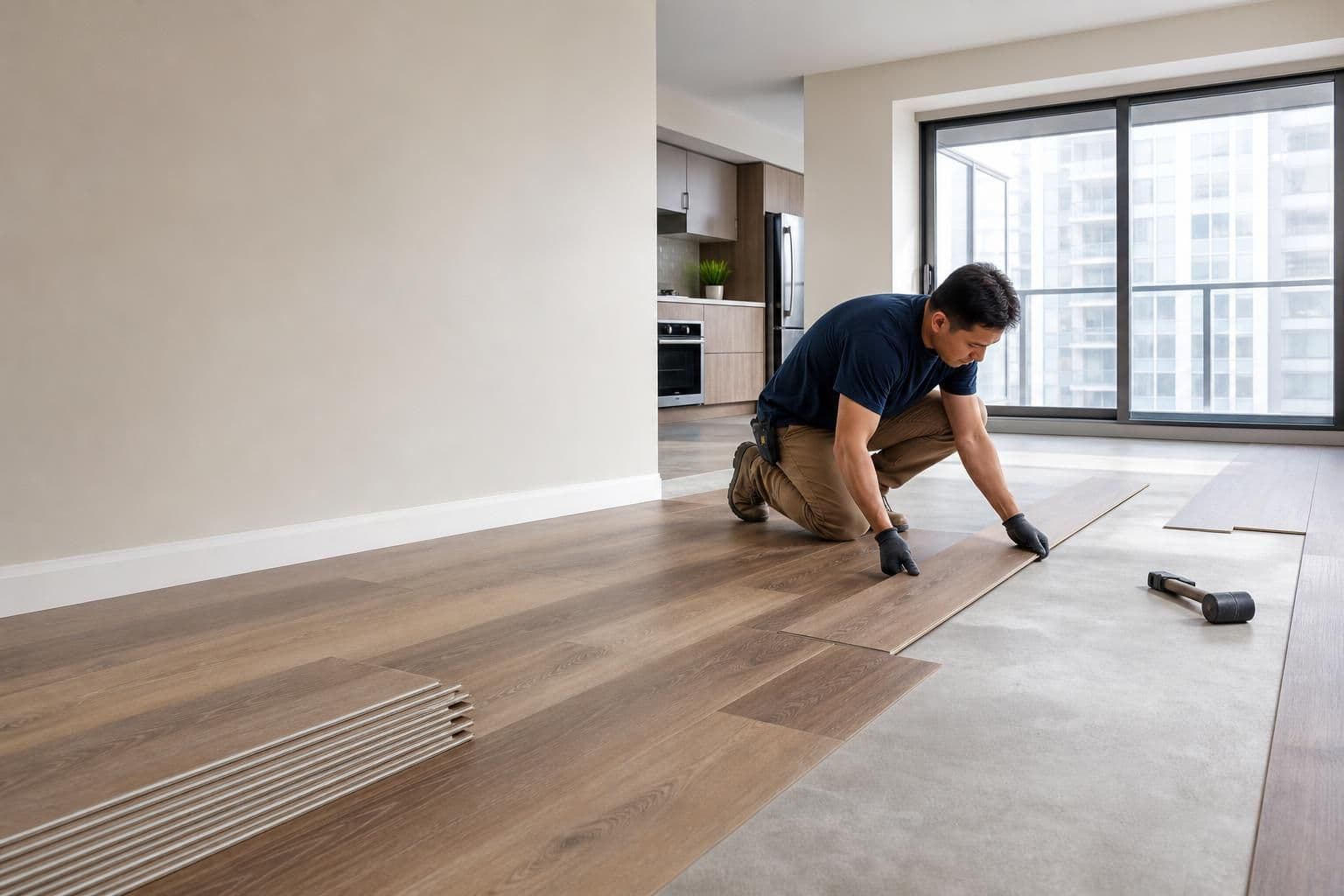
Most Oahu condo units get vinyl plank flooring installed in one to three working days once the crew starts, depending on square footage and how much furniture and old flooring need to come out first. The bigger variable isn't the install itself — it's the weeks of lead time for material ordering and, for condo owners, AOAO board approval before installers can even bring tools into the building. Plan for a same-day-to-72-hour install window, but a 3-8 week runway from quote to finished floor.
Key takeaways
- A typical 700–1,200 sq ft condo takes 1-3 install days once crews are on-site with materials in hand.
- AOAO approval and elevator/service reservations often add 2-4 weeks before installation can start — start that paperwork early.
- Removing old tile or glued-down flooring, moving furniture, and prepping subfloor moisture barriers are the steps most likely to add extra days.
Install day timeline by unit size
The physical labor of laying vinyl plank is fast compared to tile or hardwood because click-lock and glue-down LVP doesn't need curing time before people walk on it. Rough benchmarks installers use on Oahu:
- Studio or 1-bedroom (500–700 sq ft): typically 1 day, sometimes finished by early afternoon if there's no demo.
- 2-bedroom (800–1,100 sq ft): usually 1-2 days, especially with hallways, closets, and a lanai transition to cut around.
- 3-bedroom or larger (1,200+ sq ft): 2-3 days, more if the layout has multiple flooring transitions or the unit has load-bearing walls that complicate baseboard removal.
These numbers assume the crew is only installing — not tearing out ceramic tile, hauling out furniture, or waiting on subfloor leveling compound to dry. Add those and a 1-day job can become a 3-day job.
What actually adds time in a condo (vs. a house)
Condos have logistics constraints a single-family home doesn't. Building rules, not the flooring itself, are usually what stretches a project from "a weekend" to "a month."
- Elevator and loading dock reservations. Many Honolulu buildings require a booked freight elevator slot for material delivery and debris removal, and slots can be limited to certain days or hours — high-rises with a single service elevator shared across dozens of units tend to have the tightest windows.
- Noise and work-hour restrictions. Some AOAOs limit construction noise to specific weekday windows, which can turn a 2-day job into a 3-4 day job if crews can't work full shifts.
- Old flooring removal. Glued-down vinyl, tile, or carpet with tack strips typically adds a half-day to a full day of demo before new flooring goes down, and disposal hauling adds another logistics step in buildings with limited dumpster access.
- Moisture testing on concrete slabs. High-rise condos sit on concrete, and installers may want to check moisture levels before laying an underlayment — a step covered in more depth in the site's guide on flooring that holds up in Oahu's humidity and salt air.
AOAO approval: the step that determines your real timeline
The install crew can usually finish in days, but getting permission to start is often the longer wait. Most Oahu AOAOs require an application specifying material type, thickness, and sometimes an IIC/STC sound rating for units above the ground floor, since impact noise transmission to the unit below is a common board concern. Board review cycles vary — some approve within a week, others only meet monthly, which can mean a 4-week wait before a court date for the elevator is even possible. This is why getting your flooring specs and product documentation in board-ready form before submission matters more than the install date itself; the site's breakdown of condo AOAO flooring approval requirements covers what boards typically ask for.
A realistic week-by-week example
For a 900 sq ft 2-bedroom condo with existing carpet and no major subfloor issues:
- Week 1: Get a measurement-based quote, choose material, submit AOAO application.
- Weeks 2-4: AOAO review (varies by building; some approve faster, some slower), material lead time, elevator/dock reservation confirmed.
- Install week: Furniture moved out of work areas, old carpet removed (half day), underlayment and vinyl plank installed (1-1.5 days), baseboards and transitions finished (half day).
- Total elapsed time: roughly 3-5 weeks from quote to move-back-in, with only 1.5-2 of those days being actual on-site labor.
What drives the cost while you're planning the timeline
Since budget and schedule usually get decided together, it helps to know what actually moves the cost of a condo vinyl plank job even before you get a quote — the material tier you choose changes both price and how the timeline plays out:
| Material tier | Durability / wear layer | Moisture tolerance | Install complexity | Typical lead time |
|---|---|---|---|---|
| Standard click-lock LVP | Lighter wear layer, fine for lower-traffic rooms | Good for normal condo humidity | Straightforward, fastest to install | Often in stock locally |
| Waterproof rigid-core (SPC/WPC) | Thicker, more impact-resistant core | Handles lanai transitions and slab moisture well | Slightly more prep for a flat, moisture-tested subfloor | Usually in stock, occasional order wait |
| Premium wear layers / wide-plank formats | Highest wear-layer thickness, longest expected service life | Same core moisture performance, larger planks show subfloor flaws more | More cutting and leveling care, especially with wide planks | Frequently special-order, longer island freight wait |
Beyond material tier, the things that actually shift a condo job's cost are old flooring removal and disposal, subfloor leveling in older buildings with uneven concrete, stairs or multiple room transitions, furniture moving, and special-order freight time for premium products shipped to Oahu. A detailed breakdown of what drives vinyl plank pricing walks through each of these in more depth. The only way to know what your project will actually cost is a free quote measured against your unit's real square footage and condition.
What speeds the process up
A few things consistently shorten the calendar time, separate from install-day labor:
- Submitting AOAO paperwork with product specs (thickness, wear layer, sound rating) already attached, instead of waiting for the board to request it
- Choosing in-stock material at a Honolulu showroom rather than a special-order product with a longer shipping window
- Emptying rooms of furniture and small items before the crew arrives, since move-and-cover time is billed as labor
- Confirming elevator or loading dock reservations the same week the AOAO approves, instead of restarting that request later
Frequently Asked Questions
Q: How many days does it take to install vinyl plank flooring in an average condo?
Most 700-1,200 sq ft condos take 1-3 working days for the physical installation once crews are on-site with materials and old flooring removed. Larger units or jobs with significant demo work can run longer.
Q: Does AOAO approval add time before installation can start?
Yes — AOAO board review, elevator reservations, and material lead time typically add 2-4 weeks before installers can begin, even though the install itself only takes a few days.
Q: Can vinyl plank flooring be walked on immediately after installation?
Click-lock vinyl plank can generally be walked on right away since it doesn't require curing time, though glue-down installations may need a short waiting period per the adhesive manufacturer's instructions.
Q: Does removing old flooring add to the timeline?
Yes — removing glued-down vinyl, tile, or carpet with tack strips typically adds a half-day to a full day before new flooring installation can begin.
Q: What information do condo boards usually want before approving a flooring project?
Most AOAOs ask for the flooring material type, thickness, and often a sound/impact rating to address noise transmission concerns for units below, similar to standards referenced by the National Institute of Standards and Technology.