Flooring Contractors Kailua Homeowners Can Actually Vet
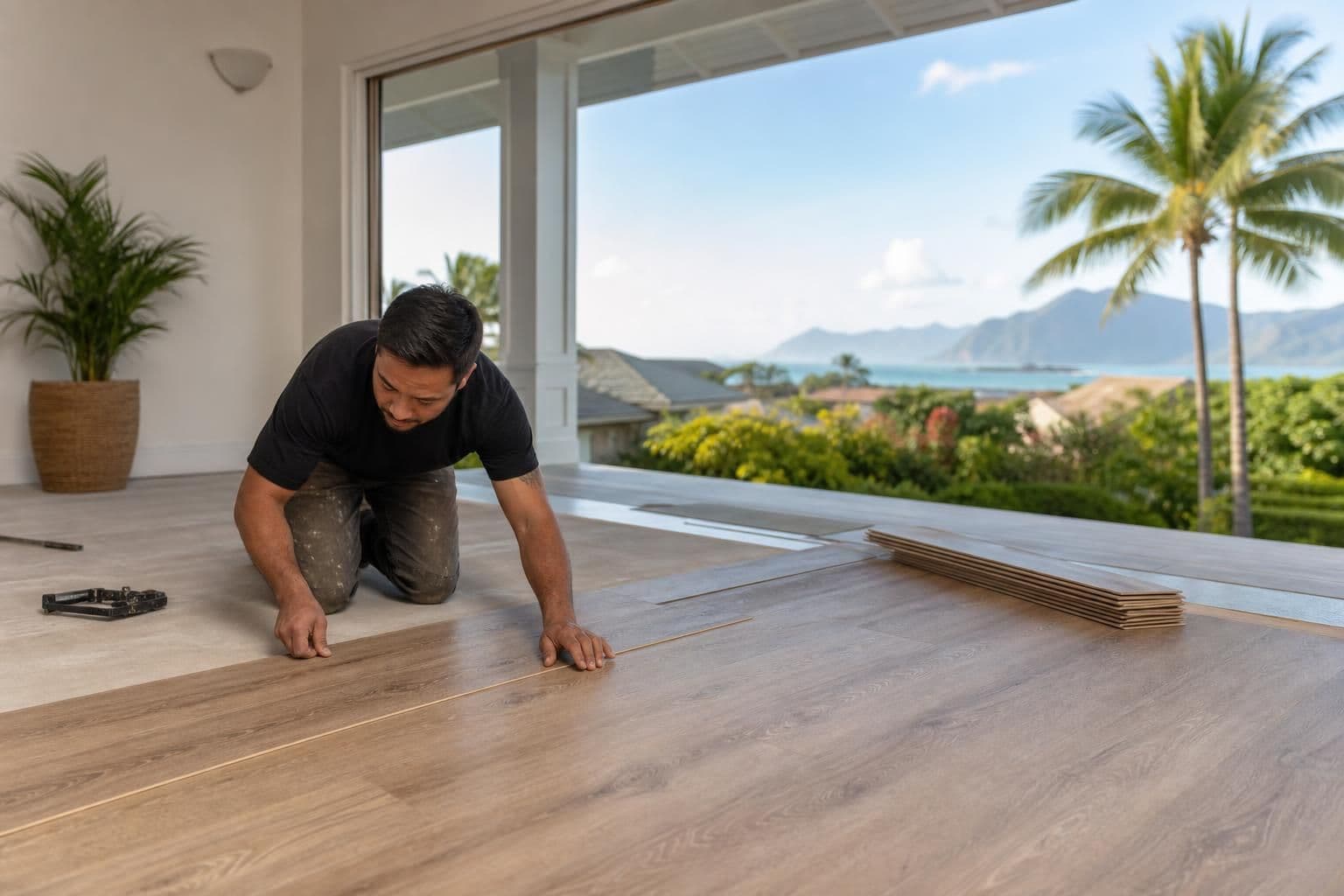
Key takeaway
Finding a flooring contractor in Kailua means confirming an active Hawaii contractor license, checking that the crew actually works that side of the island regularly (not just "will drive out"), and getting a quote based on your real square footage rather than a phone estimate. The fastest way to screen candidates is to ask for license number, proof of insurance, and a written scope before any material is ordered. Kailua's older slab homes and beach-adjacent moisture also make subfloor condition and material choice bigger cost factors than labor alone.
Key takeaways
- Verify any contractor's license through the state's own lookup tool before signing anything — Kailua has both licensed trade crews and unlicensed handymen advertising the same work.
- Ask what happens if they find a wet or uneven subfloor once they pull up old flooring; that discovery, not the install itself, is what usually changes a quote.
- A written quote tied to your actual square footage, not a verbal estimate, is the only number worth comparing between contractors.
What "licensed" actually means in Hawaii
Hawaii requires a specialty contractor license for flooring work performed for pay, issued through the state's Department of Commerce and Consumer Affairs. A legitimate contractor can give you a license number on request, and that number is searchable on the Hawaii DCCA Professional and Vocational Licensing lookup. Unlicensed labor is common in residential flooring on Oahu because the barrier to advertising is low — a truck, a nail gun, and a Craigslist post — so this one check removes most of the risk before a deposit changes hands.
Licensing also matters for insurance. A licensed contractor is required to carry liability coverage; if a crew member is hurt pulling up your old tile or a subfloor is damaged during tear-out, an unlicensed worker leaves you exposed. Ask for a certificate of insurance, not just a verbal "yes, we're covered."
Why Kailua jobs price differently than a generic quote
Kailua's housing stock skews toward older slab-on-grade homes near the water, and that combination changes what a contractor needs to do before a single plank goes down.
- Subfloor moisture. Homes within a few blocks of the coast can carry higher ambient humidity into the concrete slab itself, which affects adhesive choice and underlayment.
- Slab leveling. Older Kailua homes often have more floor variation than newer Kapolei or Mililani construction, and leveling compound adds time before installation even starts.
- Furniture and tear-out. Full-house jobs usually require moving furniture and hauling away old material, which is a separate line item from the flooring itself.
- Material fit for salt air. Coastal humidity pushes most Kailua homeowners toward vinyl plank over hardwood or laminate for stability.
None of these are flat fees — they depend on your specific slab, your specific square footage, and how much the crew can see before tear-out begins. That is why a trustworthy quote is always tied to a walkthrough or detailed measurements, not a phone number pulled from memory.
Questions to ask before you sign anything
A short phone screen eliminates most bad fits before you waste a visit.
- "What's your Hawaii contractor license number?" A real contractor answers without hesitation.
- "Do you work Kailua regularly, or is this a special trip?" Crews unfamiliar with the area may underbid, then add trip charges later.
- "What happens if you find a moisture or leveling issue once you start?" The answer tells you whether they've seen Oahu subfloors before or are guessing.
- "Can I see or touch a sample of the material before I commit?" Photos online don't show texture, sheen, or how a plank feels underfoot — something Oahu Flooring Quote handles with physical samples at its Honolulu showrooms rather than swatches on a screen.
- "Is the quote based on my actual square footage?" If the number comes before anyone measures your home, treat it as a placeholder, not a bid.
Condo and townhouse considerations in Kailua
Kailua has a mix of single-family homes and smaller condo or townhouse complexes, and condo boards (AOAOs) frequently require sound-rating documentation before approving new flooring — particularly for upper-floor units. This is a separate hurdle from the install itself: the contractor needs to provide an IIC (Impact Insulation Class) rating or manufacturer spec sheet that satisfies the board's written rules, and that paperwork needs to exist before demo day, not after. If you're in a multi-unit building, ask any contractor specifically whether they've prepared AOAO submission paperwork before, since that experience saves weeks of back-and-forth with a board.
For background on what boards typically ask for, the site's own guide on Honolulu condo AOAO rules covers the documentation most buildings require before approving a flooring swap.
Matching material to a Kailua home
Vinyl plank has become the default recommendation for coastal Oahu homes because it tolerates humidity swings and doesn't expand or cup the way solid hardwood can near open windows and salt air. If you're comparing it against laminate or engineered wood for a Kailua remodel, the site's comparison of LVP, laminate, and engineered wood breaks down where each one holds up and where each one fails in a humid, coastal environment. For homeowners deciding room by room, the guide to flooring ideas for living rooms on Oahu is a useful next stop once the subfloor and licensing questions are settled.
Getting a quote without guessing
A Kailua homeowner can shortcut most of this by requesting a quote that's tied to actual square footage rather than a rough phone estimate. Oahu Flooring Quote works this way by design: one point of contact handles the measurement, material selection, and installer connection from the first call through delivery, and condo owners get documentation formatted for AOAO board review as part of the process. A free quote request is priced for the actual job, with a response typically within 24 hours — which is a faster and more accurate way to compare options than collecting verbal estimates from three different trucks parked outside your house.
Frequently Asked Questions
Q: How do I verify a flooring contractor's license in Hawaii?
Use the Hawaii Department of Commerce and Consumer Affairs' Professional and Vocational Licensing search tool and enter the contractor's name or license number. An active specialty contractor license should show current status and no major disciplinary history.
Q: Why do Kailua flooring quotes vary so much between contractors?
Variation usually comes from differences in subfloor assessment, not labor rates — one contractor may price for a level slab while another accounts for leveling compound, moisture barrier, or tear-out and disposal after seeing the actual floor.
Q: Does my condo association need to approve new flooring in Kailua?
Most Kailua condo and townhouse AOAOs require flooring submissions that include sound-rating documentation, especially for units above the ground floor, before work can begin.
Q: Is vinyl plank flooring a good choice for a Kailua home near the beach?
Vinyl plank is generally more stable than solid hardwood in coastal humidity because it doesn't absorb moisture and swell the way wood products can, which is why it's the common recommendation for homes close to the shoreline.
Q: What's the fastest way to compare flooring contractors in Kailua?
Ask each candidate for a license number, proof of insurance, and a written quote based on your measured square footage — then compare those three things side by side rather than relying on a verbal price quoted over the phone.