How to Find Countertop Installers in Kapolei
Key takeaway
Finding a qualified countertop installer in Kapolei means checking three things before you check pricing: an active Hawaii contractor license, a documented templating and fabrication process, and experience with the slab material you've chosen (quartz, granite, or quartzite behave differently on install day). Kapolei's mix of newer single-family subdivisions and mid-rise condo buildings means the right installer also needs to know whether your project requires AOAO paperwork or just a standard kitchen tear-out. The only way to get an accurate number for your own kitchen is a quote against your actual measurements, not a generic estimate.
Key takeaways
- Confirm the installer's Hawaii contractor license through the state's public license search before signing anything.
- Ask whether templating happens in your home with a digital or physical template — this step catches out-of-square walls common in older Kapolei homes.
- If you're in a condo or townhome with an AOAO, get your installer's cut sheet and spec written for board review before demo day.
What a Qualified Countertop Installer Actually Does
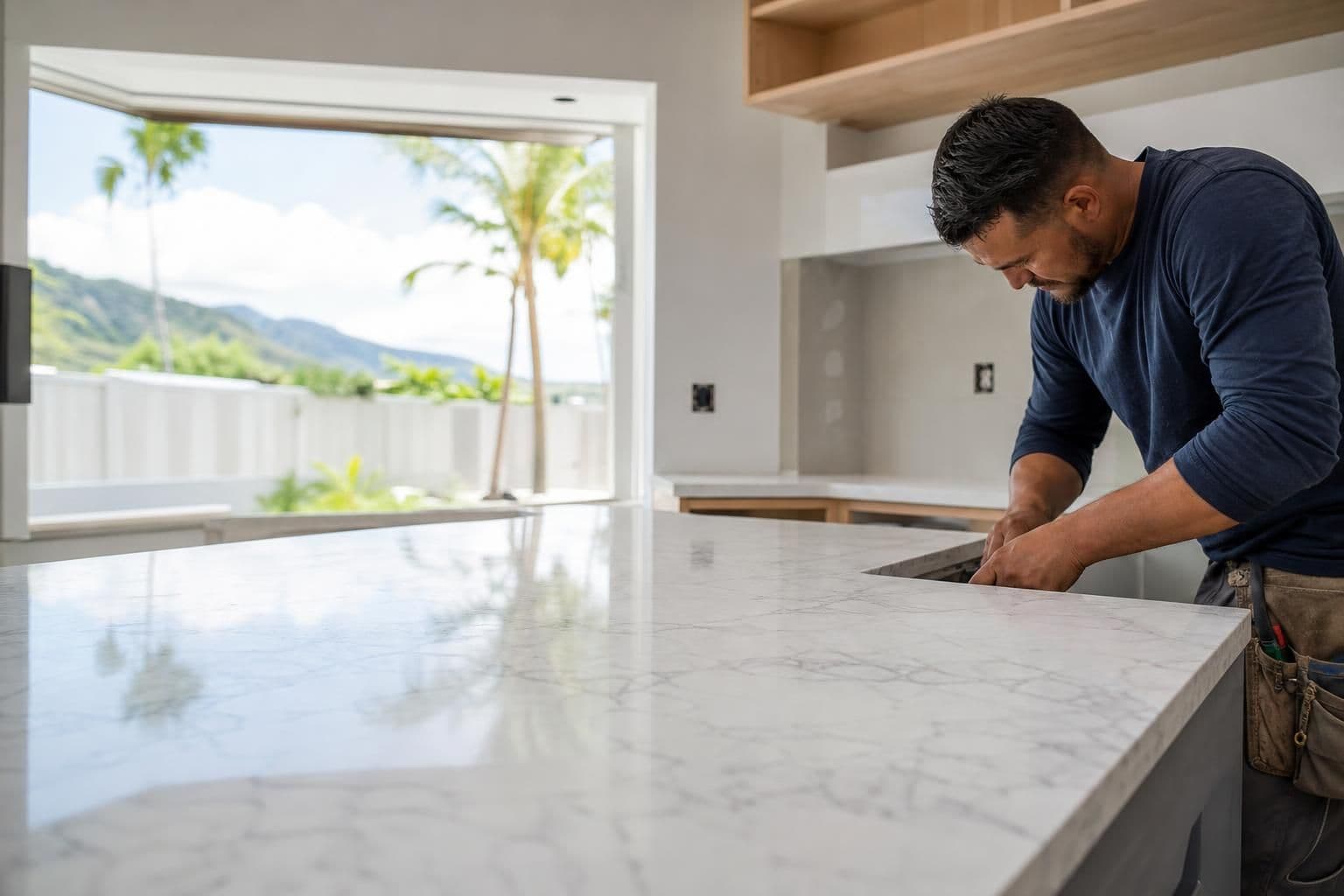
Installing a countertop isn't just setting a slab on cabinets. A proper job includes an in-home measurement or digital template, fabrication cuts for sink and cooktop openings, edge profiling, seam placement on larger runs, and a final set with structural support under any overhang. Kapolei kitchens with islands or peninsula seating often need extra bracing or corbels for overhangs beyond a few inches, which is something a template visit catches — a phone-quoted job often doesn't.
If you want to see how a template visit and material selection typically unfold before you commit, this walkthrough of a countertop showroom visit covers what to expect from first sample to final cut sheet.
Verify the License Before You Verify Anything Else
Hawaii requires contractors doing countertop installation tied to a kitchen remodel (and often standalone installs involving plumbing or electrical disconnects) to hold an active license through the state's Department of Commerce and Consumer Affairs. You can look up any contractor's license status directly through the Hawaii DCCA's professional and vocational licensing search. An active license doesn't guarantee workmanship, but an expired or missing one is an immediate disqualifier — it also usually means no bonding or insurance coverage if something goes wrong during demo or set.
What Shapes Your Timeline and Scope in Kapolei
Because no two kitchens measure the same, the honest answer to "what will this cost" is that it depends on a handful of site conditions rather than a flat number. Here's what actually moves the scope of a Kapolei countertop job:
- Cabinet condition — whether existing cabinets can support the new slab or need leveling first.
- Sink and cooktop cutouts — custom cutouts for undermount sinks or gas cooktops add fabrication time.
- Edge profile complexity — a simple eased edge installs faster than a built-up ogee or bullnose; this guide to countertop edge profiles breaks down the common options.
- Seam count — larger islands or L-shaped runs may need a seam, which affects both fabrication and the visual result.
- Tear-out and disposal — removing old laminate or tile backsplash before the new slab goes in adds a step most installers price separately.
- Material lead time — special-order quartz or stone not in local stock may require island freight, which adds days, not weeks, to scheduling.
None of these factors have a universal dollar value — they're specific to your kitchen's layout and the material you pick. A free quote priced against your actual square footage is the only way to get a number that reflects your project, with an answer back within 24 hours.
Condo and AOAO Steps for Kapolei Buildings
Kapolei has a growing number of condo and townhome associations, and many require board approval before any countertop or flooring work begins — particularly if the job involves plumbing shutoffs, electrical disconnects for a cooktop, or moving materials through shared elevators and loading docks. Associations typically want a written spec sheet showing material, thickness, and scope of work before they'll sign off. Builders and owners working through an AOAO process benefit from an installer who can produce that paperwork without back-and-forth delays — this is one area where having a single point of contact from quote to delivery saves real time, since re-explaining a job to multiple people is how approvals stall.
Questions to Ask Before You Book
Before signing a contract, ask the installer directly:
- Can I see your current Hawaii contractor license number?
- Do you template in person, and how long between template and install?
- What happens if the template reveals out-of-level cabinets or walls?
- Who handles disposal of the old countertop and backsplash?
- If I'm in a condo, can you provide a spec sheet for AOAO review?
A straight answer to all five, in writing, is a reasonable bar for any installer working in Kapolei.
A Note on Fabrication Safety
Cutting and polishing quartz and other engineered stone releases fine silica dust, which is a recognized respiratory hazard when inhaled over time. The U.S. Occupational Safety and Health Administration maintains guidance on respirable crystalline silica exposure for fabrication shops, including wet-cutting and ventilation requirements. Asking whether your installer's fabricator follows wet-cutting practices is a fair question, not an unusual one — it protects the people doing the cutting as much as it protects your kitchen's air quality during install week.
Frequently Asked Questions
Q: Do I need a licensed contractor just to replace a countertop in Kapolei?
If the job involves disconnecting plumbing or electrical — which most sink and cooktop countertop replacements do — Hawaii generally requires a licensed contractor. You can confirm license status through the state's DCCA license search before booking.
Q: How long does countertop installation usually take from template to final set?
Timing depends on material availability and fabrication complexity, but most jobs involve a template visit, a fabrication period, and a separate install day rather than a single same-day job. Special-order materials needing island freight add time to the fabrication window.
Q: Does my condo association need to approve a countertop replacement?
Many Kapolei AOAOs require written approval before work begins, especially if plumbing, electrical, or shared elevator/loading-dock access is involved. Ask your installer whether they can prepare a spec sheet for board review as part of the process.
Q: Can I get quartz, granite, and quartzite installed by the same installer?
Most fabricators work across common slab materials, but ask specifically about experience with your chosen stone — quartzite in particular requires different cutting and sealing approaches than engineered quartz.
Q: Why can't I get a flat price over the phone?
Countertop pricing depends on your exact square footage, edge profile, cutout count, and site conditions like cabinet level — none of which a phone call can measure. A quote based on your actual kitchen, like the one available through Oahu Flooring Quote's quote form, gives a number that holds up once work starts.