How to Find the Best Flooring Store on Oahu
Key takeaway
The best flooring store on Oahu is one that lets you touch real samples under local light, verifies its installers through Hawaii's contractor licensing system, and can produce the paperwork a condo board needs before anyone cuts a single plank. Price matters less than whether the store understands island-specific problems — humidity, freight delays on special orders, and AOAO approval — because those are what actually derail projects here. A store that handles all three in one place, with one person answering your questions start to finish, is worth more than one with the lowest sticker price.
Key takeaways
- Verify any installer's license through the Hawaii DCCA before signing anything — it takes less than five minutes and confirms the business is legally allowed to work in the state.
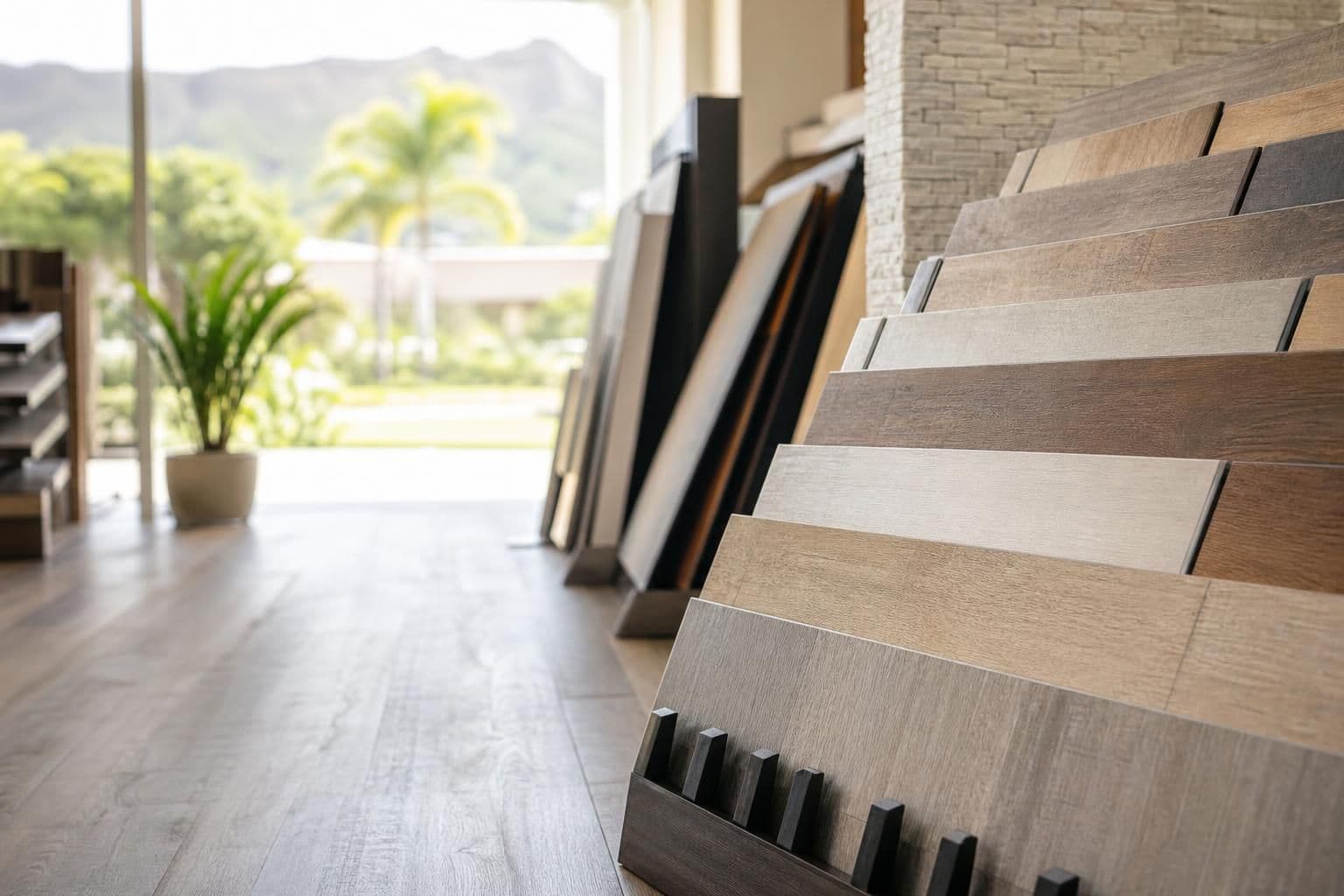
- A store with physical showroom samples lets you check how a material reads under Oahu's natural light and humidity, which online photos cannot show you.
- If you own a condo, ask upfront whether the store can produce AOAO-ready specs; this single question eliminates most of the back-and-forth that delays approval.
What Separates a Good Flooring Store From a Great One on Oahu
Most flooring stores sell the same handful of material categories: vinyl plank, tile, quartz, engineered wood. What varies is everything around the sale — how accurately they measure your space, whether they coordinate the installer, and whether they understand Oahu's building stock. Many homes here were built decades ago on slab or with uneven subfloors, and older high-rises add elevator booking windows and loading-dock rules that mainland suppliers never have to think about. A store that asks about your building type and floor level before quoting anything is doing real due diligence, not just taking an order.
Ask every store these three questions before comparing anything else:
- Can I see and touch actual material samples, not just photos?
- Do you work with licensed installers, and can you confirm their license number?
- Have you handled AOAO or building-management approval paperwork before?
If a store can't answer the third question for a condo project, you'll likely end up doing that paperwork yourself.
Showroom Experience vs. Online-Only Ordering
| Factor | Showroom with physical samples | Online-only ordering |
|---|---|---|
| Color/texture accuracy | True under local light and humidity | Screen color can shift significantly |
| Lead time visibility | Staff can flag special-order freight delays | Often unclear until after you pay |
| Installer coordination | Frequently bundled or referred | Usually separate, your responsibility |
| Condo/AOAO paperwork | Can be written into the quote | Rarely offered |
| Returns on wrong material | Easier to resolve in person | Can involve return freight costs |
Touchable samples matter more on Oahu than almost anywhere else, because salt air and humidity change how certain finishes feel and perform over time. A matte vinyl plank that looks fine in a product photo can show scuffing differently once it's living in a beachside unit. This is one of the reasons waterproof vinyl often outperforms tile in Oahu's humid, high-traffic homes — but you won't know if a specific product fits your space until you've handled it.
Licensing: The Step Most Homeowners Skip
Hawaii requires contractors doing flooring, cabinet, or electrical work to hold a license through the Department of Commerce and Consumer Affairs. Before hiring anyone a store refers you to, you can look up that license directly through the Hawaii DCCA license search to confirm it's active and matches the scope of work. A reputable flooring store won't hesitate to give you an installer's license number — if a store is vague about this, treat it as a warning sign, not a minor detail.
Why Climate Should Shape Which Store You Choose
Oahu's average relative humidity runs high year-round, and indoor flooring has to tolerate moisture swings that mainland products aren't always rated for. The National Oceanic and Atmospheric Administration tracks Honolulu's climate data, and the pattern is consistent: consistently warm, consistently humid, with trade winds that push moist air through homes that aren't fully sealed. A flooring store that stocks materials rated for high-moisture environments — and can explain why a given vinyl core resists swelling better than a cheaper alternative — is solving a problem specific to this island, not reciting a sales script.
This is also where the right flooring choice for a given room depends on more than looks. A lanai-adjacent living room has different moisture exposure than a closed bedroom, and a store worth using should ask about that before recommending a product.
Condo and AOAO Considerations
If you live in a Honolulu high-rise, your building's AOAO likely has rules about underlayment sound ratings, installation hours, and elevator or loading-dock reservations. A flooring store that's done condo work before should be able to:
- Write specs that match common AOAO sound-rating requirements without you having to translate technical language yourself
- Flag whether your building needs advance elevator booking before material delivery
- Tell you realistic lead times for special orders, since island freight adds time most mainland buyers never experience
Skipping this step is the single most common reason condo flooring projects get delayed after approval is already granted.
Cabinets and Countertops: The Same Standard Applies
If you're also sourcing cabinets or countertops, the same vetting applies — licensing, samples, and realistic freight timelines. Custom cabinet work in particular depends on accurate measurements and design previews before fabrication starts, which is why it helps to understand what actually drives cabinet pricing on Oahu before you compare quotes. A store or referral service that handles flooring, countertops, and cabinets together can also catch conflicts early — for example, cabinet toe-kick height affecting your flooring transition strips — that siloed vendors tend to miss.
Getting an Apples-to-Apples Quote
Because every home's square footage, subfloor condition, and access constraints are different, the only reliable way to compare stores is to request a quote based on your actual measurements rather than a generic estimate. Oahu Flooring Quote connects homeowners with a Honolulu supplier running two showrooms, a single point of contact through the whole process, and condo-ready specs for AOAO submissions — which covers most of the criteria above in one call rather than five.
Frequently Asked Questions
Q: What makes a flooring store "the best" on Oahu specifically?
The best fit combines physical showroom samples, verified licensed installers, and experience with Hawaii-specific issues like humidity-rated materials and condo AOAO approval. A store that only competes on advertised price but can't address those three areas will likely cost you more time later.
Q: Should I choose a store based on price alone?
No — accurate pricing depends entirely on your project's square footage, subfloor condition, and access (stairs, elevators, loading docks), so a quoted number without those details isn't comparable between stores. A free quote based on your actual measurements is the only way to compare offers fairly.
Q: How do I verify a flooring installer is licensed in Hawaii?
Use the Hawaii DCCA's public license search to confirm the installer's license is active and covers the type of work you need. Any legitimate flooring store or referral service should be able to provide the license number without hesitation.
Q: Does humidity really affect which flooring store or product I should choose?
Yes — Oahu's consistently high humidity can cause lower-grade materials to swell, warp, or loosen over time, so a store that stocks moisture-rated vinyl or engineered products understands a problem generic mainland retailers often don't address. Ask specifically how a product performs in high-humidity conditions before buying.
Q: What should condo owners ask a flooring store before buying?
Ask whether the store can produce AOAO-ready specs covering underlayment sound ratings, and whether they're familiar with your building's elevator or loading-dock reservation process. Skipping this step is the most common reason approved condo flooring projects get delayed during installation.