What Is the Best Flooring for a Home Gym?
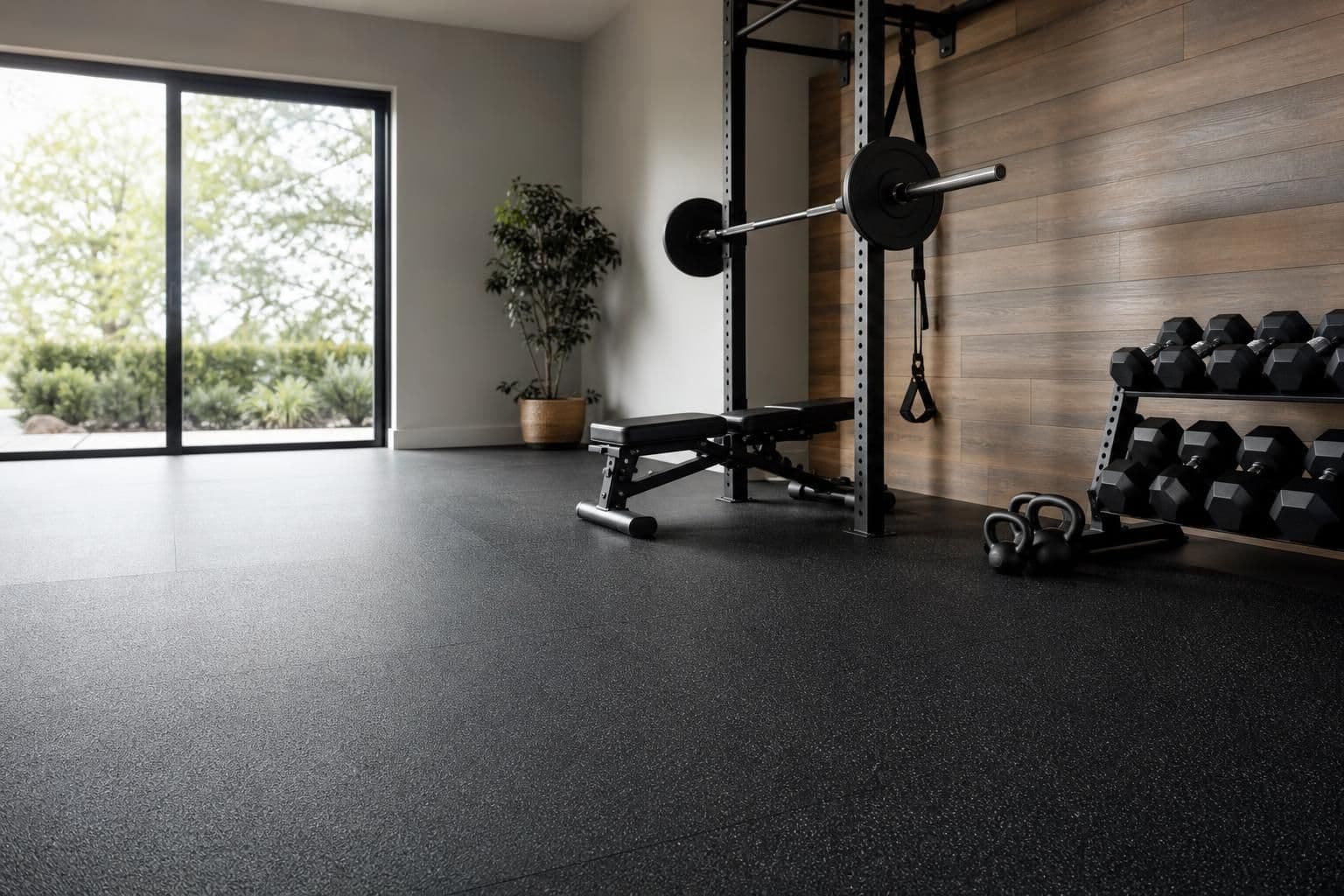
Key takeaway
The best flooring for a home gym depends on what you're doing on it: rubber tiles or rolled rubber are the standard for heavy weightlifting because they absorb impact and protect the subfloor from dropped plates, while rigid-core vinyl plank works well for cardio, yoga, or multi-use rooms where moisture resistance and easy cleanup matter more than shock absorption. On Oahu, the subfloor underneath — usually a concrete slab in single-family homes — also shapes which option makes sense. There's no single "best" material; there's a best match for your equipment, your subfloor, and how the room gets used.
Key takeaways
- Rubber flooring is the standard for free weights and dropped equipment; vinyl plank suits cardio, yoga, and light-use gym rooms.
- Concrete slabs, common in Oahu homes, need a moisture check before any flooring goes down — sweat and humidity both add to the load.
- Condo owners converting a lanai or spare room into a gym should confirm sound-rating rules with the AOAO before buying materials.
What Actually Matters in a Home Gym Floor
Four things decide whether a floor holds up in a home gym: impact absorption, moisture handling, slip resistance, and how easy it is to clean sweat and chalk off the surface. Impact absorption protects both your joints and the subfloor underneath — a dropped kettlebell on thin vinyl over concrete transmits nearly all that shock straight down, which can crack tile grout lines or dent softer subfloors over time. Moisture handling matters because a home gym generates more humidity and sweat than any other room except the bathroom, and Oahu's ambient humidity adds to that load year-round.
Slip resistance is tested using standardized methods like ASTM International's F609 static coefficient of friction test, which manufacturers reference on product spec sheets — worth checking if you're comparing flooring for a room where you'll be barefoot or in grip shoes.
Comparing Home Gym Flooring Options
| Flooring Type | Impact Absorption | Moisture Resistance | Best For | Subfloor Needs |
|---|---|---|---|---|
| Rubber tiles/rolls | High | Good | Free weights, dropped equipment, CrossFit-style training | Flat, minimal prep |
| Rigid-core vinyl plank (SPC/WPC) | Low–Moderate | Excellent | Cardio, yoga, Pilates, multi-use rooms | Flat, dry; benefits from an underlayment |
| High-density foam mats | Moderate | Fair | Bodyweight training, stretching, kids' fitness areas | Flat surface, minimal prep |
| Carpet tile | Low | Poor | Light stretching only, not recommended for weights | Flat, dry |
Rubber wins on shock absorption because it's designed to. Vinyl plank wins on moisture and long-term durability, which matters more in a room that doubles as a guest space, home office, or media room between workouts.
Why Subfloor Condition Drives the Decision on Oahu
Most single-family homes on Oahu sit on a concrete slab, and older homes — especially plantation-era houses in town or older Kailua neighborhoods — often have slabs with minor unevenness or moisture that wasn't a problem under the original flooring but becomes one under new material. Vinyl plank can go directly over concrete, but the slab needs to be flat, dry, and free of active moisture intrusion first. That's covered in more depth in our guide to installing vinyl plank over concrete, which walks through what a moisture test actually checks for.
Rubber flooring is more forgiving of minor slab imperfections since the tiles themselves have some give, which is one reason it's the default choice in commercial gyms and garages being converted into workout spaces.
Condo and Multi-Family Gym Considerations
If the "home gym" is a bedroom, lanai, or flex space inside a condo, the flooring choice isn't only about performance — it's about what the building allows. Most Honolulu AOAOs require a minimum Impact Insulation Class (IIC) rating for any hard-surface flooring above a shared ceiling, specifically because dropped weights transmit impact noise to the unit below far more than footsteps do. A gym room is exactly the scenario AOAO sound rules were written for. Before ordering material, check the building's flooring policy and confirm the spec sheet documents an IIC rating that meets it — this is also where having condo-ready paperwork prepared for board approval saves a remodel from stalling at the board review stage.
When Vinyl Plank Is the Right Call for a Gym Room
Vinyl plank makes sense when the room isn't a dedicated weight room — think a spare bedroom used for yoga, a Peloton and a mat, or a home gym that also functions as a guest room. In those cases, moisture resistance, easy cleanup, and a floor that doesn't look like a commercial gym when guests visit are bigger priorities than maximum shock absorption. A rigid-core SPC product handles daily sweat, occasional water bottle spills, and rolling equipment carts without the seams or edge-curling issues that softer vinyl can develop over time. Pairing it with a rubber mat under any heavy equipment gives you moisture resistance for the whole room and impact protection exactly where it's needed, without covering the entire floor in rubber.
For upkeep once it's installed, the same maintenance routine used for any vinyl plank floor on Oahu applies — regular sweeping to keep grit from scratching the wear layer, and prompt cleanup of sweat or spilled supplements before they sit on the surface.
Getting a Number for Your Space
Every gym room is a different shape, sits on a different subfloor, and needs a different mix of materials — a garage conversion with a slab that needs leveling is not priced the same as a spare bedroom with a flat subfloor already in place. The only accurate number comes from measuring the actual room and checking the slab or subfloor condition. A free quote priced for your actual square footage answers within 24 hours, and if you're comparing vinyl plank options for a multi-use gym room, touchable samples at either Honolulu showroom make it easier to judge texture and slip resistance in person.
Frequently Asked Questions
Q: Is vinyl plank flooring good for a home gym?
Yes, for cardio, yoga, or multi-use rooms where moisture resistance and easy cleaning matter most. For heavy free-weight training, pair it with a rubber mat under the equipment rather than relying on vinyl alone to absorb impact.
Q: Can I put rubber gym flooring over vinyl plank?
Generally yes, as long as the vinyl is fully cured and the rubber mat doesn't trap moisture against the surface. Interlocking rubber tiles or mats simply sit on top and can be removed without damaging the vinyl underneath.
Q: Do condo boards on Oahu restrict home gym flooring?
Most AOAOs require a minimum sound (IIC) rating for hard-surface flooring above another unit, and a home gym with dropped weights is a common reason boards enforce this closely. Check your building's flooring policy before ordering material.
Q: What subfloor prep does a home gym need on a concrete slab?
The slab should be flat, dry, and tested for moisture before flooring goes down, particularly in older Oahu homes where minor unevenness may not have mattered under the original flooring. A moisture test and a leveling compound, if needed, are the two most common prep steps.
Q: Is carpet ever a good choice for a home gym?
Carpet tile works for light stretching or a kids' fitness corner but isn't recommended under free weights or high-impact equipment, since it doesn't handle moisture or dropped weight well and can trap sweat odor over time.