What Is the Best Flooring for a Home Office?
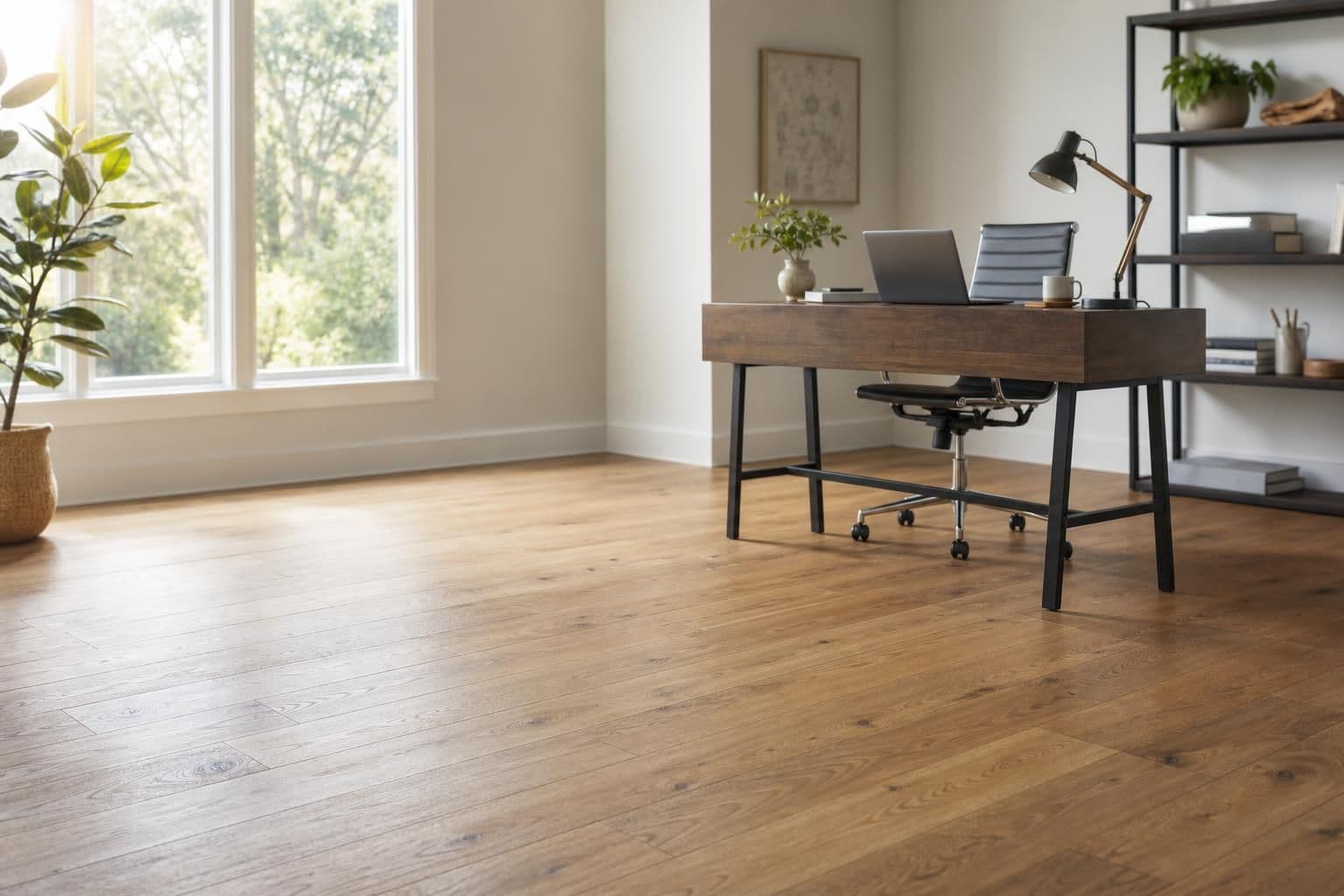
Key takeaway
For most Oahu home offices, rigid-core vinyl plank is the best overall choice because it resists humidity swings, holds up under a rolling chair without denting, and comes in sound-dampening options that matter in condos and open-plan houses. Engineered wood is a close second if you want a warmer look and don't mind more careful climate control. Carpet tile and laminate both fall short on Oahu specifically — carpet traps moisture and dust, and laminate's wood-fiber core swells faster in humid, salt-air conditions.
Key takeaways
- Rigid-core vinyl plank handles humidity, chair casters, and sound better than laminate or carpet in most Oahu home offices.
- If your office is in a condo, check the AOAO's sound-rating requirement (often an IIC/STC minimum) before you buy any hard-surface flooring.
- A chair mat or a caster rated for hard floors protects any material — but vinyl plank shows the least wear over years of daily rolling.
What a Home Office Actually Demands From Flooring
A home office gets different daily abuse than a bedroom or living room. The same square footage takes hours of chair rolling in one or two tracks, holds heavier furniture (desks, filing cabinets, monitor arms) in fixed spots, and — if you're on video calls — needs to not sound like a drum when someone walks across it. On Oahu, add humidity and salt air to that list, which rules out anything with an untreated wood-fiber core.
Rolling office chairs are harder on flooring than most residential foot traffic. Casters concentrate weight into a small contact patch and repeat the same path hundreds of times a week, which is why manufacturers of office seating publish caster and floor-protection guidance rather than leaving it to guesswork — BIFMA, the furniture industry's standards association, sets test methods for exactly this kind of wear.
Why Vinyl Plank Wins for Most Offices
Rigid-core (SPC or WPC) vinyl plank has a waterproof core, so it doesn't swell when Oahu's humidity climbs during summer months or after a window's left open during a storm. It's also dimensionally stable under a stationary desk leg for years, where solid wood and some laminates can show pressure marks. If you're weighing it against other wood-look options, the differences in core construction are worth understanding before you buy — see vinyl vs. laminate flooring for how each holds up.
Sound is the other reason vinyl plank fits home offices well. Many rigid-core products now come with an attached underlayment pad that absorbs impact noise — footsteps, a dropped stapler, chair movement — which matters if your office shares a floor with a bedroom below, or if you're in a condo with a downstairs neighbor.
Condo and AOAO Considerations
If your home office is in a Honolulu high-rise or mid-rise condo, the flooring choice isn't only about comfort — it's about approval. Most AOAOs require a minimum Impact Insulation Class (IIC) rating for hard-surface flooring above an occupied unit, and some specify an underlayment brand or thickness by name. Getting the wrong product means re-doing paperwork or, worse, ripping out flooring that already failed inspection. Condo owners should confirm the building's sound-rating threshold before ordering material, and keep the technical spec sheet on hand for board submission.
Allergies and Air Quality in a Home Office
A home office is a room you sit in for hours at a stretch, often with the door closed, which makes indoor air quality more noticeable than in a hallway or guest room. Hard-surface flooring like vinyl plank doesn't trap dust, pet dander, or dust mite allergens the way carpet does, and it's easier to keep clean with a damp mop rather than a vacuum that can recirculate fine particles. The EPA's indoor air quality guidance notes that reducing dust-trapping surfaces is one of the simpler ways to improve air quality in a room used daily. If allergies are a factor in your household, the trade-offs across flooring types are laid out in more detail in best flooring for allergies.
Comparing the Main Options
| Flooring Type | Humidity Resistance | Chair-Caster Durability | Sound Dampening | Best For |
|---|---|---|---|---|
| Rigid-core vinyl plank | Excellent — waterproof core | Excellent, minimal denting | Good with attached pad | Most Oahu home offices, including condos |
| Engineered wood | Good, needs climate control | Good, can dent over time | Fair, needs separate underlayment | Offices with lower humidity exposure |
| Laminate | Fair — core swells if wet | Fair, prone to chipping at edges | Fair | Budget builds, drier interior rooms |
| Carpet tile | Poor — traps moisture and dust | Poor without a chair mat | Excellent | Offices where sound matters more than allergies |
| Tile | Excellent | Excellent, but hard underfoot | Poor, transmits impact noise | Slab-on-grade rooms, not typical for offices |
What Actually Moves the Cost of an Office Floor
Every job prices out differently, so the honest answer to "what will this cost" is a free quote against your own square footage — not a published number that's either too high or too low for your room. What does change the price from one office to the next:
- Subfloor condition. Many older Oahu homes have uneven concrete slabs or plywood subfloors that need leveling before vinyl plank can go down flat — skipping this step shows up later as clicking or gapping under a rolling chair.
- Furniture and equipment moving. A desk, file cabinets, and server-rack style furniture take longer to move and reset than an empty bedroom.
- Elevator and loading-dock access. High-rise condo offices often mean scheduled elevator time and material staged through a loading dock, which adds labor hours a ground-floor house doesn't need.
- Sound-rated underlayment. Meeting an AOAO's IIC requirement sometimes means a thicker or specified underlayment, which is a material-tier decision, not a fixed add-on cost.
- Material tier and any special order. Wider planks, specific finishes, or a color not in local stock can mean island freight time added to the schedule.
Before ordering samples for a small office footprint, it's worth knowing what to actually check in person — texture, thickness, and how a sample reads under your office lighting are covered in what to check before you buy flooring samples.
Maintenance Once It's Installed
A home office floor doesn't get mopped as often as a kitchen, but it does collect paper dust, eraser shavings, and the occasional coffee spill near a desk. Vinyl plank holds up to regular damp mopping without the swelling risk that wood or laminate carries, and it doesn't require refinishing. For a room-specific routine, how to clean vinyl plank flooring the right way covers what to avoid so the wear layer isn't dulled early by the wrong cleaner.
Frequently Asked Questions
Q: Is vinyl plank flooring good for a home office with a rolling chair?
Yes. Rigid-core vinyl plank resists denting and surface wear from rolling office chairs better than laminate or engineered wood, especially with a hard-floor-rated caster or a chair mat under the desk.
Q: Do I need special flooring for a condo home office in Honolulu?
Most AOAOs require a minimum sound-rating (often measured in IIC) for hard-surface flooring, so check your building's requirement before ordering material — some boards also specify an approved underlayment.
Q: Is carpet or hard flooring better for a home office?
Hard flooring like vinyl plank is generally better for air quality and chair-caster wear, while carpet tile dampens sound better but traps more dust and allergens over time.
Q: How do I stop chair casters from damaging my office floor?
Use casters rated for hard flooring (soft urethane wheels rather than hard plastic) or add a clear chair mat — both reduce point-load wear regardless of the flooring material underneath.
Q: What flooring holds up best to Oahu's humidity in a closed-door office?
Rigid-core vinyl plank (SPC or WPC) handles humidity swings without swelling, which matters in a room that's often closed off with less air circulation than the rest of the house.